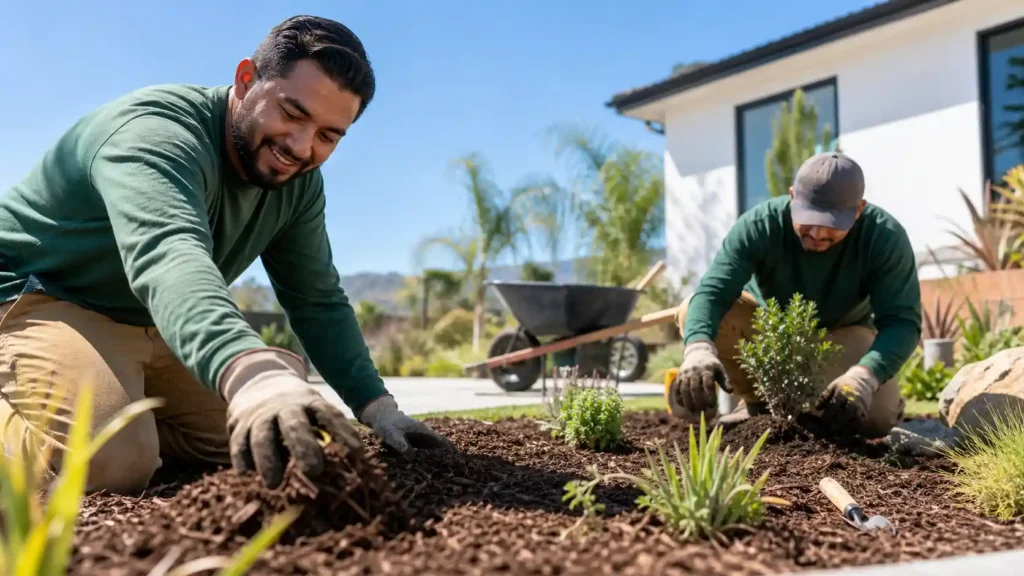
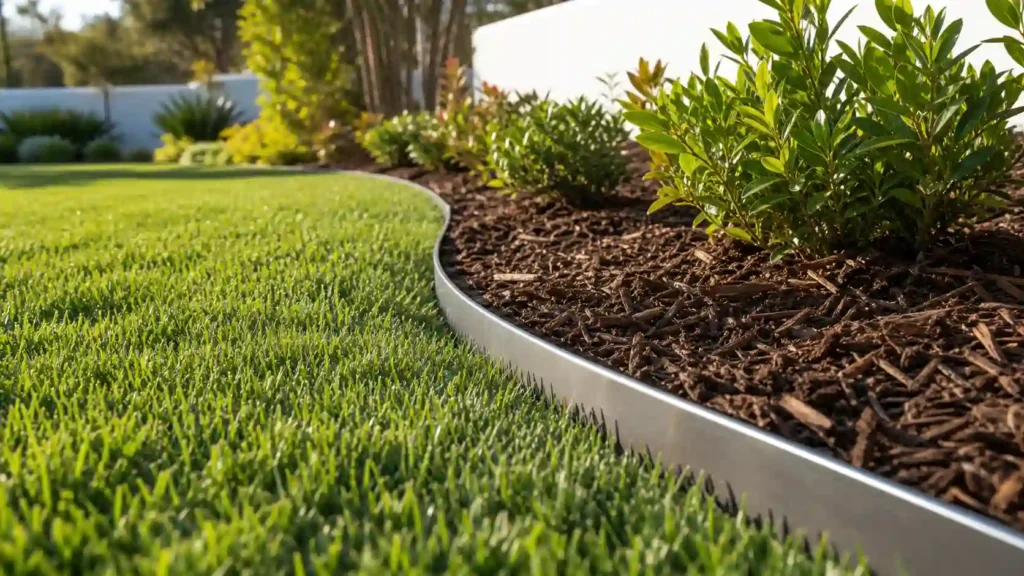
Landscape edging is a boundary that separates different areas of an outdoor space, such as a lawn, flower bed, garden, walkway, or decorative rock area. It can be created by cutting a clean line into the soil or installing materials such as metal, plastic, brick, stone, or concrete. Its purpose is to define landscape areas, contain materials, and create a more organized appearance.
This guide is for homeowners and DIYers who want to pick the right edge before they buy or hire. You will learn the types, the costs, and a simple way to match the material to the job.
Key Takeaways
- Edging is a boundary between yard areas, built from material or cut into soil.
- It does three jobs: it draws a line, holds material in, and blocks grass.
- Pick the job first, then the material. Plastic, steel, stone, and concrete each fit different jobs.
- Runner grasses like kikuyugrass need a deep, solid barrier, not a thin strip on the surface.
- Cost depends on material, length, curves, and prep work, not only the price per foot.
What Does Edging Mean in Landscaping?
Edging in landscaping means creating a clear boundary between two outdoor surfaces or landscape features. The boundary may separate grass from a flower bed, decorative rock from artificial turf, or a garden area from a walkway.
Landscape edging serves both a practical and visual purpose. It helps keep different landscape materials in their intended areas while giving the yard a more defined appearance.
For example, consider a residential backyard with a lawn, a flower bed, and a decorative gravel section. Without clear boundaries, grass can spread into the planting area, gravel can move onto the lawn, and the different sections may appear less organized.
Edging establishes separation between these areas.
What Is the Difference Between Landscape Edging and Lawn Edging?
Landscape edging is the broader term for creating boundaries between different landscape features. Lawn edging is more specific and usually refers to defining the boundary around grass.
Feature | Landscape edging | Lawn edging |
Main purpose | Separates different landscape areas | Defines lawn boundaries |
Common locations | Gardens, rock beds, patios, walkways | Lawn perimeters and planting beds |
Materials | Metal, plastic, concrete, brick, stone | Cut soil edges, metal, plastic, concrete |
Main benefit | Landscape organization | Clean grass boundaries |
Both terms are related, but they do not describe exactly the same application.
Why Does Edging Matter?
Edging keeps a yard neat with less weekly work. University of Illinois Extension educator Rhonda Ferree says edging forms a clean line between planting areas and turf or groundcovers, in her bed edges article.
Here is what a good edge does for you:
- Hold mulch and soil in place so beds stay full.
- Slows grass and weed roots from moving into beds.
- Cuts trimming time because the line is already set.
- Guides the mower so wheels do not scalp the bed.
- Makes the yard look finished from the street.
How Does Edging Work?
Edging works in one of three ways. Each way solves a different problem.
- A visual line. A shallow trench or low strip shows where the lawn stops and the bed starts. It looks sharp but stops little.
- A container. A raised or buried strip holds mulch, gravel, or soil so it does not spill onto the lawn or walk.
- A root barrier. A deep, solid strip blocks stolons and rhizomes. These are the runners that spread under and over soil. Cornell’s weed science team notes that bermudagrass spreads by runners and rhizomes.
Most people want a line and a container. Runner grasses call for a barrier.
What Are the Types of Landscaping Edging?
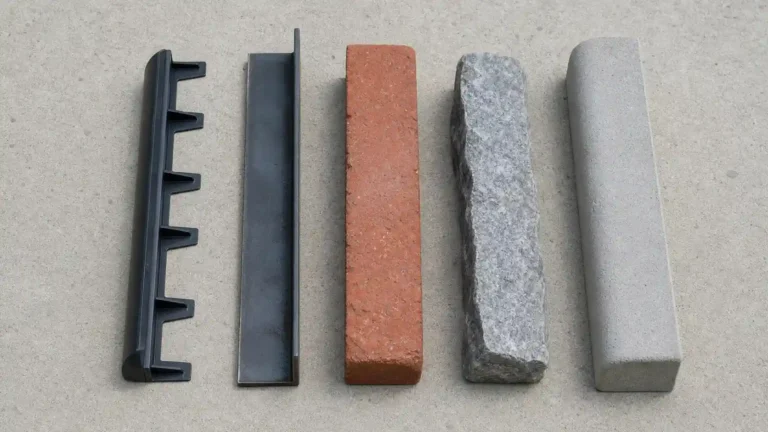
The main types are natural trench edging, metal, plastic, brick and stone, concrete, and wood. LSU AgCenter lists plastic, steel, concrete, and stone or paver edging as the common choices. Here is how each one behaves.
Natural (trench) edging
A natural edge is a V-shaped or straight trench cut with a spade. It costs only your tools and time. It needs to be recut each season. It works best where runner grass is not a problem.
Steel and aluminum edging
Metal gives a thin, crisp line. University of Illinois Extension says metal edging, including steel and aluminum, lasts the longest of the common types, in its steel bed edging guide. Steel is stronger. Aluminum bends easier on curves but can ding and lose shape, according to Edge Right.
Plastic edging
Plastic is light, flexible, and low in cost. LSU AgCenter says it is easy to install but does not last as long as steel. A trade article from Total Landscape Care adds that plastic can shift out of place and get dinged by mowers. Use it for low-traffic beds with tame grass.
Brick, paver, and stone edging
Brick and pavers give a classic look. Laid flat at ground level, they also make a mow strip. Mississippi State Extension describes paver mow strips where the bed line is dug out so the paver tops sit level with the ground. Stone is heavier and costs more. Both need a firm base.
Concrete edging
Concrete edging creates a solid, defined boundary between different outdoor areas. It can be installed as individual concrete units or as a continuous concrete border.
Homeowners may use it around:
- Lawn perimeters.
- Flower beds.
- Decorative rock sections.
- Walkways and patios.
Concrete can provide a structured appearance and work well with other hardscape features.
Considerations: Concrete requires suitable preparation and installation. Cracking, movement, and drainage problems can occur if the design or base preparation is inadequate.
Wood edging
Wood edging uses landscape timbers, wooden boards, or other suitable wood products to separate garden beds from surrounding areas.
It works particularly well with rustic and natural landscape designs.
Common applications include:
- Raised planting beds.
- Vegetable gardens.
- Straight garden borders.
- Mulch containment.
Considerations: Wood can deteriorate through moisture exposure, decay, and insect activity. Its lifespan depends on the wood species, treatment, installation, and surrounding conditions. Use products suitable for the intended landscaping application.
How Do the Landscape Edging Options Compare?
This table shows the trade-offs at a glance. Cost levels are relative.
Material | Best for | Durability | Cost level | DIY level |
Natural trench | Lawn to bed, tight budget | Needs recutting each season | Lowest | Easy |
Plastic | Low-traffic beds, curves | Shorter life, can shift | Low | Easy |
Steel | Clean lines, grass barrier | Long | Medium to high | Moderate |
Aluminum | Tight curves | Can dent and lose shape | Medium | Easy to moderate |
Brick or pavers | Traditional look, mow strip | Long on a firm base | Medium | Moderate |
Natural stone | Large beds, natural look | Long | Medium to high | Hard (heavy) |
Poured concrete | Permanent, straight runs | Longest | Highest | Hard, usually a pro |
Wood | Rustic or raised beds | It defends on wood type | Medium | Easy |
How Do You Choose? The Job-First Rule

Pick the job before the material. Most bad edging choices come from skipping this step. Ask three questions.
1. What is the edge’s main job?
- Draw a line: natural trench or low plastic.
- Hold mulch or gravel: raised steel, stone, or concrete.
- Block runner grass: deep, solid steel or concrete.
- Guide the mower: flush pavers or a concrete strip.
2. What touches the edge every week?
Mower wheels, bare feet, a string trimmer, or runner roots. Soft plastic suffers from mowers. Sharp steel tops need care near kids and pets.
3. How long should it last?
If you will redo the bed in two years, plastic or a trench is fine. If you want to forget about it for a decade, pay more now for metal, stone, or concrete.
Write your answers down. The material usually picks itself.
Which Grass Edging Options Fit San Diego County?
The best grass edging options in San Diego County depend on the grass. Kikuyugrass and bermudagrass are common in warm areas of California. UC IPM says kikuyugrass invades ground covers and flower beds and can choke them out. Its page shows stolons growing out of a shrub in San Diego County.
That changes the advice:
- Beside kikuyugrass or bermudagrass: use deep, solid steel or a concrete curb. Surface plastic gets crossed by runners.
- Beside fescue or other clumping grass: a shallower strip is enough, since the roots stay put. Edge Right notes that trench depth should match root depth.
- Beside artificial turf: the turf needs a firm edge to stay in place. Common choices are header boards, pavers, or a concrete curb.
- Cold-weather worries do not apply. Freeze and thaw cycles push shallow edging upward in northern climates, per the Ware Learning Center. Coastal San Diego County rarely sees that problem.
How Do You Install Basic Edging?
This method fits steel or plastic strips that you drive into the soil.
- Mark the line. Lay a hose or spray a paint line. Walk it and adjust the curves.
- Cut the trench. Use a flat spade. Make it as deep as the strip needs.
- Clear the trench. Pull sod, roots, and rocks so the strip sits straight.
- Set the strip. Place it so the top sits at your planned height. Steel usually sits just above the soil.
- Backfill and pack. Push soil in on both sides. Press it down firmly with your hands or a tamper.
- Stake and join. Drive stakes and link pieces with the connectors that come with the product.
- Water and check. Water the soil to settle it. Re-check the line after the first mow.
For brick and pavers, add a compacted gravel or sand base first.
How Much Does Edging Cost?
Edging costs depend on the material, the length, the curves, and the prep work. LawnStarter puts the average at $3.50 to $8.80 per linear foot. For 180 feet, that is $630 to $1,584. HomeAdvisor reports a typical range of $780 to $2,099, based on projects from 1,048 members.
These things raise the price:
- Tight curves and many corners
- Removing old edging
- Sloped ground or hard, rocky soil
- Base work under brick or stone
- Concrete forms and finishing
What Mistakes Should You Avoid?
- Buying by looks alone. Match the material to the job first.
- Setting it too shallow. Runner grass crosses a shallow strip.
- Skipping the base under pavers. Loose pavers shift and tilt.
- Leaving plastic unstaked or too high. It pops up and gets hit by mowers.
- Forcing stiff material around tight curves. Use a flexible product or plan gentler curves.
- Ignoring the mower path. Leave room for a wheel, or use a flush mow strip.
- Forgetting upkeep. Even good edges need trimming and a yearly check.
Edging Checklist
- I named the edge’s main job.
- I know which grass or surface sits next to it.
- I picked a material that fits that job.
- I measured the full length and added extra for curves.
- I marked the line and walked it.
- I checked for utility lines before digging.
- I planned the mower path.
- I set a date to re-check the edge after the first month.
What Tools Do You Need?
- Flat spade or half-moon edger
- Rubber mallet or hammer
- Garden hose or string for the line
- Level and tape measure
- Hand tamper for soil or base
- Metal cutting tool for steel
- Gloves and eye protection
- String trimmer or powered edger for trimming
For a full list of national resources, see the University of California’s UC Guide to Healthy Lawns for grass behavior and care.
Practical Landscape Edging Examples
Understanding how edging works in real residential layouts makes it easier to select the right option.
Example 1: Separating a Lawn From a Flower Bed
Imagine a homeowner with a front lawn and a curved flower bed along the property.
Grass gradually spreads into the planting area, making the boundary look untidy.
A maintained trench edge or suitable installed barrier can create a cleaner separation. The choice depends on the grass species, the desired appearance, and how much maintenance the homeowner prefers.
Example 2: Separating Artificial Turf From Decorative Rock
Consider a backyard that combines artificial turf with a decorative rock section.
Without an appropriate boundary, loose stones can move onto the turf, while the transition between the two surfaces may look unfinished.
A suitable physical edging material can help contain the rock and establish a defined transition.
For this type of layout, the border should also account for drainage, surface levels, and the installation requirements of both materials.
Example 3: Creating a Border Along a Garden Walkway
A homeowner may want to separate a planting bed from a walkway.
Brick, concrete, or natural stone edging can create a visual transition between the planted area and the walking surface.
The border should be stable, level where necessary, and positioned to avoid interfering with foot traffic.
Conclusion and Next Steps
Edging in landscaping is a simple border that does real work. It sets lines, holds material in, and slows grass. Start with the job, then pick the material. Check the grass next to it, since runner grass changes the answer.
Your next step is to walk your yard and mark each edge with its job. If a lawn meets a patio or new turf, ask a pro about the right edge. SD Home Turf installs artificial turf throughout San Diego County.
FAQs
What is the purpose of edging in landscaping?
Edging separates yard areas, such as a lawn and a flower bed. It keeps mulch and soil in place and slows grass from creeping into beds. It also gives the yard a clean, finished look and cuts the time you spend trimming each week.
What is the best edging for a lawn?
There is no single best choice. Steel suits crisp lines and runner grass. Plastic fits low-traffic beds on a budget. Pavers work as a mow strip. Concrete is permanent. Pick based on the job, the grass beside it, and how long you want it to last.
What is the cheapest type of edging?
A natural trench costs the least because you only need a spade and time. Plastic is the lowest-cost material edging. It usually lasts less time than steel. Cheaper options may cost more over the years if you must replace them.
How deep should lawn edging be?
Depth depends on the material and the grass roots. Edge Right advises a trench deeper than the grass roots. Runner grasses need a deeper, solid barrier than clumping grasses.
Does edging stop grass from spreading?
A deep, solid barrier slows or blocks runners. A shallow or surface strip does not. UC IPM notes kikuyugrass spreads by stolons into beds, so thin edging beside it often fails. Regular trimming along the edge still helps, even with a good barrier.
What is the difference between edging and curbing?
The terms overlap. Edging is the broad word for any border. Landscape curbing usually means a taller, more solid border, often poured concrete or stone. Contractors and price guides use both words, so check what a quote includes.
How do you edge grass without a special tool?
Use a flat spade. Press it straight down along a string line, then angle it to lift a clean strip of sod. Remove the cut piece and rake the soil smooth. A string trimmer turned sideways also works for light touch-ups.