

Does hardscaping add value? Yes. It adds value when it creates usable outdoor living space, improves curb appeal, or fixes a real problem on your lot. Buyers see it, use it, and remember it. But not every dollar you spend comes back at sale. The return depends on the project, the quality, and your local market.
Realtors estimate a paver patio recovers about 95% of its cost. A fire feature recovers about 56%. This guide shows how hardscaping lifts home value, which projects matter most, and how ROI and resale value really work.
Three Ways Hardscaping Lifts Home Value
Hardscaping lifts home value through space, looks, and function. Each one gives a buyer a clear reason to want the property.
More Usable Outdoor Space
A patio does not add square feet to the floor plan. It adds outdoor living space, and buyers can picture using it right away. Pavers laid on a flat base give you room for outdoor seating, a dining area, and an entertaining space. Add outdoor lighting and the space works after dark too. Mild weather in San Diego County means a patio gets used for much of the year.
A Better First Impression
Buyers judge a home before they reach the door. A clean paver walkway, a tidy driveway, and a clear entry make the front yard look finished and cared for. NAR found that 92% of realtors advise sellers to improve curb appeal before listing. That shows how much buyer appeal starts at the street.
Better Function and Lower Upkeep
Some hardscaping solves problems. A walkway gives safe access between areas. A retaining wall turns a steep slope into a usable yard. Smart drainage moves water away from the house. Stone, pavers, and concrete need no mowing or watering, so low upkeep ranks among the top hardscaping advantages for buyers. That kind of functionality is easy to see and easy to trust.
Hardscaping Projects That Add the Most Value
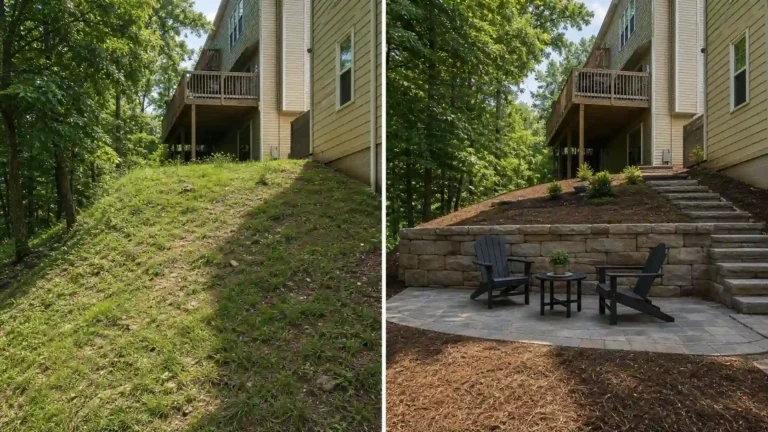
Four projects come up most often: paver patios, walkways, retaining walls, and decorative rock. Each one adds value in a different way. Together they shape how a yard works as an outdoor living space.
Paver Patios
A paver patio is the clearest case. NAR priced an 18 by 16 foot paver patio at about $10,500. Realtors estimated that 95% of that cost comes back at sale. Owners rated patios 9.9 out of 10 for joy, one of the top scores in the report. A seating area and a dining area on concrete paver installation give buyers a space they understand at once. It suits family dinners and entertaining alike.
Walkways
A walkway adds good looks, safe movement, and a link between spaces. A paver walkway or a concrete walkway sets a clear path from street to door. Smooth, level surfaces also improve accessibility for kids, guests, and older families. NAR’s front yard upgrade included a flagstone walkway, stone planters, shrubs, and a tree. It recovered about 100% of its $9,000 cost. NAR does not list walkways alone, so treat that figure as a guide. Learn more about walkway installation.
Retaining Walls
A retaining wall earns value by fixing a problem. It holds back a slope, slows erosion, and creates level, usable space. Picture a yard that drops six feet behind the house. A wall can turn that slope into a flat spot for seating or play. A good design also guides water away through built-in drainage. NAR has no figure for walls, so no percentage is promised here. See our retaining wall installation work for examples.
Decorative Rock
Decorative rock works best as a maintenance tool. Use it as ground cover where grass is hard to keep alive. It blocks weeds and cuts water use in dry beds and side yards. It will not drive value alone. Pair it with a patio or walkway for the best effect.
What Return Should You Expect?

No single ROI percentage fits every project. Hardscaping return on investment swings with the job. Project cost, materials, labor, and installation quality all move the number. So do your local market, property condition, neighborhood, buyer demand, project size, and design.
NAR measures cost recovery. That is the share of a project’s cost that realtors estimate comes back when you sell. The figures below are 2023 national averages for standard-quality work on a typical home.
Project | Typical cost | Estimated cost recovered |
Paver patio | $10,500 | 95% |
Outdoor kitchen | $15,000 | 100% |
Wood deck | $16,900 | 89% |
Outdoor lighting | $6,800 | 59% |
Fire feature | $9,000 | 56% |
Treat these as project estimates, not promises. Other guides list different percentages, which shows how much the numbers shift by source and year.
Here is a simple example. A $10,000 patio at 95% recovery returns about $9,500 at sale. You are $500 behind on paper. But you used the space for years, so the home improvement still paid off as an investment. Resale value was a bonus on top.
How Appraisers View Outdoor Improvements
An appraisal does not work like a receipt. Owners often ask how home appraisal outdoor living space is counted. Spending $20,000 does not make your home worth $20,000 more.
An appraiser values the whole property. They compare it to comparable properties that are sold nearby and study market value in your area. Fannie Mae’s Selling Guide counts only finished, above-grade space as gross living area. A patio is outdoors, so it adds no square feet.
Appraisers weigh outdoor improvements as part of overall appeal and use. Buyers may love a feature that never shows up as a clean dollar line. Local comps decide how much it counts.
What Raises or Lowers a Project’s Value
Good hardscaping adds function without making the property feel overbuilt.
What Raises It
- Design: it fits the home’s architecture and style.
- Scale: the size suits both the yard and the house.
- Materials: they match the neighborhood and hold up to sun and use.
- Installation quality: a compacted base, level surfaces, and tight joints.
- Drainage: water flows away from the house, not toward it.
- Maintenance: the finished space is easy to keep clean.
What Lowers It
A project can make a home easier to sell and still not return its full cost. NAR’s 56% figure for fire features shows this. Watch for these problems:
- Poor workmanship
- Drainage problems that pool water
- Cracked or uneven surfaces
- Excessive hardscape that leaves no open or green space
- A design that does not fit the property
- Over-improvement, such as a luxury build on a modest street
- Expensive features buyers do not value
- Difficult-to-maintain installations
- Highly personalized designs that narrow buyer preferences and hurt resale
Build for Resale or for Yourself?
Does hardscaping add value to home life as well as sale price? Yes, but the right plan depends on your goal.
If You Plan to Sell
The outdoor improvements that boost resale value are the ones buyers see first. Focus on these:
- Visible curb appeal
- Clean, safe walkways
- Functional outdoor areas
- Repairs for any visible problem
- A cohesive design
NAR found that 92% of realtors suggest curb appeal work before listing. Only 3% suggest a new patio, and 1% an outdoor kitchen. Start with the front yard, then ask a local agent what nearby buyers expect.
If You Plan to Stay
Build what you will use. Think about comfort, functionality, durability, maintenance, and drainage. A patio, a walkway, or a retaining wall that fixes a slope pays you back every week. Outdoor living space you enjoy has value even when the sale is years away.
The Bottom Line
Does hardscaping add value? Yes, but the value comes from the right project, not from spending more. A well-planned patio, walkway, or retaining wall improves outdoor living space, curb appeal, and buyer appeal. The best projects solve a real need, fit the property, and are built correctly. Expect ROI to vary, and treat resale as a bonus on top of daily use.
SD Home Turf builds pavers, walkways, and retaining walls across San Diego County. Explore our hardscaping services in San Diego County and request a free estimate.