

If you ask what is hardscaping, the short answer is simple. Hardscaping is the built, non-living framework of an outdoor space. It includes features such as patios, pavers, walkways, retaining walls and decorative rock. Landscaping is broader: it can include the hardscape plus living elements such as grass, trees, shrubs and flowers. In simple terms, hardscape provides the structure, softscape provides the living elements, and landscaping brings the complete outdoor space together.
This guide shows how the two differ, what hardscape features look like, and which one to plan first. Each part uses plain words and simple examples, so you can plan your own yard with confidence.
What Is Hardscaping in Simple Terms?
Hardscaping is the planning, building, and use of non-living, man-made features in an outdoor space. These features are permanent or semi-permanent, and people use them every day. Examples include concrete pavers, a patio, a walkway, a retaining wall, and decorative rock.
Picture your whole yard as one landscape that has two main parts: hardscape and softscape. Hardscape is the built, non-living part, while softscape is the living, growing part. If you want to know what’s hardscaping, picture the hard parts of a yard that you walk or sit on.
What Hardscape Is Made Of and What It Does
Hardscape uses hard, long-lasting materials, and the most common ones are listed below.
- Concrete: poured, stamped, or shaped into slabs and blocks
- Pavers: small concrete or stone blocks laid in a pattern
- Natural stone: flagstone, granite, and similar rock
- Brick: fired clay units used for paths, walls, and borders
- Gravel and decorative rock: loose stone for paths, borders, and dry beds
- Wood: decking, posts, and pergolas
- Metal and other durable built materials: railings, edging, and fences
Together, these materials form the structural framework of a yard, and each piece has a job.
- Structure: a patio marks the spot where the outdoor living area begins.
- Movement: a walkway leads people from the gate to the door.
- Usable areas: flat, firm surfaces hold chairs, tables, and grills.
- Boundaries: walls, fences, and borders show where one zone ends.
- Grade changes: a retaining wall and steps handle slopes and height changes.
- Drainage and erosion: grading and smart surface choices send rain away from the house and hold soil in place.
If you plan one of these features, see our hardscaping services in San Diego County to learn what is available. For a short outside reference, you can read the Wikipedia page on hardscape as well.
Common Hardscape Examples
Most yards use some mix of the features below, and each one is hardscape.
- Concrete pavers: a surface for patios, walkways, and driveways
- Patios: flat areas for dining and lounging
- Walkways: paths that guide movement and give easy access
- Driveways: firm surfaces for cars
- Retaining walls: structures that hold back soil on slopes
- Steps and stairs: a safe way to handle height changes
- Decorative rock and gravel: ground cover for paths and dry beds
- Fire pits and outdoor fireplaces: gathering spots for warmth
- Outdoor kitchens: built-in grills and counters
- Decks and pergolas: raised platforms and shade structures
- Fences and garden borders: privacy and clean edges
- Water features: fountains, ponds, and waterfalls
If pavers interest you, see our concrete paver installation services for a closer look.
Not every hardscape feature has to be a paved surface like a patio or driveway. Retaining walls, decorative rock, and other built, non-living features count too.
What Landscaping Means and Where Softscape Fits
Landscaping is the broader process of shaping an outdoor environment. Landscape design is the plan that decides where everything goes. Groups such as the American Society of Landscape Architects focus on how people plan and shape outdoor spaces.
In daily talk, many people use landscaping to mean planting and yard work only. In the full sense, landscaping covers both hardscape and softscape. That double meaning is why people mix up the two terms so often.
Softscape is the living, growing part of the space that changes with the seasons. It includes grass, trees, shrubs, flowers, and planting beds filled with soil and mulch.
How Hardscape and Softscape Differ
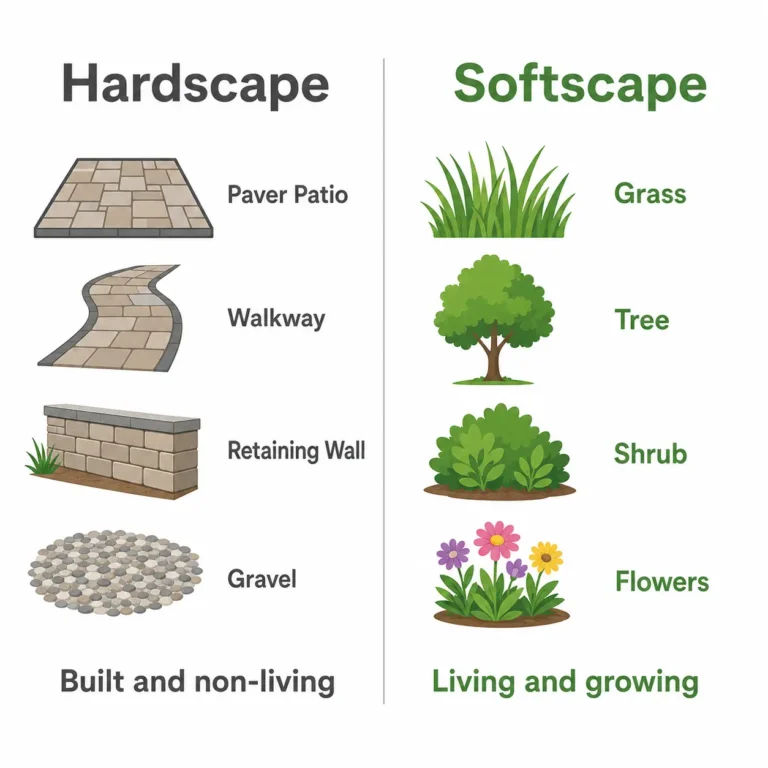
The main hardscape vs landscape differences come down to material, change over time, and care.
Hardscape | Softscape | |
What it is | Built, non-living features | Living, growing plants |
Examples | Pavers, patios, retaining walls, walkways, decorative rock | Grass, trees, shrubs, flowers, planting beds |
Over time | Holds its shape for years | Grows and changes each season |
Upkeep | Occasional cleaning and repairs | Regular watering, mowing, and pruning |
Main job | Adds structure and usable space | Adds color, shade, and life |
Hardscaping is part of landscaping, not a completely separate category from it. The difference between landscaping and hardscaping is mostly about scope: landscaping is the whole, and hardscaping is one part. When people search landscaping vs hardscaping, they usually mean hardscaping vs softscape.
Most good yards use landscaping and hardscaping together, with hardscaping giving structure and softscape adding living elements. Good landscape design plans both parts at the same time.
Gray Areas: Gravel, Mulch, Boulders, and Wood
Some items are hard to sort, but a few simple rules settle most cases.
- Boulders and large rocks are hard to find because they are non-living and stay in place.
- Gravel and decomposed granite count as hardscape, whether used for paths, driveways, or dry beds.
- Wood mulch is usually softscape because it breaks down and feeds planting beds.
- Wood decks and pergolas are hard-scaled, since built wood is no longer living.
Why Hardscape Matters in a Yard
Hardscape does real work in a yard, and it goes well beyond looks.
- A patio or deck turns bare ground into usable outdoor living space.
- Walkways and borders set clear paths and activity zones, which helps circulation through the yard.
- Retaining walls manage slopes, and together with paved surfaces they add erosion control by holding soil and stopping mud.
- Hardscape supports drainage planning, since grading and permeable pavers can guide rain away from your home.
- Less planted area means less routine maintenance, such as watering, mowing, and replanting.
- Hardscape is not zero upkeep, since you still sweep, clean, and fix a shifted paver now and then.
- Stone, concrete, and brick handle foot traffic and weather well, and that durability gives the yard a lasting frame.
Which Comes First, Hardscape or Planting?
In hardscaping and landscape construction, the built work usually comes first. For projects with both, hardscape is generally planned and installed before the final planting. Here are the four main reasons that crews follow this order.
- Excavation can disturb planting, so new plants would get dug up or crushed.
- Grading affects drainage, and plant beds should follow the final slope.
- Hardscape sets the finished edges, such as where a patio or walkway ends.
- Softscape and planting then fit around the finished hardscape, so nothing gets dug up twice.
A Simple Example of Both Working Together

Picture a sloped backyard behind a home in San Diego County. A paver patio sits near the back door, and a walkway leads to the side gate. A low retaining wall holds the slope behind the patio. Shrubs, flowers, and other plants fill the beds along the wall and path.
The pavers, patio, walkway, and wall are hardscape, and the plants are softscape. Together they form one landscape that follows a single landscape design. Hardscape provides structure, softscape adds living elements, and landscaping brings the whole outdoor space together.
Final Thoughts
The answer to “what is hardscaping” is simple: it is the built, non-living part of an outdoor space. Landscaping is the broader outdoor space, which can include both hardscape and softscape. If you plan a patio, walkway, retaining wall, or decorative rock area, you are planning a hardscape.
When you are ready, the team at SD Home Turf can help you plan your yard.
FAQs
Is the hardscape part of landscaping?
Yes, a stone wall or gravel path counts as part of the overall landscape, even though it has no plants.
Can I add hardscape to an existing yard?
Yes, you can add a patio, path, or wall to a finished yard. A crew plans around your current plants, drains, and slope.
Does hardscaping increase home value?
It can improve curb appeal and add usable space, but no one can promise a set return. Results depend on design, material quality, and what buyers in your area want.
Do hardscaping and landscaping need different contractors?
Not always, because some companies handle both and others do only one. Ask who plans the grading and drainage, since those steps affect both parts.