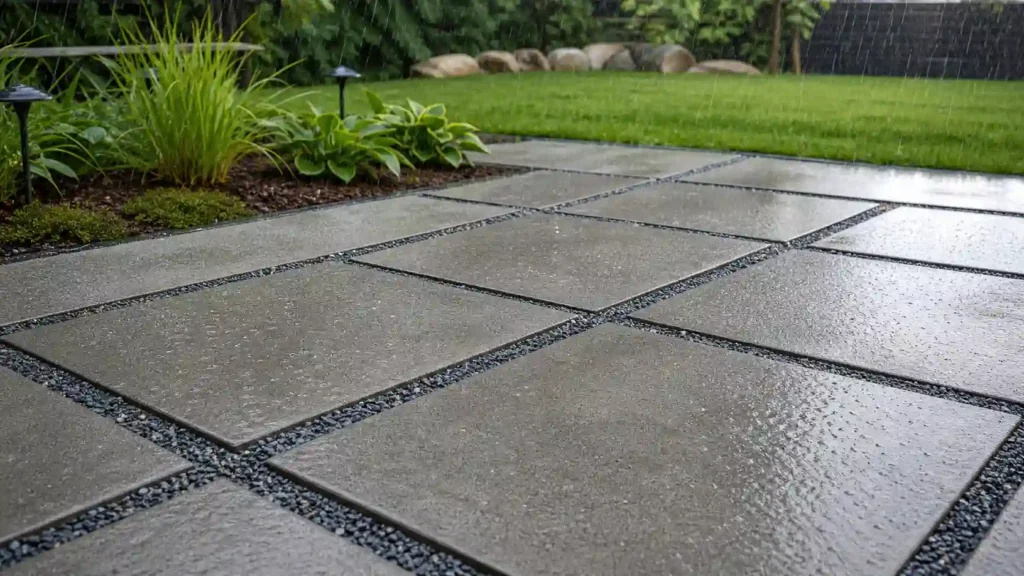
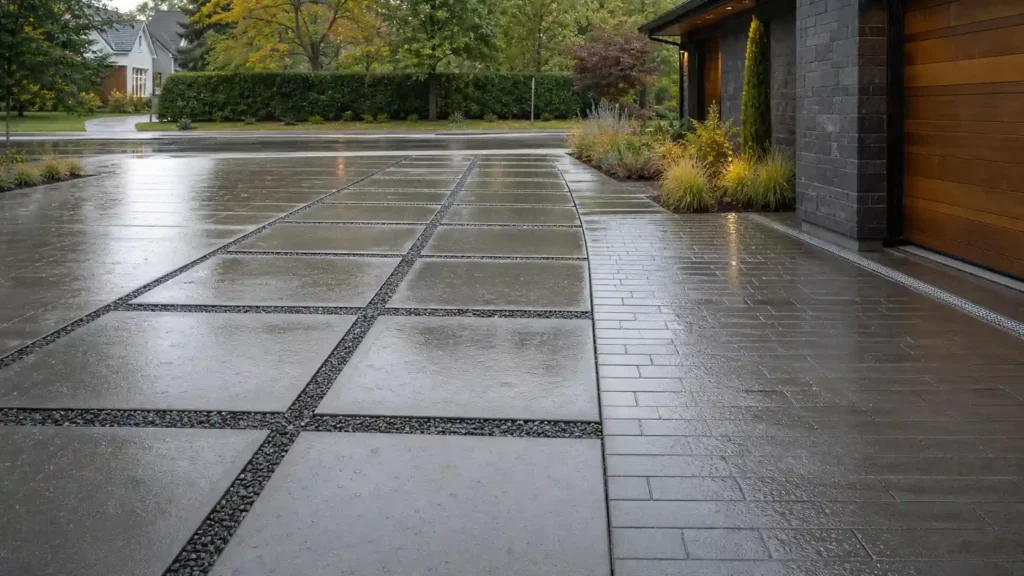
Permeable vs impermeable pavers comes down to where stormwater goes. Permeable pavers let rain soak through wide joints and a deep stone base into the soil. That process is called infiltration. Conventional pavers form a tight surface, so most runoff flows across the top to a planned drain. The two systems also differ in base, joint fill, cost, and upkeep.
Your soil, slope, budget, and drainage goals decide the better pick. This guide explains each difference in plain terms and shows you how to choose for your yard.
How Permeable and Impermeable Pavers Work
The system is the difference, not the paver. Concrete, clay, and stone pavers are solid blocks. They do not soak up much water on their own. What changes is the gap between them and the layers underneath.
A permeable system is often called permeable interlocking concrete pavement, or PICP. It uses solid concrete pavers that meet ASTM C936, the standard for solid interlocking concrete pavers. Wide joints hold small stones. Rain moves through that stone and down into the soil. For the full background, read about what permeable pavers are.
A conventional system uses tight joints and a dense base. Some water still seeps through those joints. The design just does not count on it. Most stormwater runoff leaves across the surface.
Terms vary. Impermeable, impervious, non-permeable, and traditional all mean a solid surface. Permeable, pervious, and porous mean the surface drains. That is why people also search for non impervious pavers. It means pavers that let water pass. You will also see permeable pavers, a common misspelling of permeable pavers.
What Is the Difference Between Permeable and Impermeable Pavers?
Here is the short version, side by side.
Feature | Permeable system | Impermeable system |
Water path | Through joints into the base and soil | Across the surface to edges or drains |
Base layer | Deep, open-graded No. 57 stone | Compacted dense-graded base with bedding sand |
Joint fill | Clean, small angular stone (No. 8) | Polymeric or fine sand |
Drainage plan | Overflow outlet or underdrain if soil drains slowly | Slope and surface drains |
Upfront cost | Higher | Lower |
Upkeep | Sweep, clear sediment, top up stone | Refresh joint sand, seal, pull weeds |
Best fit | Puddling, heavy storms, runoff rules | Soil that already drains, tight budgets |
Water flow
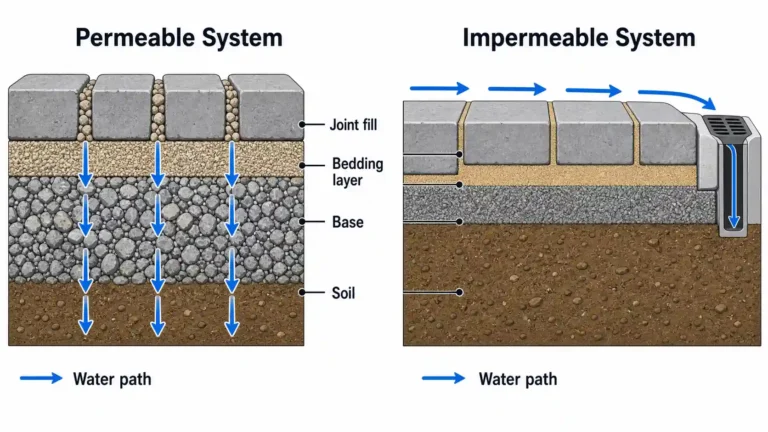
In a permeable system, rain enters the joints and moves down. The stone base holds it like a tank while the soil slowly absorbs it. This cuts runoff and refills groundwater.
A conventional surface sheds water instead. You must slope it away from the house toward a lawn or a drain. The ground under the pavers stays mostly dry.
Base layer
Permeable bases use open-graded stone with no fine sand. No. 57 stone is the common size. The gaps between the stones store water. One city design guide calls for at least 6 inches of No. 57 under a 2 inch leveling layer. A Montgomery County, Maryland driveway detail shows at least 10 inches. Fine sand would fill those gaps and block the flow.
A conventional base uses dense-graded stone packed tight, topped with bedding sand. It is built for strength, not storage. Some permeable jobs add a geotextile fabric under the stone to keep soil from mixing in. The design engineer decides if it is needed.
Joint material
Permeable joints are wider. They hold clean, angular stone, often ASTM No. 8. Water moves through the gaps between those stones.
Conventional joints are tight. Installers fill them with polymeric sand or fine sand. Polymeric sand hardens to lock the pavers and slow weeds. Never use it in a permeable system. It would seal the joints shut.
Drainage planning
A permeable system still needs an overflow plan. In a big storm, the base can fill. If the soil drains slowly, an underdrain pipe carries extra water away.
Conventional systems need slope and drains from day one. Pitch the surface away from buildings so water does not pool at the foundation.
Permeable Pavers for Driveways: What Changes?
A driveway carries more weight than a patio. That changes the build. Vehicle load calls for pavers at least 80 mm (about 3 1/8 inches) thick. The base gets deeper too. Base depth depends on soil and load, so a contractor or engineer sets it for your site.
Edges matter. A strong edge restraint keeps the pavers from spreading under tires. Concrete curbs are a common choice.
Slope matters too. Extension guidance from Auburn University advises against grades over 2% for permeable paving. Water on a steep drive can wash stone out of the joints.
Your driveway also often catches runoff from a roof or nearby concrete. In that case, expect a thicker base or a drain pipe. The subgrade sets the limit. That is the native soil under the base. Slow soil needs more stone storage or an underdrain.
Permeable vs Impermeable Pavers: Cost and Maintenance
Cost
Permeable systems cost more up front. Crews dig deeper during excavation. They haul in more clean aggregate, and it costs more than standard base. The joints and drainage design add work.
A conventional install costs less because the build is shallower and simpler. Permeable systems can save money later, though. They can reduce the need for separate drains. They can also help you meet local stormwater rules.
Maintenance
Permeable joints clog. Dirt, leaf bits, and fine soil fill the gaps over time. Sediment is the main problem. Keep soil, mulch, and sand off the surface.
Sweeping helps. Fairfax County, Virginia advises vacuum sweeping at least twice a year. Top up the joint stone when it settles or washes out.
Conventional pavers need care too. Joint sand washes out, and weeds sprout. Sealing protects color and fights stains. Refresh the sand every few years.
Which Type of Paver Is Better for Your Project?
Neither type wins every time. Match the system to your site. In the impermeable vs permeable choice, soil is your first test.
Choose permeable pavers when:
- Water puddles on your driveway, patio, or walkway.
- Heavy storms push runoff toward your home or the street.
- Your area has stormwater rules. The County of San Diego publishes a Low Impact Development Handbook with a permeable pavement design guide.
- Your soil drains well. Run a soil infiltration test first.
- The slope is gentle.
Choose conventional pavers when:
- Your yard already drains well.
- Your budget is tight.
- Site conditions block infiltration, such as heavy clay, high groundwater, or a steep grade.
- You want the simplest upkeep.
Not sure which fits? The team at SD Home Turf can look at your drainage and slope. See our concrete paver installation service for San Diego County projects.
Can Permeable Pavers Still Have Drainage Problems?
Yes. Permeable pavers improve the water path. They cannot fix every soil or build problem. Five issues cause most trouble:
- Clogged joints: Sediment fills the gaps. Water then sits on top.
- Poor grading: A wrong slope sends water to low spots.
- Slow-infiltrating soil: Clay absorbs water slowly, so the stone base stays full.
- Weak system design: A base too shallow for the soil or roof runoff overflows.
- Sediment from nearby dirt: Bare ground and garden beds wash silt onto the surface.
Ponding after rain is the warning sign. Try this simple check. Sweep the surface, then pour a five-gallon bucket of water on it. If the water soaks in, the joints work. If it pools, call a pro.
The Bottom Line
A permeable system is built to manage water. A conventional system is built to move water off the surface. The right choice in permeable vs impermeable pavers depends on your soil, drainage goals, budget, and upkeep plans. Test your soil, check local rules, and plan your slope before you buy.
FAQs
Do permeable pavers let water through the paver itself?
No. Most are solid concrete. Water moves through the joints or openings cast into the paver, then into the stone base.
Can permeable pavers handle cars?
Yes. A well-built permeable paver driveway handles daily traffic. It needs pavers at least 80 mm thick over a deeper base made for the load.
Do permeable pavers clog?
Yes, over time. Sediment fills the joints. Regular sweeping, vacuuming, and joint stone refills keep water moving.
Can you use both on one project?
Yes. Many projects pair a permeable driveway with a conventional patio. If solid areas drain onto the permeable surface, size the base for that extra runoff.