
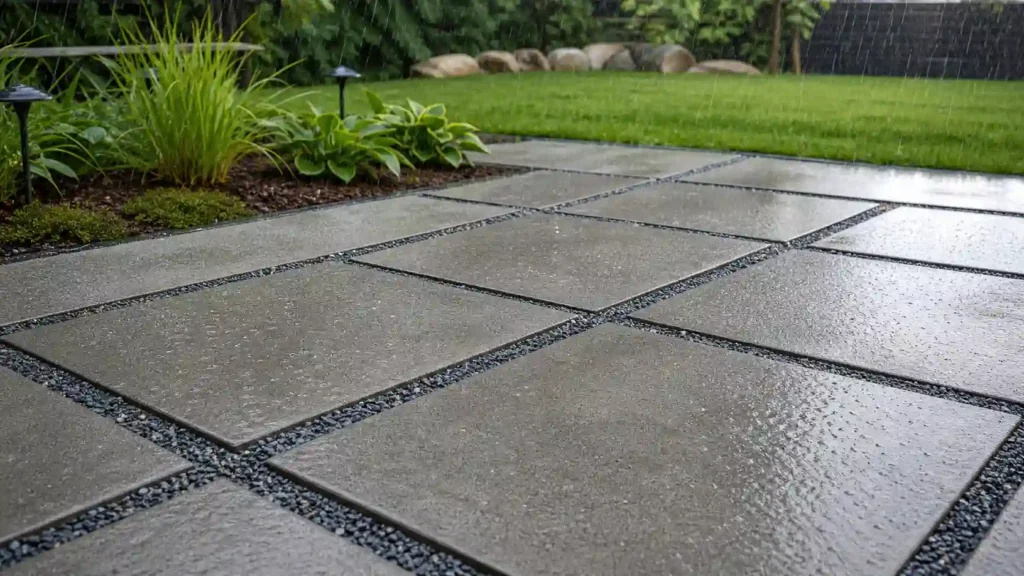
Here is the answer to what are permeable pavers: units laid with open joints filled with clean aggregate. Rain moves through those joints into a stone base below, instead of racing across the surface toward a drain. The base holds the water for a while, then lets it soak into the soil or drain out slowly. That cuts stormwater runoff and the puddles that form on hard surfaces.
Most home projects use permeable interlocking concrete pavers, also called PICP, on driveways, patios, walkways, and parking areas. This setup supports sustainable landscaping by managing rain where it falls. Below, you will see how the system works and when it fits.
What Makes a Paver Permeable?
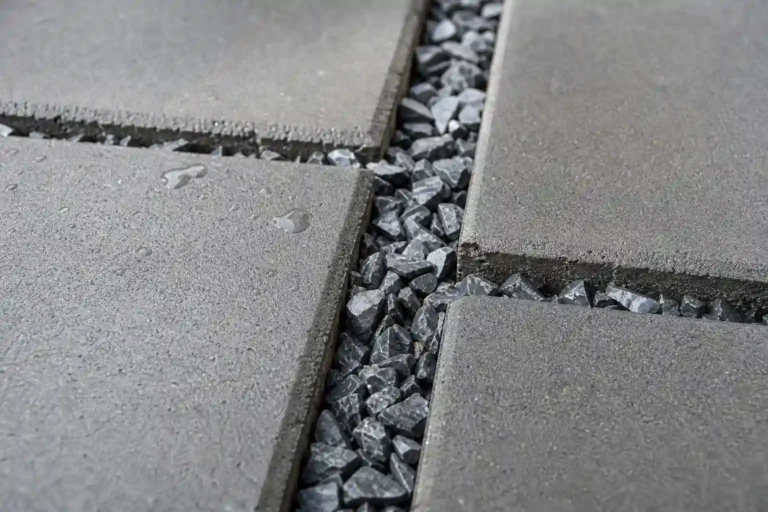
The name can mislead you, because permeable does not mean water passes through the block itself. Most permeable concrete pavers are made of dense, solid concrete, just like traditional pavers.
The difference is the gap, because spacer bars on each unit leave open joints between neighbors. Those open joints hold joint aggregate, which is clean, angular crushed stone with no fine sand. Water enters through the joint aggregate and keeps moving down.
Together, permeable interlocking concrete pavers, or PICP, form a system of concrete pavers, open joints, and stone layers. Industry guidance from CMHA and ICPI describes it the same way. Permeable pavers can also be clay brick or natural stone, but concrete units are the most common for homes.
How Do Permeable Pavers Work?

The basic process is simple.
1. Rain reaches the paver surface
Rain falls onto the paved area instead of immediately flowing across it toward a drain or lower part of the property.
2. Water enters the open joints
The spaces between the pavers give rainwater an opening into the pavement system. Built-in spacer bars can help create the required joint width.
3. Joint aggregate keeps the water moving
The joints contain clean, open aggregate with spaces between the stones. These spaces allow water to move downward.
Fine sand is not used in the same way because small particles can fill the spaces between the larger stones and reduce water movement.
4. Stone layers store water below the surface
Below the pavers is a layer of open-graded aggregate. The spaces between these stones provide temporary storage for stormwater.
This stone reservoir is one of the most important parts of the system. It gives water somewhere to go while it moves through the pavement.
5. Water enters the native soil when conditions allow
After entering the aggregate layers, water can infiltrate into the native soil. How well this works depends on the soil, groundwater conditions, slope, and system design.
A site with slow-draining soil may need a different drainage approach.
6. An underdrain can control excess water
When the ground cannot accept water quickly enough, an underdrain can collect and direct excess water away from the pavement system.
This is why a permeable pavement project needs to consider the whole site. The pavers are only one part of the system.
Open-graded aggregate means stone sorted to a narrow size range with almost no fine dust, so the gaps stay open. The thin bedding course sits right under the pavers, and larger stone forms the base reservoir and subbase below it. Those gaps between stones act like a tank that stores water during a storm.
The stored water then moves into the native soil, a process called infiltration. Slow-draining soil needs help, so designers add an underdrain, a perforated pipe that carries extra water away. An underdrain removes water that has not soaked in within a set design period, often 48 to 72 hours.
Sand in the joints or a dense, tightly packed base blocks this path. Fine material clogs the gaps, and the water has nowhere to go.
Why Are Permeable Pavers Important in Sustainable Landscaping?
Sustainable landscaping works with rain instead of against it, and that starts with stormwater management. Concrete and asphalt are impervious surfaces that shed rain fast. Permeable paving is a form of green infrastructure, which means it uses soil and stone to handle water on site.
This is where sustainable hardscaping helps: it cuts runoff, supports infiltration, protects water quality, and aids groundwater recharge. The EPA points to permeable pavement as a tool for reducing runoff by letting rain soak in.
They Cut Stormwater Runoff
On impervious surfaces, rain runs across the top and into drainage systems. A permeable system lets that rainfall enter the pavement through infiltration, so less stormwater runoff leaves the site.
Here is a simple example: one inch of rain on a 400 square foot patio produces about 250 gallons. In a permeable system, the stone base can hold part or all of it, depending on its depth.
They Support Infiltration and Groundwater Recharge
Water stored in the base can move down through the subgrade and into the native soil. In the right conditions, some of it travels on to the water table, which supports groundwater recharge.
This depends on the site, because soil type and system design decide how much water soaks in. No installation can promise recharge on every property, so a site check matters.
They Help Filter Sediment and Pollutants
As stormwater moves down, the aggregate layers can trap sediment and some pollutants. Oil drips, dirt, and debris from a driveway often get caught in the stone instead of reaching a storm drain. This filtration improves stormwater quality, but it is not a full water treatment system.
They Make Hardscape Work More Like Green Infrastructure
The goal is not to remove hardscape, because people still need driveways and patios. Impervious pavement, such as standard concrete or asphalt, only moves runoff somewhere else. Permeable systems let a hard surface manage stormwater the way green infrastructure does. You keep the usable surface and add water management on top.
Where Do Permeable Pavers Work Best?
Permeable pavers can be used in several residential and commercial hardscape areas when the site and pavement design are suitable.
Driveways
A permeable pavers driveway can provide a firm surface for vehicles while giving rainwater a path into the pavement system.
Driveways need proper structural design because they receive vehicle loads. The base, subbase, paver thickness, soil conditions, and drainage design all affect performance.
The goal is not simply to place pavers over gravel. The entire pavement section needs to work as one system.
Patios and Walkways
Permeable pavers for patio areas can help manage rain where outdoor living space meets the rest of the yard.
They can also work for walkways and sidewalks. These areas usually have lower loads than driveways, but the surface still needs proper support and drainage.
For a residential patio, the system can provide a stable paved area while allowing rainfall to enter the stone layers below.
Parking and Other Hardscape Areas
Permeable pavement can also be used for parking areas and other paved spaces.
Larger areas require careful planning because more pavement creates more stormwater to manage. Traffic loads, soil infiltration, storage depth, drainage, and sediment exposure all become important.
The same basic concept remains: water enters through the surface, moves into the aggregate structure, and is infiltrated or drained according to the site’s design.
How Is a Permeable System Different From Traditional Pavers?
Both look similar from above, but they handle water in three different ways.
Feature | Traditional pavers | Permeable pavers |
Joints | Narrow, filled with sand | Open joints filled with joint aggregate |
Base | Dense, compacted base | Open-graded base with storage space |
Stormwater runoff | Most rain runs off the surface | Rain enters and is stored or infiltrated |
That is why you cannot just lay permeable pavers over a standard base.
Are Permeable Pavers Right for Your Site?
A permeable system works when the site can accept the water. Six factors decide this:
- Soil infiltration: This is how fast the soil takes in water. Clay soil drains slowly, so it often needs an underdrain.
- Slope: Steep sites need extra design so water does not travel along the base instead of soaking in.
- Water table: A high water table leaves less room for stored water.
- Traffic: Cars and heavy trucks need a stronger base than foot traffic.
- Drainage needs: Overflow needs a planned exit during very heavy rain.
- Sediment exposure: Dirt, mulch, and leaves from nearby soil can cause clogging over time.
A site assessment checks all six before any digging starts. For yours, contact SD Home Turf. Hardscaping services in San Diego County from our team start with soil, slope, and drainage checks.
What Are the Main Permeable Pavers Benefits?
The main permeable pavers benefits come from combining a usable paved surface with stormwater management.
They can:
- Reduce surface runoff from paved areas
- Provide temporary stormwater storage below the surface
- Support on-site infiltration when soil conditions allow
- Help filter sediment and some pollutants
- Reduce standing water on suitable paved areas
- Work for driveways, patios, walkways, and parking areas
- Provide a durable hardscape surface
Their performance still depends on proper design, suitable site conditions, and keeping the open joints from becoming clogged.
What to Remember About Permeable Pavers
Permeable pavers are not simply pavers with holes. They are part of a pavement system that moves stormwater through open joints and aggregate layers below the surface.
Keep that in mind the next time someone asks what are permeable pavers: they are a system, not a block. When the soil allows infiltration and the design is sound, they cut stormwater runoff and make hardscape fit sustainable landscaping.
Planning a patio or driveway? Review our Concrete Paver Installation in San Diego County page, or call SD Home Turf to talk through your site.