
Here is the short answer on why turf infill is important. It adds ballast, holds turf fibers upright, and protects the turf backing from foot traffic and sun. That gives artificial grass the stability to stay flat and keep its finished look. Without it, the turf mats down, shifts, and wears out faster. The right material also adds cushion and helps water drain.
Artificial turf infill sits between the turf fibers and works as one part of the full turf system. Below, you will see what each job does, what goes wrong without it, and when to check your lawn.
What Does Turf Infill Actually Do?
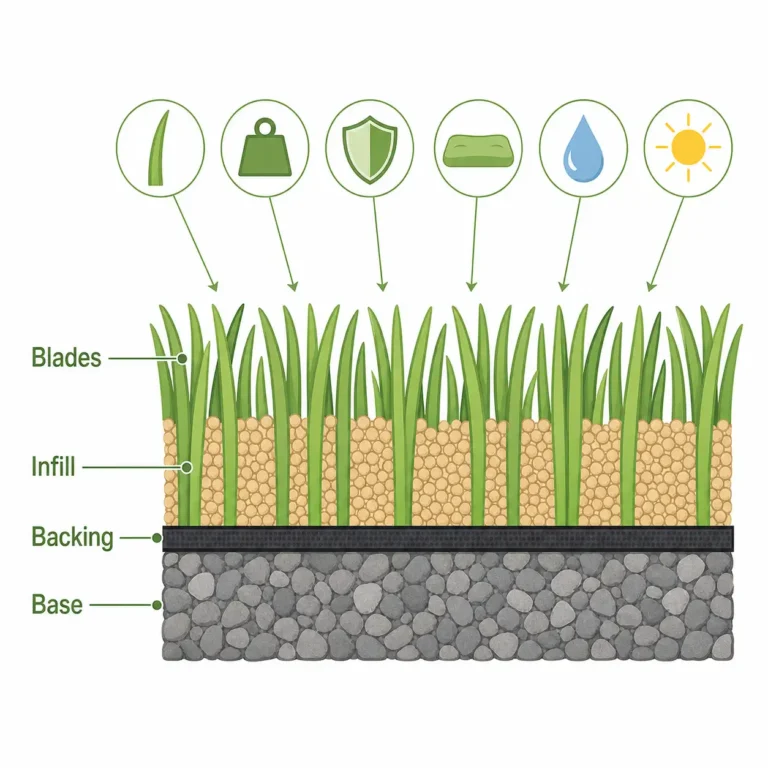
First, a quick definition for anyone asking what is infill for turf. It is a layer of fine material between the blades, sometimes sold as fake grass infill. Sand, coated sand, and organic fibers like cork or coconut are common choices. It does six jobs, and each one protects how your lawn looks and lasts.
Keeps Turf Blades Upright
Infill packs around the lower part of the turf fibers. That gives the synthetic grass blades steady blade support from the bottom up. When you step on the lawn, the blades bend, then spring back. Heavy foot traffic is where this support matters most to your lawn. Less matting means your lawn keeps a fuller, more natural look for longer.
Weighs Down and Stabilizes the Turf
Artificial turf infill is heavy, so it works as ballast across the whole lawn. That spread-out weight adds stability and helps resist turf movement. Wind, kids at play, and daily use can try to push or lift the edges. Thermal expansion is another reason, since turf grows a little in heat and shrinks in cool weather. Without enough weight, wrinkling and lifting can start in spots.
Protects the Turf Backing
The turf backing holds every blade in place, so it needs protection. Infill forms a cover around the lower fibers, so foot traffic hits the infill and not the backing. That cuts wear from repeated use and slows damage to the lower fibers. Infill also gives some shielding from UV radiation, which can cause fiber degradation over the years. A well protected backing helps the whole lawn last longer.
Adds Cushioning and Surface Support
Infill also adds cushioning that kids, pets, and adults can feel when they walk or play. The layer softens each impact and shapes the overall surface feel. It also keeps impact from landing straight on the turf backing. The amount of softness depends on the infill material and how much you use.
Supports Drainage
Water has to pass through the turf and into the ground below. An evenly spread infill can support that water flow by keeping the surface open. The turf backing, the sub-base, and the full drainage plan still do most of the work. Infill cannot fix a poor slope or a blocked base on its own. Clean, loose infill helps keep water moving, while packed or dirty infill can slow it down and lead to pooling.
Helps Manage Surface Heat
All artificial grass gets hotter than natural grass in direct sun. Penn State researchers report that sports turf surfaces can run far hotter than natural grass. Infill is only one factor. A University of Tennessee study found that the fibers affect surface heat more than other system parts. Organic infills like cork or coconut can add some cooling as the water in them dries. Some coated sands are sold as cooling infill, but expect a small gain, not a cool surface.
What Happens When Turf Has Too Little Infill?
Problems with low infill rarely show up on day one, and they build with use. That is also why turf infill is important from the day the lawn goes in. Each problem below links back to a job the infill was meant to do.
Blades Flatten and Stay Down
Without blade support, blade matting starts in the paths people use most. Picture a side yard path that gets daily foot traffic. Flattening shows up there first, with a shiny, worn strip. Fiber recovery weakens over time, and the blades stop springing back after each step.
Turf Can Shift or Wrinkle More Easily
Low infill means less ballast, so turf stability drops across the lawn. You may see wrinkling, lifting at the edges, or slow movement after hot days or heavy use. Raised spots can catch a toe, so they are also a trip risk.
Fibers and Backing See More Wear
Less infill leaves more friction between shoes, paws, and the lower fibers. Over time the turf fibers fray, and the backing takes harder hits. That wear cuts into durability and can shorten how long the lawn looks good.
The Surface Can Feel Different
Less infill also changes surface performance, and you will notice it underfoot. The lawn can feel thin, harder, or less steady, since the cushioning layer is thinner.
Does Every Artificial Turf Installation Need Infill?
Most lawn turf is built to use infill, but the material and amount depend on the product. Some specialty turf, like indoor fitness turf, is made to run without infill, so the manufacturer specifications come first. On most jobs, infill is the last step of artificial turf installation. Crews spread it, brush it into the fibers, and water it to settle.
A residential turf lawn, pet turf, playground turf, and a putting green each place different demands on the turf system. Pet areas need odor control, play areas need cushions, and putting greens use fine sand. Industry groups like the Synthetic Turf Council are a good place to learn how turf systems are built.
Does Artificial Turf Need Infill Replacement Over Time?
Sometimes it does, but there is no single schedule that fits every lawn. Infill can move out of the turf, and this is called infill migration. Heavy foot traffic pushes granules around and slowly moves them out of busy areas. Cleaning and other regular use can also change infill levels in some spots.
A regular inspection works better than guessing by the calendar. Blade flattening or visibly low spots can signal that the infill needs attention. Infill replenishment means adding more material to those thin areas. Follow the original system’s requirements for the type and amount. Add this check to your regular artificial turf maintenance routine.
Choosing the Right Infill Matters
The right artificial grass infill depends on how you use the lawn. Think about intended use, traffic, pets, surface feel, odor-control needs, and the turf specifications. Infill for synthetic grass comes in several materials, and each has a clear job.
Silica sand is a common, low-cost pick for yards without pets or kids. Coated sand adds antimicrobial protection and is less dusty than raw sand. Zeolite infill traps ammonia from pet urine and lets rain flush it out. Antimicrobial infill helps control odor, which matters most in a pet turf installation. Crumb rubber is an example of a material made for one use, mainly sports fields.
Each application has a best fit, and your turf’s spec sheet should guide the final pick. Ask your installer before you buy infill for turf, since the wrong pick can cause the problems above. Knowing why turf infill is important helps you ask better questions before a project starts. The team at SD Home Turf picks infill to match the turf, the yard, and how the family uses it.
FAQ
Is infill the same as the base under the turf?
No, infill and the base are two different parts of the turf system. Infill sits between the blades, while the sub-base sits below the turf and handles support and drainage.
Can you add infill to turf that is already installed?
Yes, you can add infill to turf that is already down. Spread it evenly, brush it into the fibers, and water the area lightly to settle it. Ask an installer first, since the right type and amount depend on your turf.
Why do I find infill in my shoes?
Loose granules ride out on shoes, paws, and clothes, and some movement is normal. A steady stream can mean the infill sits too loose on top, so brushing it in can help.