

Is artificial grass too hot for dogs when the summer sun hits it full force? Yes, it can be, and the risk is real in strong direct sunlight. Turf can heat far above the air temperature in direct sun. A surface too hot for your hand can burn your dog’s paw pads.
Not all turf gets equally hot, and you can manage the risk. Shade, cooler outdoor times, water, surface checks, and the right turf keep your dog safe. This guide shows you how to check your lawn and protect your pup.
Yes, Artificial Turf Can Burn Dog Paws
Yes, artificial turf can become much hotter than natural grass. Direct sunlight is the biggest factor, and shaded turf stays cooler than turf in open sun. When the surface gets too hot, dog paw pads can blister or peel. Those injuries are called paw burns, and they can make walking painful. Paw burn risk rises once a surface passes about 125°F (51°C). Surface temperature changes with the weather, the time of day, and the product.
How Hot Does Artificial Turf Get in the Sun?
Air temperature and surface temperature are not the same number. Reported readings show artificial turf can reach 130°F to 160°F when the air is near 90°F. Natural grass stays much closer to the air temperature than turf does. Direct sunlight carries infrared radiation, so open, sunny lawns heat fastest.
Field tests show a wide range, depending on sun, time, and product. The Natura field test measured traditional artificial turf at 118°F on an overcast day with a 100°F forecast. The company noted that clear skies would likely push that number higher. US Turf reports potential readings far above that under other conditions.
Artificial grass temperature for dogs depends on sun, shade, and time of day, so there is no single number. So, is artificial grass too hot for dogs all summer long? No, but it often gets there on clear, sunny afternoons.
Why Artificial Turf Heats Up
Most turf is made of synthetic fibers, plastic, and sometimes rubber. These materials absorb solar radiation, including infrared radiation, and keep it as heat. As ProGreen explains, natural grass cools itself through transpiration, which releases water from its leaves. Turf has no living leaves, so it cannot cool itself that way.
Color and infill change the heat too. Dark fibers and rubber infill tend to hold heat longer. Our guide on why turf infill is important explains how infill works. Shade and airflow lower the heat, since they block sunlight and carry warm air away.
The Hand Test: A Quick Surface Check
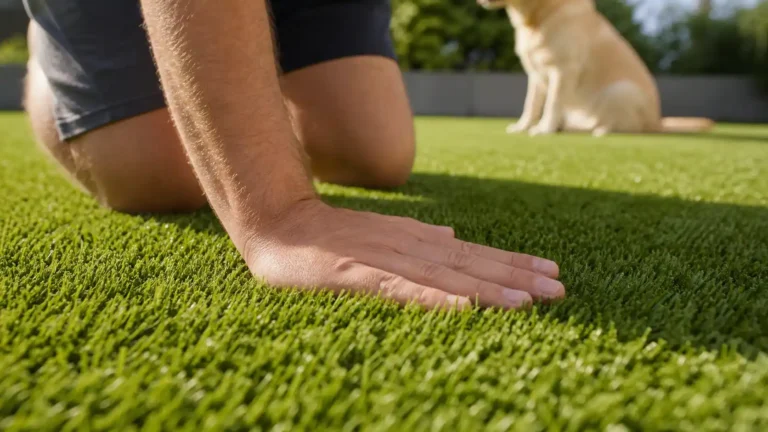
The hand test is the easiest way to check turf before your dog steps out. Press the back of your hand flat on the turf for 5 to 7 seconds. If it feels uncomfortably hot, keep your dog’s paws off it.
Test the sunny spots your dog really uses, such as the potty area and the path to it. The Kennel Club suggests seven seconds on hot ground, so use the longer end of the range.
Test again at mid-morning, noon, and late afternoon on a sunny day. That simple routine shows you when your own lawn turns risky. The hand test is a safety check, not a precise temperature reading.
Signs Your Dog Is Too Hot
Watch for two kinds of warning signs: paw problems and heat distress. Dog paw pads take the damage first, so look at them after outdoor play.
Paw problems
- Limping
- Licking the paws
- Reluctance to walk on the turf
- Lifting paws off the ground
- Visible irritation, redness, or blisters
Heat distress
- Excessive panting
- Weakness or lethargy
- Seeking shade
- Excessive drooling
- Confusion or odd behavior
Heat stress often starts with panting and a search for shade. Move your dog to a cool, shaded spot right away. Cool running water can ease sore paws, and your vet should check any burns. Confusion, heavy drooling, or blue or purple gums can signal heatstroke, which needs urgent vet care.
How to Keep Your Dog Safe on Hot Turf
Add Shade
Shade is the most reliable fix, because it blocks direct sunlight before the turf heats up. Trees, shade sails, umbrellas, and covered areas all work well. Put shade where your dog plays and rests, not just over the patio.
Use Water Carefully
A hose rinse can cool the surface for a short time. In a Brigham Young University test on a sports field, watering dropped turf from 174°F to 85°F. The surface rebounded to 120°F in five minutes and 164°F in twenty. So rinse first, then retest with your hand before your dog goes out.
Pick the Right Time
Plan outdoor breaks for early morning and evening, and avoid the peak direct sun. Keep using the hand test at those times too, since heat varies by yard.
Give Your Dog Options
Your dog needs shade, fresh water, and a cooler surface to step onto. A patch of real grass, a shaded potty zone, or a cooling mat all help.
Choosing Turf That Runs Cooler
Many makers add heat-reducing features to pet turf, and these features can lower surface heat. Brands like SYNLawn and ProGreen describe reflective yarn and cooling designs for pet turf.
Pet friendly artificial grass is made to handle pets, but that label does not mean the surface stays cool. Be wary of any claim of turf that doesn’t get hot for dogs, because full sun heats every product. Penn State turf researchers found no magic fix that cools synthetic turf by a large amount.
Cooling infill can help too, but brand claims vary, so test your own lawn. The best cooling pet turf for hot climates pairs lighter color with reflective yarn and cooling infill. Pet-friendly artificial turf safety includes heat, so ask any installer how the turf performs in direct sun.
The right product makes artificial grass good for dogs, but site conditions still matter. If you are comparing products for a dog-friendly yard, see our guide on how to choose the right artificial grass. Our pet turf services in San Diego County can match turf options to your yard’s sun and shade.
The Bottom Line
Yes, artificial grass can suit dogs, but it is not always cool in hot weather. So, is artificial grass too hot for dogs? It can be, and the fix is simple.
Use this simple rule: check the surface, give shade and water, skip peak heat, and pick turf made for pets. Pet-safe turf works best when you watch the surface temperature on sunny days.
If you are planning a dog-friendly lawn in San Diego County, talk to the SD Home Turf team first.
FAQs
Is artificial turf hotter than concrete or asphalt?
It can be as hot or hotter, depending on color and sun. A state health fact sheet reports a 2002 BYU field test. Synthetic turf averaged 117°F, asphalt 110°F, and natural turf 78°F. Treat every sunny surface the same: test it before your dog walks on it.
Do dog boots help on hot turf?
They can protect paw pads if your dog accepts them. Introduce boots slowly with treats, and still avoid very hot surfaces. Boots are a backup, not a replacement for shade or the hand test.
Are puppies, seniors, and small dogs at higher risk?
US Turf lists puppies, seniors, and small breeds as higher risk for heat injury. Test the turf more often and keep outdoor time short for these dogs.