Should I seal landscape pavers? Not always. Sealing does not add strength to your patio. It protects the surface from stains, locks in joint sand, and deepens color. Porous concrete and natural stone pavers gain the most. Porcelain pavers usually do not need it, and no sealer fixes poor installation or drainage.
Skip the paver sealer if your pavers are brand new, sit by a pool, or you dislike repeat maintenance. Below are the cases where sealing pays off and the cases where it does not.
When Should You Seal Landscape Pavers?
Seal your pavers when the surface faces stains, strong sun, or messy joints.
Sealing concrete pavers helps the most. Concrete has porosity, which means tiny holes that soak up liquids. Oil and grease sink into those holes and stay. A sealer closes them, so spills sit on top and wipe away.
Natural stone can gain from a sealer too, but only where the stone maker recommends one. Some stones are dense and need little help. Other types drink up water. Check the care sheet before you buy anything.
These situations make sealing worth the effort:
- Grills, outdoor kitchens, and dining spots: grease, wine, and food drops can leave permanent marks on bare concrete.
- High-use areas: busy patios and walkways collect dirt. Sealed pavers rinse clean with a hose and a broom, so cleaning takes less time.
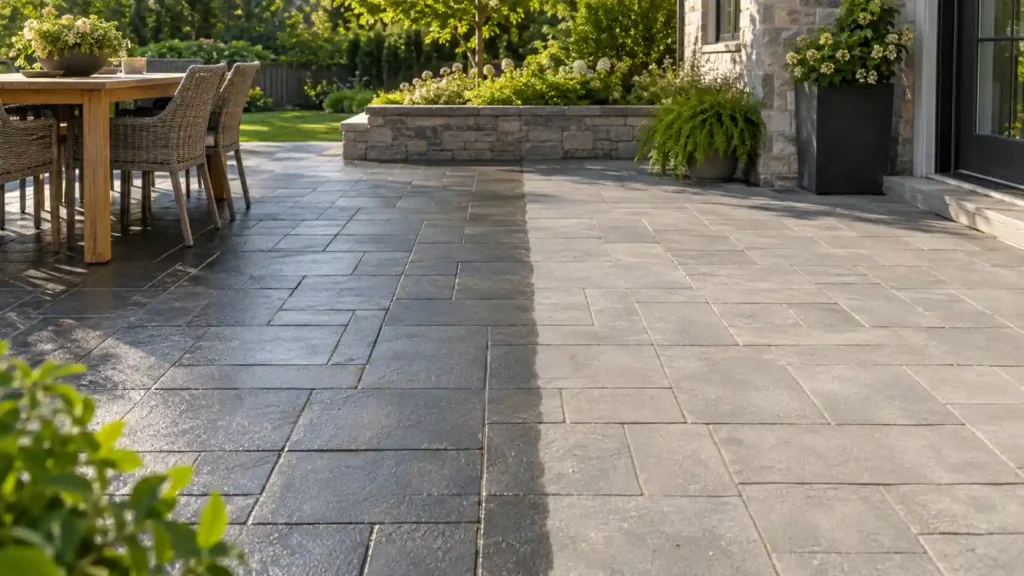
- Faded or dull color: strong sun and UV rays bleach pavers over time. A color-enhancing sealer deepens the tone. A wet look or high-gloss finish adds shine.
- Weeds and ants in the joints: a joint-stabilizing sealer glues the sand in the gaps. That gives ants, weeds, and erosion less room to start.
- Shade and tree cover: tree sap, fruit, and leaves cause organic stains. Damp shade also feeds mold and mildew.
Sealing trades a little upkeep later for less scrubbing now. That is the maintenance deal you are making.
When Should You Skip Sealing?
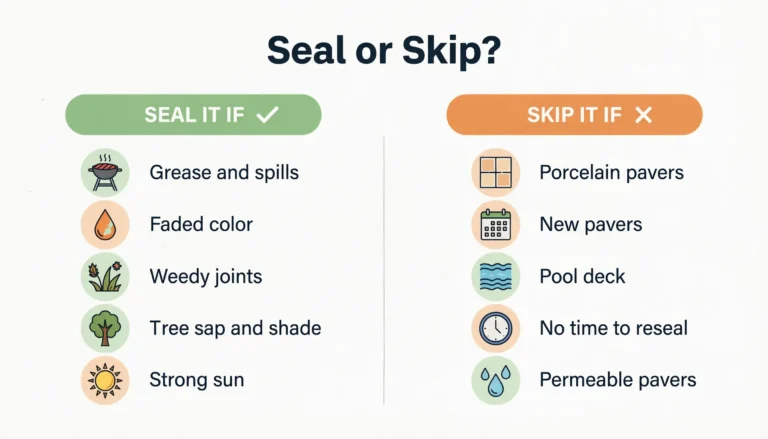
Should I seal landscape pavers that I barely use? Often, no. Skip the sealer in these cases:
- Porcelain pavers: they absorb almost no water, so a sealer has little to block.
- Low-use or covered areas: few spills and little traffic mean little to protect.
- You like the natural look: bare pavers keep a natural, matte finish. A sealer can darken the color or add shine.
- You will not reseal: sealer wears off. You must strip and reseal every 2 to 5 years, and sooner in harsh sun. If you will not keep up, skip it.
- Brand new pavers: they need time to cure first. The new pavers section below explains how long.
- A poor match between sealer and material: the wrong product can turn cloudy, peel, or trap moisture.
- Pool decks and other wet areas: a film-forming sealer, such as acrylic, leaves a shiny coat on top. That coat can turn slick when wet. Penetrating sealers soak in and leave a natural finish. Near water, pick a non-slip product and test it first.
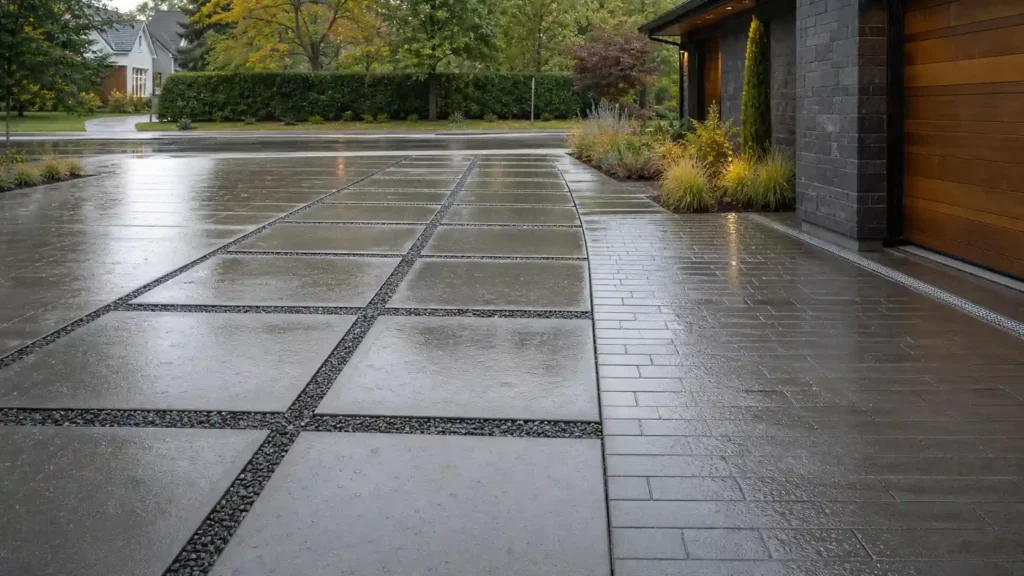
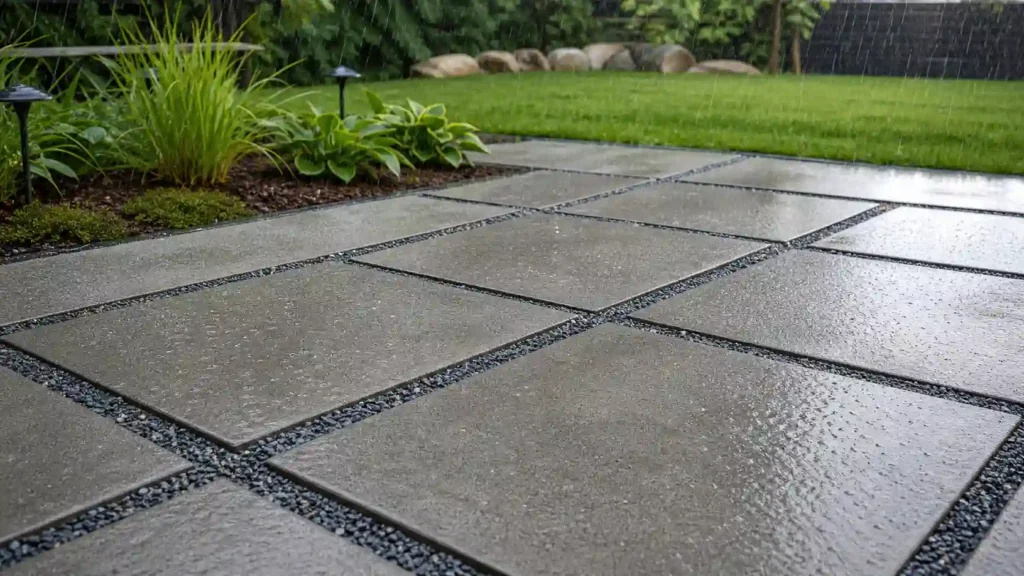
- Permeable systems: permeable pavers drain water through open joints, and a sealer can block that drainage. Read up on permeable paver systems and follow the maker’s maintenance guidance, like this ICPI permeable paver maintenance guide. Use only a compatible treatment.
Still stuck on whether to seal pavers or not? The sealing pavers pros and cons below sum up the trade.
What Are the Pros and Cons of Sealing Pavers?
Benefits:
- Stain resistance against oil, grease, and drinks
- Easier cleaning
- Richer color
- Protection from UV fading and weather wear
- Joint sand that stays put, when you use a stabilizing sealer
- Less dirt and spills soaking into the surface
Drawbacks:
- Added maintenance
- Resealing every few years
- Time to clean, apply, and wait
- A wrong product can change the look
- Some gloss finishes get slippery when wet
- A sealer cannot repair cracks, sinking, or poor drainage
So, should I seal landscape pavers? If the benefits match how you use the space, yes. If the drawbacks bother you more, skip it.
What Should You Know Before Sealing New Pavers?

New pavers need time before they get any sealer. Follow this order:
- Let the pavers cure. Follow the manufacturer’s directions. Many makers of new concrete pavers suggest 60 to 90 days, and some products need only 30 to 60.
- Wait for efflorescence to finish. This white, powdery salt rises to the surface as new concrete cures. Sealing over it traps moisture and salt and leaves a white haze. Brush or wash it off first.
- Clean the surface. Sweep away dust, dirt, and any stains.
- Make sure the pavers are fully dry. Damp pavers hold moisture under the coat.
- Check the weather. Pick a mild, dry day with no rain for 24 to 48 hours after you finish.
- Confirm the sealer is compatible. It must fit your paver type, whether concrete, brick, or stone. The label tells you.
How Do You Seal Landscape Pavers?
Here is how to seal landscape pavers in eight steps. It keeps the diy paver sealing simple on a small patio.
- Inspect the pavers. Look for cracks, loose or sunken units, weeds, and stains.
- Clean away stains and debris. Pressure wash or scrub, and use a degreaser on oil and grease.
- Fix damaged areas. Replace broken pavers and refill low joint sand.
- Let the surface dry completely.
- Test the sealer on a small hidden area. Check the color and the shine.
- Apply the compatible sealer evenly with a roller or sprayer. Follow the manufacturer instructions, cover nearby plants, and skip windy days.
- Avoid pooling. Puddles of sealer dry cloudy, so spread them out.
- Keep people and water off until the curing time ends.
Large driveways take more time and gear. A pro may suit those better.
How Long Does Paver Sealer Take to Dry?
Dry to the touch is not the same as fully cured. A coat can feel dry in a few hours, but it still needs time to harden.
Many products need about 24 to 48 hours before normal use. Foot traffic should wait for that window. Cars often need longer, around three days. Cool, damp, or shady weather slows drying.
Avoid water exposure until the coat cures. Rain, sprinklers, and hoses can ruin a fresh coat. The product label controls. Follow it for exact times.
How Often Do Landscape Pavers Need to Be Resealed?
Sealing landscape pavers is not a one-time job. Most sealers need renewal every 2 to 5 years. Four things move you along that range:
- Sun and UV exposure
- Foot and car traffic
- Rain and other weather
- Sealer type
A shaded patio with light use lasts longer than a sunny driveway.
Try a simple water test. Sprinkle water on the pavers. If it beads, the coat still works. If it soaks in, plan to reseal. Follow the product’s maintenance instructions for the best timing.
FAQs
Do all landscape pavers need to be sealed?
No. Sealing is optional for every paver type. It helps porous pavers most. Dense or lightly used pavers often do fine bare.
Is it better to seal concrete pavers?
It depends on use. A sealed concrete patio resists stains and fades more slowly. A rarely used one may not need it.
Can I seal pavers myself?
Yes. Small patios and walkways work well. You need clean pavers, a dry day, and a roller or sprayer. Not sure it is a DIY job? Ask the team at SD Home Turf.
Does sealing pavers make them slippery?
It can. Glossy film-forming sealers get slick when wet. Choose a matte or non-slip product near pools, and test a small area first.
Can you seal pavers right after installation?
No. Wait out the cure window so efflorescence can clear. Planning a new patio? See our concrete pavers installation in San Diego County.
Does sealing pavers prevent weeds?
It helps, but it does not stop weeds fully. A joint-stabilizing sealer locks sand in place, which limits weed seeds and ants. Weeds can still root in dirt that builds up on top.
Can you seal permeable pavers?
Only with a compatible product. A sealer that blocks the joints stops drainage. Check the maker’s guidance before you apply anything.