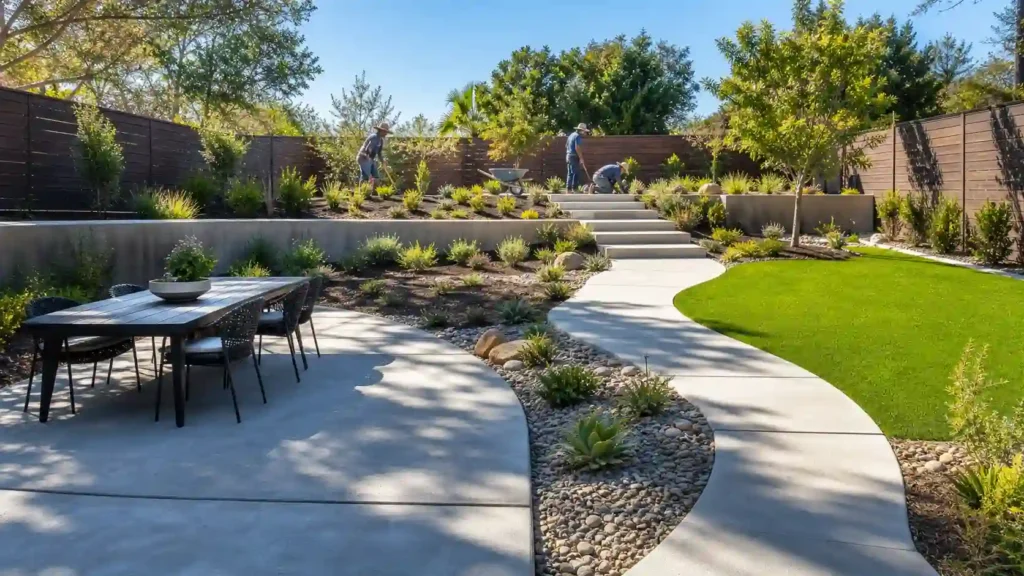
Why do so many landscaping services also do concrete work? Because most outdoor projects combine hard surfaces and soft ones in one design. Patios, walkways, steps, and curbing need concrete, while plants, turf, and rock fill the spaces around them. The same crews already handle the layout, digging, and grading that both parts of the job need.
Doing both also lets one crew control the schedule instead of waiting on an outside team. For homeowners, that means one contractor for the whole project, from earthwork to final plants. Below, we explain each reason and what to check before you hire.
Landscaping Includes More Than Plants and Lawns
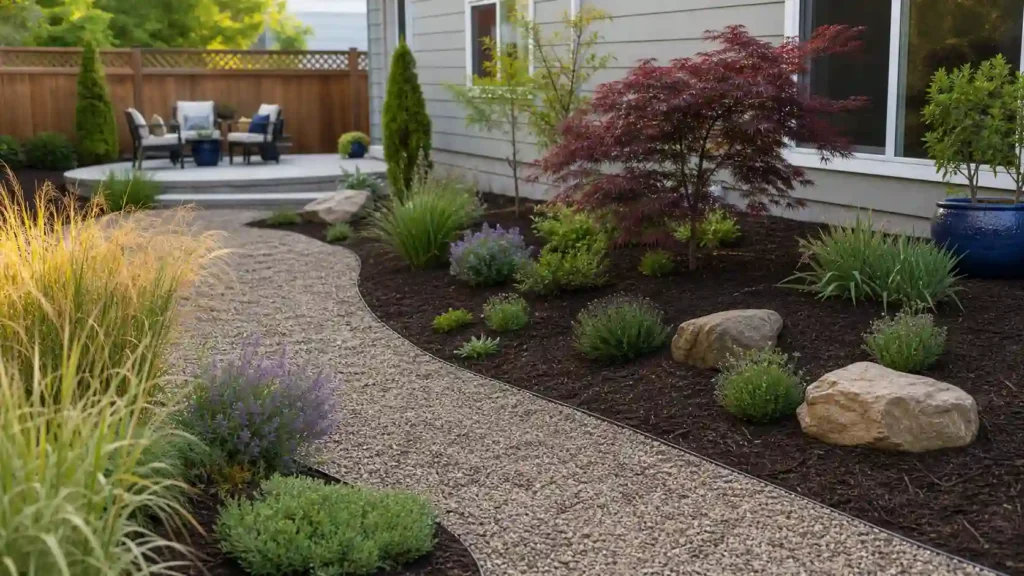
Landscaping covers more than plants and lawns, because many yards also include built features like paths, patios, and borders. Those built features fall under hardscaping, and concrete is one of the materials used to make them.
A landscape contractor who offers design and build services often handles both sides of the yard. That side of the trade is called landscape construction, and it goes well beyond mowing and planting.
This is why residential concrete work shows up on so many landscaping service lists. Most concrete work at a home is flat, such as slabs, paths, and steps, rather than building foundations.
Concrete and Landscaping Share the Same Site Work
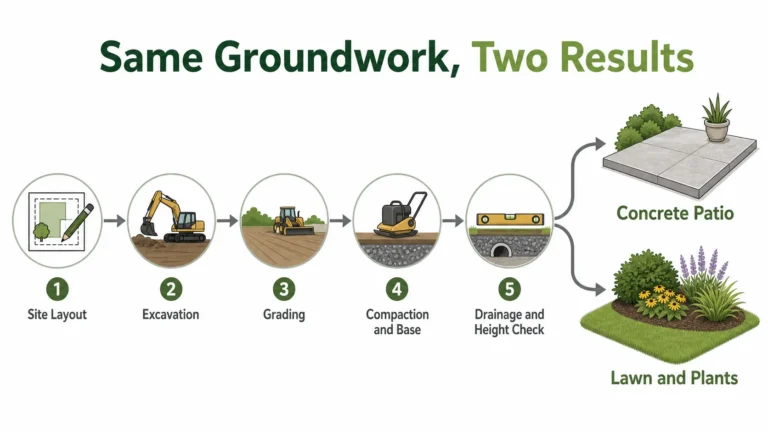
A concrete slab and a lawn both start with the ground. Before anything goes in, the crew marks the site layout and decides where each feature sits.
Next comes excavation and soil preparation, where the crew digs out grass and loose soil to the needed depth. Grading follows, which shapes the ground so water moves away from the house.
Landscapers do these steps on nearly every project, so the skills carry over to concrete. The pour itself is a specialized step, but the site work around it is already familiar.
Base preparation matters most, because compaction gives the concrete a firm layer to sit on. A slab on loose soil can settle and crack over time. Drainage and elevation need care too, since a slab must sit at the right height and shed water.
Many of the same tools help as well, like skid steers and plate compactors.
Concrete Is Often Part of a Larger Landscaping Project
Most yards that need concrete also need something built or planted around it. Four common examples show how the pieces connect.
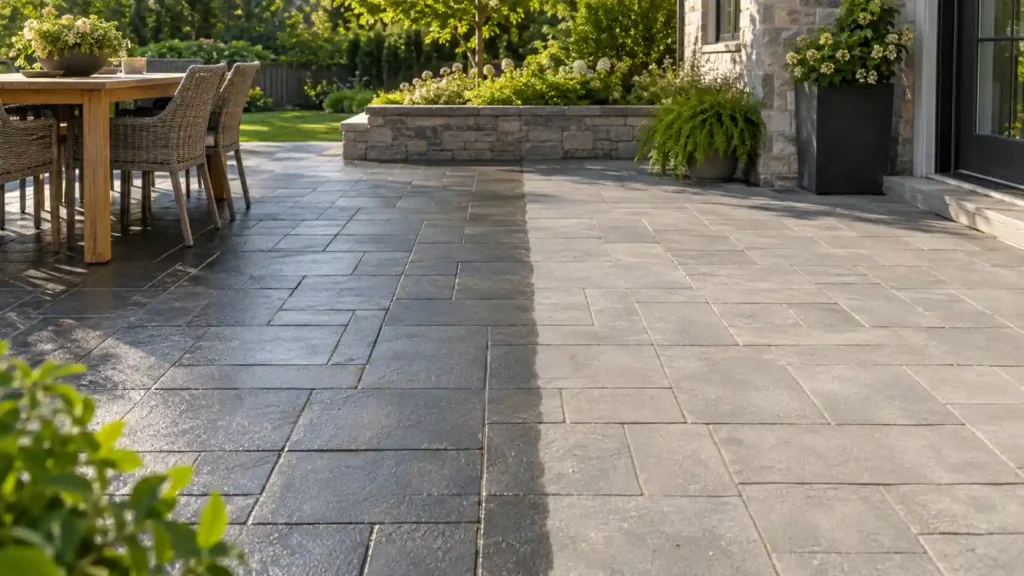
- Concrete patio: It gives you a firm spot for chairs and tables. Artificial turf or decorative rock can then frame its edges.
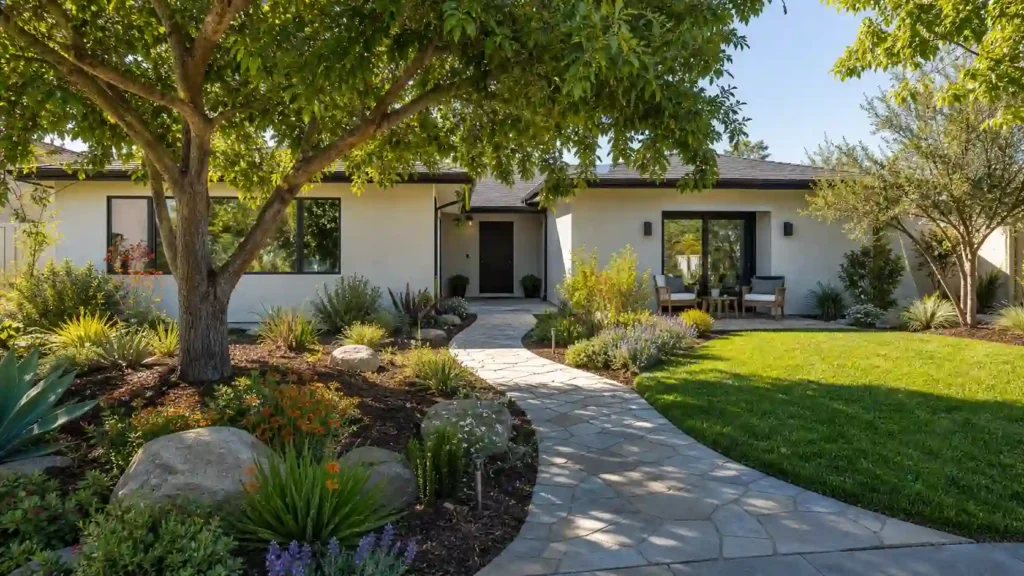
- Walkway: It needs its own layout and base, but it must also connect with the rest of the yard. Planting beds along both sides can finish the look and soften the hard edges.
- Steps: Steps handle changes in elevation, and poured steps give you safe footing on a sloped yard.
- Curbing: It works as a landscape border between grass, paths, and planting beds. Poured curbing keeps grass from creeping into flower beds and stops mulch or gravel from spilling onto paths.
Why Homeowners May Prefer One Landscaping Contractor for Both
Picture an outdoor renovation with a new patio, a walkway, and a fresh lawn. With two separate companies, you manage two schedules and two sets of instructions.
When one landscape contractor runs the whole job, project coordination gets simpler. You deal with one point of contact, and the concrete crew and planting crew follow one plan.
Scheduling is easier because grading, pouring, and planting happen in the right order. There are fewer conflicts between crews, and finished surfaces match the yard around them.
It helps the company too, since in-house crews do not wait on an outside masonry team. Some companies hire a subcontractor for the pour and still manage the whole schedule, which works well.
One contractor is not always better, but for projects mixing concrete and planting, it cuts down on handoffs.
Does Every Landscaping Company Do Concrete Work?
No, not every landscaping company does concrete work, because the term covers very different businesses. Some landscapers focus on lawn care, planting, and landscape maintenance.
Others offer landscape construction, including hardscaping, patios, walkways, and grading work. Those are the companies that add concrete, using their own crew or a concrete contractor.
Each business picks its own specialization based on its crew, tools, and training. A company that only mows and trims is unlikely to pour a patio.
What Should You Check When Hiring Landscapers That Do Concrete Work?
A few direct questions show whether a company can handle your project.
- What concrete work do they actually perform, and is the project scope written down?
- Does their own crew do the pour, or does a subcontractor?
- Do they have experience with your project type? Ask for photos of similar residential concrete work.
- How will they plan grading and drainage so the concrete fits the yard around it?
- Is licensing in place? In California, check the contractor’s license and its classification on the CSLB site.
Clear answers to these five questions show you who is responsible for each step.
If you are planning outdoor work, SD Home Turf can walk your yard with you. You can also explore our hardscaping services in San Diego County.
Landscaping and Concrete Work FAQs
Is concrete work a different trade from landscaping?
Yes and no. Concrete finishing is its own skill, and California lists concrete as a separate license classification. The two trades overlap on site work, so many companies cover both with trained crews or licensed partners.
What type of concrete work do landscaping companies usually offer?
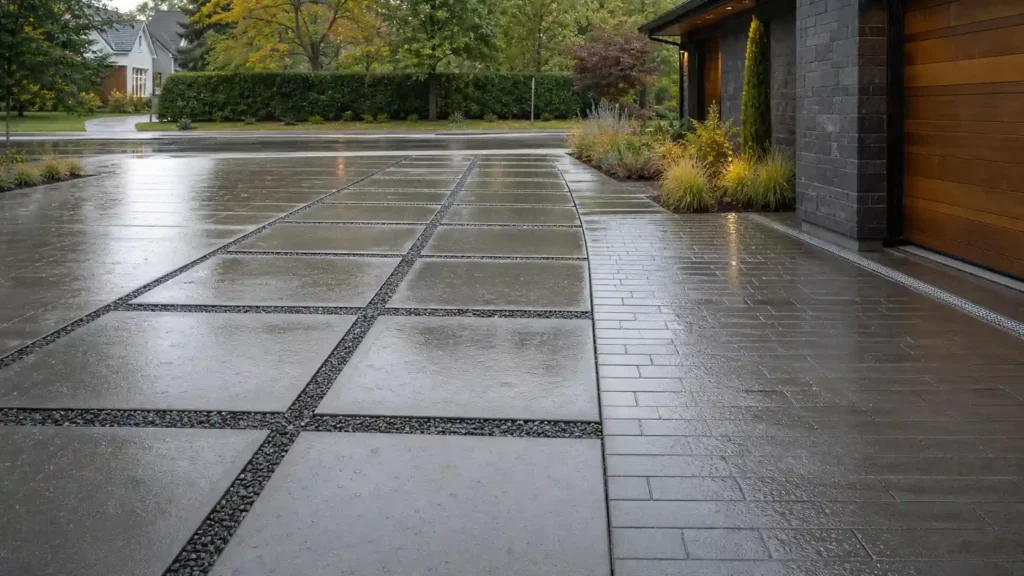
Most offer flat surfaces for homes, such as patios, walkways, steps, curbing, and driveways. Some also pour footings for garden walls or fence posts when a project needs them. Large structural jobs usually go to a dedicated concrete contractor with the right training.
Is concrete considered landscaping or hardscaping?
Concrete is a hardscape material, while plants, lawns, and turf make up the softscape. Together they form a complete outdoor design, so concrete counts as part of the full yard plan.