...

SD Home Turf

4.8
★ ★ ★ ★ ★
(90 Ratings & Reviews)

Residential Backyard Artificial Turf

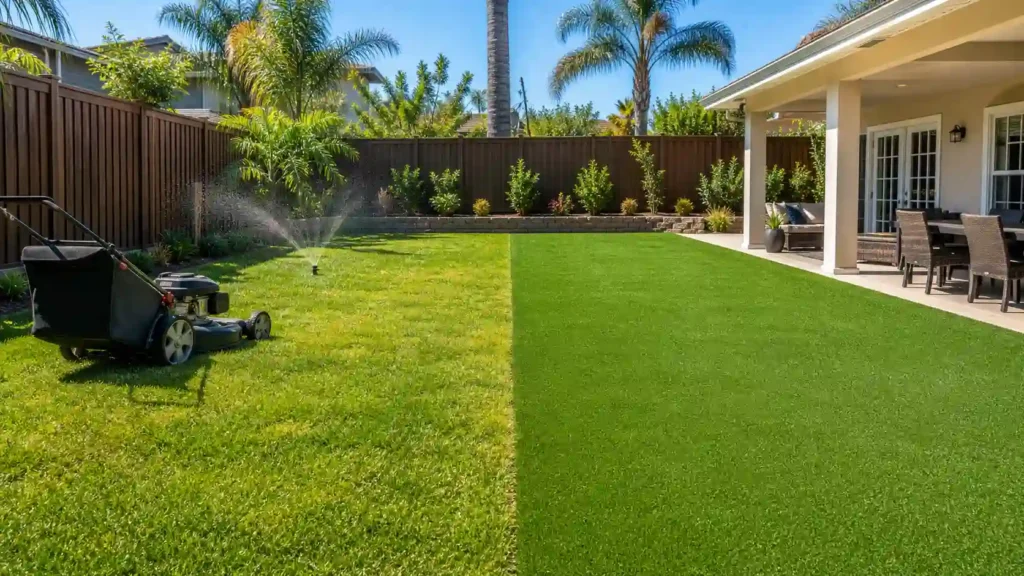
Natural grass vs artificial turf in a backyard, with a lawn mower and sprinkler on the left and a smooth green turf lawn on the right
Residential Backyard Artificial Turf

Natural Grass vs Artificial Turf: Which Is Better for Your Yard?

Choosing between natural grass and artificial turf comes down to how you want your yard to look, feel, and work. Both can create a useful green space, but they differ in water use, upkeep, durability, cost, drainage, and daily use. Natural grass vs artificial turf: the best choice depends on your yard, budget, family, pets, and how much lawn care you want to handle. This guide compares each factor side by side so you can make a clear choice for your property. Quick Answer: Natural Grass vs Artificial Turf Here is the quick view. The turf vs grass choice looks different for every residential yard, so treat this table as your starting point. Factor Natural Grass Artificial Turf Water Needs regular irrigation Little routine watering Maintenance Mowing and lawn care Brushing, cleaning, and light upkeep Appearance Changes as it grows Steady green look Durability Can wear and get bare spots Handles repeated traffic without growing back Pets Natural surface, but urine and mud cause damage Easy waste cleanup, needs good drainage and cleaning Children Soft, natural lawn Steady surface with no muddy bare spots Installation Seed or sod, then establishment Site preparation, then turf installation Long-term cost Lower start cost, recurring care Higher start cost, different upkeep and replacement costs Drainage Depends on soil, grade, and roots Depends on turf, base, grade, and drainage path Environment Living plants, but uses water and lawn-care inputs Cuts irrigation and mowing, but uses synthetic materials Water Use and Irrigation Natural grass needs regular watering. Artificial turf needs almost none. This is the biggest daily gap between the two. A lawn needs irrigation to stay green. Most yards run sprinklers several times a week in dry months. That raises water consumption and your bill. The EPA reports that outdoor use is about 30 percent of household water on average. In dry regions, it can reach 60 percent. Turf ends routine watering. You may rinse it now and then to clear dust or pet mess. That reduced water demand supports water conservation in dry areas. Water bills worry many homeowners in San Diego County. Our guide to the benefits of artificial turf for a residential backyard covers lower lawn water use in more detail. Maintenance and Upkeep Natural grass asks for steady work. Artificial turf asks for lighter care. Neither one is free of upkeep. A lawn needs mowing every week or two in the growing season. It also needs watering, fertilizer, and weed control. Bare spots need reseeding and repair. Turf needs brushing to keep the fibers upright. You clear leaves and other debris. You rinse or clean it from time to time. Some turf uses infill, which needs light upkeep to stay level. Artificial turf is low maintenance, not zero maintenance. The chores are lighter and less frequent than lawn care. Appearance and Feel A natural lawn has a living look. Color and texture shift with the seasons, water, and growth. Stressed areas turn thin, patchy, or bare. Many people love that soft, real feel underfoot. Turf gives steady color and full coverage all year. The turf fibers are manufactured, so the look depends on product quality. Cheap turf can look flat or shiny. Good turf that looks like real grass uses mixed green tones and varied blade shapes. In artificial turf vs real grass, grass wins on natural feel. Turf wins on steady looks. Ask to touch a sample of realistic artificial grass before you buy. Durability and Everyday Use Grass wears down under heavy foot traffic. Paths and bare spots show up fast in busy areas. Grass can grow back with water and care. That takes time, and small repairs mean reseeding a patch. Turf handles repeated traffic without thinning out. The surface stays consistent day to day. Fiber wear does show up in time, mostly along high-traffic paths. Lifespan depends on the product, use, and sun exposure. All turf needs replacement someday. Our article on how long artificial turf lasts explains what affects it. Pets and Children Both surfaces work for families. The difference is mud, wear, and cleanup. For Pets Dogs are hard on natural grass. Urine leaves brown spots. Digging and running create mud and worn patches. After rain, paws carry that mud indoors. Turf has no mud and no dead spots. Urine drains through the backing. Cleanup is simple: pick up solids and rinse the area. Drainage matters here. Poor drainage traps odor, so the base under the turf must be built right. For Children Kids play hard on any lawn. Grass feels soft and natural for everyday play. Repeated traffic wears it thin, and rain turns worn areas to mud. Turf gives a steady surface for running and games. It stays usable soon after rain and leaves no muddy patches. Installation: What Changes Between the Two? Grass starts with seed or sod. You prepare the soil, then wait for the lawn to establish. During establishment, you water often. It takes time before the lawn can handle heavy use. Turf has more steps up front. Crews remove the existing lawn when needed. They excavate the area, then grade it so water flows away. Next they build a sub-base and compact it. Drainage gets planned before the turf goes down. Then they install the turf. At SD Home Turf, we treat the base as the most important step, because it decides how the turf drains and lasts. See our guide on how to prepare the ground for artificial grass. Wondering about your current lawn? Read whether you can install artificial grass over existing grass. Want artificial turf installation in San Diego County? SD Home Turf builds turf yards for local homes, from ground prep to the final finish. We look at your yard, your drainage, and how your family uses the space. Long-Term Cost: What You Actually Pay For Grass vs artificial turf costs look different at the start and over the years. Natural grass has a lower installation cost. Then come the ongoing costs: water, mowing,

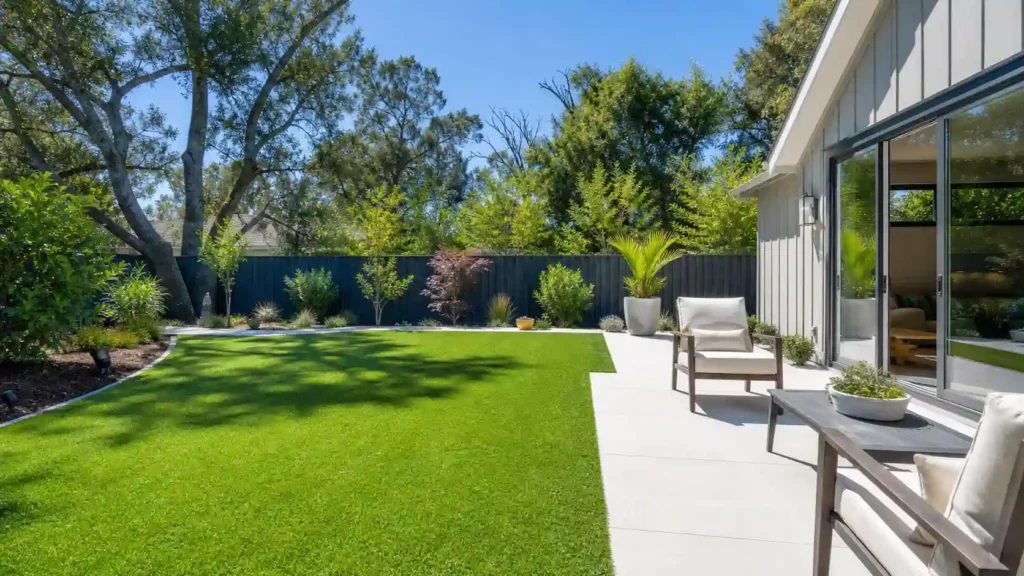
Backyard with green artificial turf and patio seating, showing the pros and cons of artificial turf for a real San Diego home.
Residential Backyard Artificial Turf

Pros and Cons of Artificial Turf for Your Backyard

Artificial turf can make a backyard easier to use with less mowing and routine watering. But the trade-off includes a higher upfront cost, heat, drainage needs, ongoing care, and eventual replacement. The right choice depends on what you want from your yard. These pros and cons of artificial turf can help you decide before you invest. The Pros of Artificial Turf Less Mowing and Routine Lawn Work One of the biggest advantages is simple: artificial turf does not grow. You do not need to mow it every week during the growing season. There is also no grass height to manage or lawn equipment needed for routine cutting. That can reduce the time spent on basic lawn care. You also avoid tasks tied to natural grass growth, such as regular mowing and trimming. Artificial turf still needs some care, but the work is different. Instead of cutting grass, you mainly deal with debris, cleaning, brushing, and occasional spot care. For homeowners who dislike weekly lawn work, this can be a major practical benefit. Reduced Watering Artificial turf does not need routine irrigation to stay green. Natural grass needs water to grow and maintain its appearance. Synthetic grass does not have that same water demand because the blades are not living plants. This can reduce the amount of water used for routine lawn irrigation. It can also make the backyard easier to manage during periods when watering is restricted. The key point is that reduced watering does not mean zero water use. You may still rinse the surface when cleaning is needed. Water may also be required for certain cleaning tasks or to remove dust and debris. So, when comparing artificial turf pros and cons, think of water reduction as a lower routine demand rather than a complete end to water use. Consistent Appearance Natural grass can change with weather, growth, mowing, watering, and other lawn conditions. Artificial turf provides a more consistent surface appearance. Its turf blades stay in place instead of growing taller between cuts. A properly selected and installed product can maintain a uniform green look across the yard. The result still depends on turf quality and installation. Poor seams, uneven preparation, worn areas, or poorly maintained blades can affect the final appearance. Artificial turf is not automatically attractive just because it is synthetic. Product quality and installation still matter. Durable for Regular Backyard Use Artificial turf can handle regular foot traffic and common backyard activity without the same growth and recovery cycle as natural grass. That makes it useful for yards used for play, outdoor activities, walking, or general family use. Durability does not mean the surface cannot wear. Heavy traffic can flatten turf fibers over time. Sun exposure, use patterns, product quality, and maintenance can also affect performance. This is an important distinction when considering the pros and cons of artificial turf grass. A durable lawn surface can reduce common wear problems, but no turf system lasts forever. More Usable Backyard Conditions Natural grass can become muddy or worn when it receives heavy use or wet weather. Artificial turf provides a more predictable surface for everyday backyard use when the system has been installed correctly. That can make the yard easier to use for outdoor living, play, and regular foot traffic. The benefit is not that artificial turf makes every backyard usable under every condition. Drainage, grading, soil, and installation quality still matter. The main advantage is a consistent finished surface that does not depend on grass growth. The Cons of Artificial Turf Higher Upfront Installation Cost The biggest financial drawback is the initial investment. Artificial turf costs more upfront than simply maintaining an existing lawn. The total project can include turf, labor, site preparation, base materials, infill, edging, removal, and other work needed for the property. Current published U.S. estimates show why prices can vary widely. Angi reported an average artificial turf installation cost of about $5,800 in 2026, with typical pricing around $3 to $11 per square foot. Other published estimates put professionally installed projects at a wider range depending on preparation and project conditions. These figures are useful for planning, not as a quote for your backyard. A small, simple yard can have a very different cost from a large yard with difficult access, poor drainage, slopes, or extensive preparation. The important decision is whether the higher upfront cost fits your budget and whether the lower routine lawn workload justifies that investment for your use. Artificial Turf Can Get Hot in Direct Sun Synthetic fibers absorb heat differently than living grass. Under strong, direct sun, turf surfaces get noticeably hotter than a natural lawn does at the same time of day. University turf research has recorded synthetic surface temperatures well over 140°F on hot, sunny days, compared to 90–100°F for natural grass nearby. That’s a real difference if you’re walking barefoot, letting kids play at midday, or have a dog that spends a lot of time outside. Shade, time of day, and turf color all affect how much this matters for your yard. Full-sun backyards in San Diego County feel this more than shaded or coastal spots. Drainage Still Has to Be Planned Turf doesn’t remove the need for drainage. It changes how water needs to move through the system. Water has to pass through the turf backing, into the base layer below, and away from the yard. That only works if the site was graded correctly and the base was built right before the turf ever went down. Skip that step, or get it wrong, and you end up with pooling water sitting on top instead of soaking through. This is one of the most common installation mistakes, and it’s almost always avoidable with proper planning up front. Learn more about how artificial turf drains water. It Still Needs Some Maintenance Artificial turf reduces lawn maintenance. It does not eliminate maintenance. Leaves, dirt, and other debris can collect on the surface. Occasional rinsing can help remove dust and surface debris. Turf may
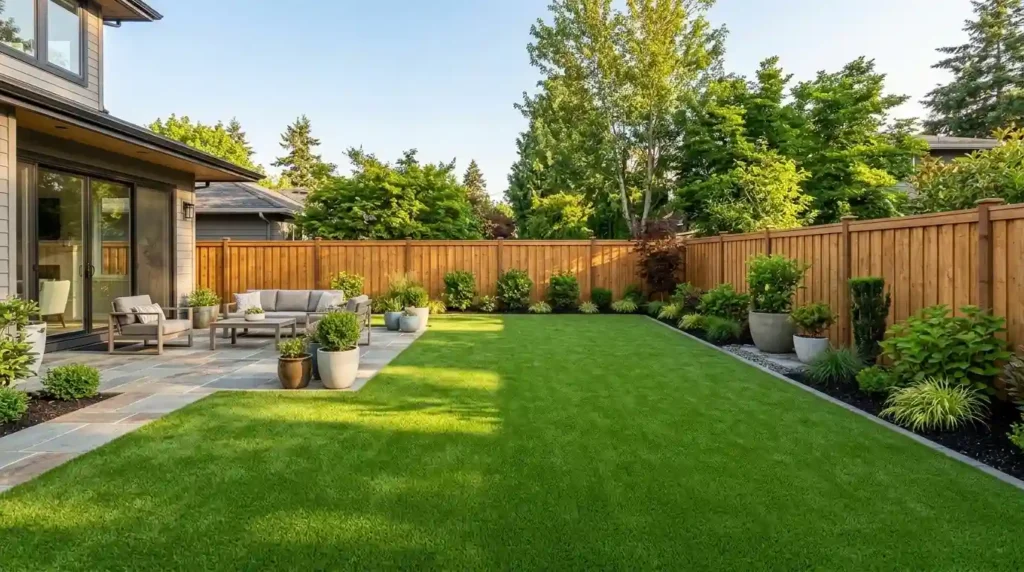
Benefits of Artificial Turf for a Residential Backyard shown in a modern yard with a stone patio, seating area, and lush green lawn
Residential Backyard Artificial Turf

Benefits of Artificial Turf for a Residential Backyard

Homeowners often want a backyard that looks good without demanding constant lawn care. The benefits of artificial turf for a residential backyard include less routine upkeep, lower lawn water use, a steady green appearance, and a surface that is easier to use. Artificial turf can also give families, children, and pets a more dependable outdoor area. When planned well, it can fit with planting beds, patios, pathways, and other parts of the backyard. This guide walks through exactly what changes when you switch, room by room and season by season. No fluff, just the real advantages of artificial turf for a residential yard. 1. Artificial Turf Reduces Backyard Maintenance One of the clearest benefits of artificial turf is the amount of routine lawn work it removes. Natural grass needs regular attention to stay green and full. That can include mowing, watering, fertilizing, edging, and reseeding. Homeowners also need lawn equipment and time to keep the grass from becoming overgrown or patchy. Artificial turf does not need regular mowing or routine lawn watering to keep its green appearance. You also do not need to reseed bare areas or maintain the lawn in the same way as natural grass. That does not mean the surface needs zero care. Leaves, dirt, and other debris still need to be removed, and an occasional rinse or brush can help keep the turf looking clean. The bigger difference is the type of work involved. Instead of managing a growing lawn, homeowners mainly maintain the finished surface. Good preparation also matters. A stable, well-prepared base helps the finished turf remain usable and even. If you want to understand that part of the process, see How to Prepare the Ground for Artificial Grass. Less lawn maintenance can mean more time for the backyard itself. 2. It Keeps the Backyard Looking Green Throughout the Year Natural grass goes dormant in cold weather and browns out in a dry summer. Artificial turf doesn’t follow the seasons. It holds a steady, even green color all year, with no bare patches from foot traffic or drought. This is one of the clearest benefits of artificial turf. You get full, consistent coverage in January and in July, without babying it through weather changes. Modern turf also looks more like real grass than older versions did. Manufacturers blend multiple blade colors, use varied blade shapes, and add a thatch layer underneath to mimic the texture of a natural lawn. UV-stable fibers keep that color from fading in direct sun year after year. 3. It Can Significantly Reduce Lawn Water Use A natural grass lawn needs water to remain alive and green. That usually means regular irrigation, with the amount changing based on grass type, weather, soil, and local conditions. Artificial turf does not need routine lawn irrigation to maintain its green appearance. Replacing a natural-grass backyard can therefore reduce the water normally used for watering that lawn. This matters because residential outdoor water use is a major part of household water demand in the United States. The U.S. Environmental Protection Agency says residential outdoor use accounts for nearly 8 billion gallons of water each day, mainly from landscape irrigation. You can learn more about water-smart residential yards from EPA WaterSense Outdoor Resources. Reducing lawn watering does not mean every plant in the backyard stops needing water. Trees, shrubs, flowers, and other living plants still need appropriate care. The benefit is narrower and easier to understand: the turf area itself no longer needs routine irrigation to stay green. That can reduce dependence on lawn watering and make the yard easier to manage. 4. Artificial Turf Makes the Backyard Easier to Use A backyard is more valuable when the family can actually use it. Artificial turf creates a consistent surface for everyday activities such as walking, playing, relaxing, and spending time outdoors. Instead of treating the lawn mainly as something that needs to be maintained, homeowners can use it as part of their outdoor living area. This is where the usability benefit becomes important. A residential yard may serve several purposes during the same week. Children may play on it. A dog may run across it. Family members may sit outside or walk through the area. Guests may use it during a gathering. Repeated foot traffic is part of normal backyard use. A suitable turf system gives homeowners a defined surface for these activities while keeping the lawn area visually consistent. The advantage is not simply that artificial turf looks good. It gives the residential yard a practical role in everyday life. 5. It Gives Children and Pets a More Usable Outdoor Space A consistent play area for children Children can use a backyard for running, playing, and other everyday outdoor activities. A consistent turf surface can make the lawn easier to use when children move across the area repeatedly. The appearance also stays more uniform than a natural lawn that develops worn or bare spots from frequent foot traffic. That does not mean every turf surface is suitable for every type of play. Product choice, installation quality, and the way the area will be used still matter. The important benefit is simple: artificial turf can give children a dedicated outdoor area that remains available for regular backyard activities. A practical surface for pets Pets can place heavy demands on a residential lawn. Dogs may run across the same areas, create muddy paws after wet weather, or dig into natural grass. Artificial turf can provide a more consistent surface for frequent pet traffic. It can also make cleanup easier because there is no living grass that becomes muddy in the same way after repeated use. Drainage is another important part of a pet-friendly turf system because liquid needs a path through the turf and underlying base. Artificial turf does not remove the need for cleaning or pet care. It simply changes the surface being maintained. For homeowners planning a dedicated pet area, see SD Home Turf’s artificial turf services for residential turf options that can

Translate »
Seraphinite AcceleratorOptimized by Seraphinite Accelerator
Turns on site high speed to be attractive for people and search engines.