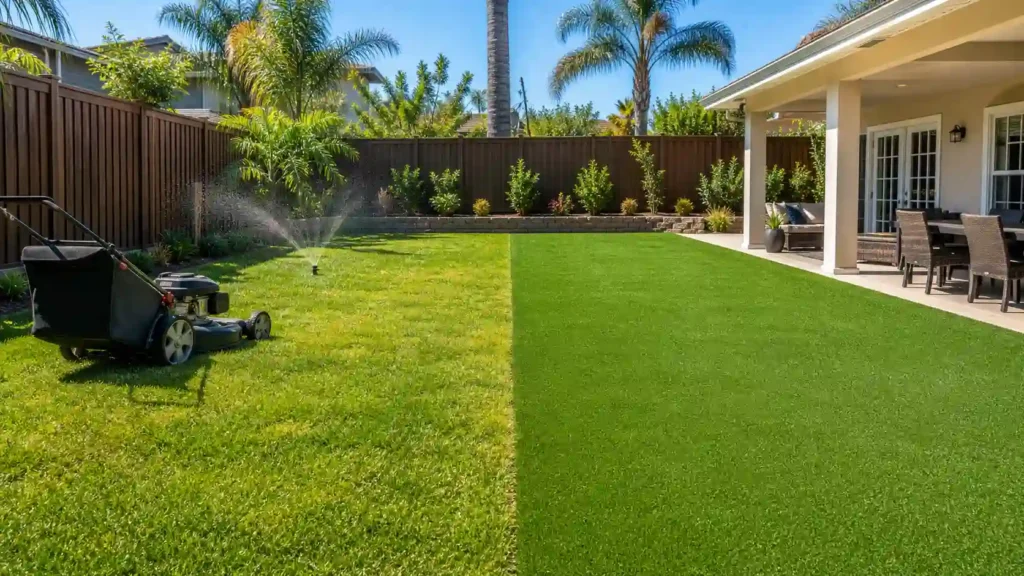
Choosing between natural grass and artificial turf comes down to how you want your yard to look, feel, and work. Both can create a useful green space, but they differ in water use, upkeep, durability, cost, drainage, and daily use.
Natural grass vs artificial turf: the best choice depends on your yard, budget, family, pets, and how much lawn care you want to handle. This guide compares each factor side by side so you can make a clear choice for your property.
Quick Answer: Natural Grass vs Artificial Turf
Here is the quick view. The turf vs grass choice looks different for every residential yard, so treat this table as your starting point.
Factor | Natural Grass | Artificial Turf |
Water | Needs regular irrigation | Little routine watering |
Maintenance | Mowing and lawn care | Brushing, cleaning, and light upkeep |
Appearance | Changes as it grows | Steady green look |
Durability | Can wear and get bare spots | Handles repeated traffic without growing back |
Pets | Natural surface, but urine and mud cause damage | Easy waste cleanup, needs good drainage and cleaning |
Children | Soft, natural lawn | Steady surface with no muddy bare spots |
Installation | Seed or sod, then establishment | Site preparation, then turf installation |
Long-term cost | Lower start cost, recurring care | Higher start cost, different upkeep and replacement costs |
Drainage | Depends on soil, grade, and roots | Depends on turf, base, grade, and drainage path |
Environment | Living plants, but uses water and lawn-care inputs | Cuts irrigation and mowing, but uses synthetic materials |
Water Use and Irrigation
Natural grass needs regular watering. Artificial turf needs almost none. This is the biggest daily gap between the two.
A lawn needs irrigation to stay green. Most yards run sprinklers several times a week in dry months. That raises water consumption and your bill. The EPA reports that outdoor use is about 30 percent of household water on average. In dry regions, it can reach 60 percent.
Turf ends routine watering. You may rinse it now and then to clear dust or pet mess. That reduced water demand supports water conservation in dry areas. Water bills worry many homeowners in San Diego County. Our guide to the benefits of artificial turf for a residential backyard covers lower lawn water use in more detail.
Maintenance and Upkeep
Natural grass asks for steady work. Artificial turf asks for lighter care. Neither one is free of upkeep.
A lawn needs mowing every week or two in the growing season. It also needs watering, fertilizer, and weed control. Bare spots need reseeding and repair.
Turf needs brushing to keep the fibers upright. You clear leaves and other debris. You rinse or clean it from time to time. Some turf uses infill, which needs light upkeep to stay level.
Artificial turf is low maintenance, not zero maintenance. The chores are lighter and less frequent than lawn care.
Appearance and Feel
A natural lawn has a living look. Color and texture shift with the seasons, water, and growth. Stressed areas turn thin, patchy, or bare. Many people love that soft, real feel underfoot.
Turf gives steady color and full coverage all year. The turf fibers are manufactured, so the look depends on product quality. Cheap turf can look flat or shiny. Good turf that looks like real grass uses mixed green tones and varied blade shapes.
In artificial turf vs real grass, grass wins on natural feel. Turf wins on steady looks. Ask to touch a sample of realistic artificial grass before you buy.
Durability and Everyday Use
Grass wears down under heavy foot traffic. Paths and bare spots show up fast in busy areas. Grass can grow back with water and care. That takes time, and small repairs mean reseeding a patch.
Turf handles repeated traffic without thinning out. The surface stays consistent day to day. Fiber wear does show up in time, mostly along high-traffic paths. Lifespan depends on the product, use, and sun exposure. All turf needs replacement someday. Our article on how long artificial turf lasts explains what affects it.
Pets and Children
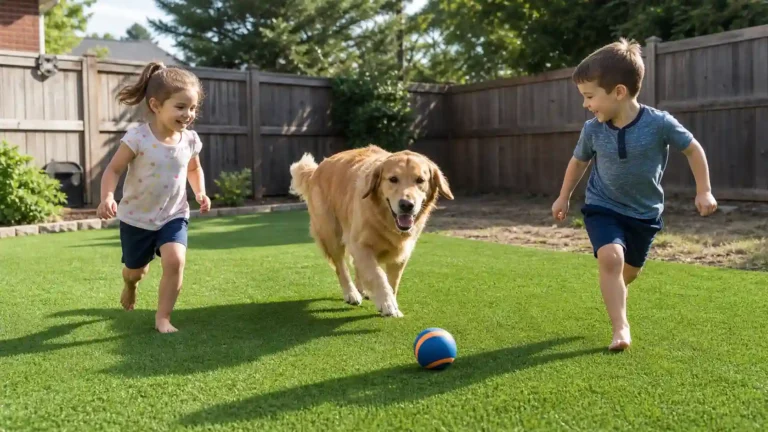
Both surfaces work for families. The difference is mud, wear, and cleanup.
For Pets
Dogs are hard on natural grass. Urine leaves brown spots. Digging and running create mud and worn patches. After rain, paws carry that mud indoors.
Turf has no mud and no dead spots. Urine drains through the backing. Cleanup is simple: pick up solids and rinse the area. Drainage matters here. Poor drainage traps odor, so the base under the turf must be built right.
For Children
Kids play hard on any lawn. Grass feels soft and natural for everyday play. Repeated traffic wears it thin, and rain turns worn areas to mud.
Turf gives a steady surface for running and games. It stays usable soon after rain and leaves no muddy patches.
Installation: What Changes Between the Two?
Grass starts with seed or sod. You prepare the soil, then wait for the lawn to establish. During establishment, you water often. It takes time before the lawn can handle heavy use.
Turf has more steps up front. Crews remove the existing lawn when needed. They excavate the area, then grade it so water flows away. Next they build a sub-base and compact it. Drainage gets planned before the turf goes down. Then they install the turf. At SD Home Turf, we treat the base as the most important step, because it decides how the turf drains and lasts.
See our guide on how to prepare the ground for artificial grass. Wondering about your current lawn? Read whether you can install artificial grass over existing grass.
Want artificial turf installation in San Diego County? SD Home Turf builds turf yards for local homes, from ground prep to the final finish. We look at your yard, your drainage, and how your family uses the space.
Long-Term Cost: What You Actually Pay For
Grass vs artificial turf costs look different at the start and over the years. Natural grass has a lower installation cost. Then come the ongoing costs: water, mowing, fertilizer, repairs, and general lawn care.
Turf has a higher installation cost. It lowers routine lawn-care spending. You add some cleaning and maintenance costs. In time, it needs replacement.
The cheaper option at installation is not always cheaper across your years of ownership. Turf does not always win the total ownership cost math either. To compare, add up your water cost, mowing or lawn service, fertilizer, and repairs over 10 years. Then compare that with a turf quote and its expected lifespan. Our guide on how much artificial turf installation costs shows what goes into a quote.
Drainage: Which Surface Handles Water Better?

Water follows the same path on both surfaces. It moves from the top down through the layers below. What differs is what those layers are.
Natural grass relies on soil absorption. Soil condition, the grade of the yard, and the plant root zone control how fast water sinks in. Compacted soil or a poor slope leaves standing water.
Turf drains through its backing into the base and the underlying soil. The grade and drainage path steer water away. A poorly built base still leaves standing water, even under good turf. Drainage depends on the whole system, not only the surface. Our article on how artificial turf drains water explains the backing, base, and grade.
Environmental Considerations
Each option has trade-offs. Neither one is perfect.
Natural grass is made of living plants. It adds green cover and supports the soil. It also uses water, and many lawns get fertilizer and pesticides for weed control. Mowing adds to fuel use. The EPA says up to half of outdoor water use is wasted through overwatering and poor systems.
Turf cuts irrigation and mowing. It is made of synthetic materials, including plastic components. It needs replacement in time. University of Illinois Extension notes that worn synthetic turf ends up in landfills. Ask any installer how they handle end-of-life disposal.
So, Which Is Better for Your Yard?
So, is artificial turf better than grass? Not for every yard. The best pick in natural grass vs artificial turf depends on how you live.
Natural grass may fit better when:
- You prefer a living lawn and natural texture.
- You are fine with routine lawn care.
- Ongoing watering and upkeep fit your time and budget.
- You want a living surface in your yard.
Artificial turf may fit better when:
- You want less routine maintenance.
- You want to cut irrigation.
- A steady look matters to you.
- The yard gets repeated traffic.
- You want to avoid mud and bare areas.
- You want a surface that does not depend on grass growth.
Either can work. Weigh your yard conditions, drainage, use, upkeep habits, budget, and environmental priorities first. Then choose.
Frequently Asked Questions
Is artificial turf cheaper than grass in the long run?
Not always. Turf costs more up front but cuts water and mowing. Your yard size, use, and turf lifespan decide the result.
Does artificial turf need water?
Not to stay green. You may rinse it to clear dust or pet waste.
Is artificial turf good for dogs?
For most yards, yes. It has no mud and no urine spots. It needs good drainage and regular cleaning.
Does artificial turf drain better than grass?
Not by default. Both depend on soil, grade, and the layers below. A well-built base lets turf drain well.