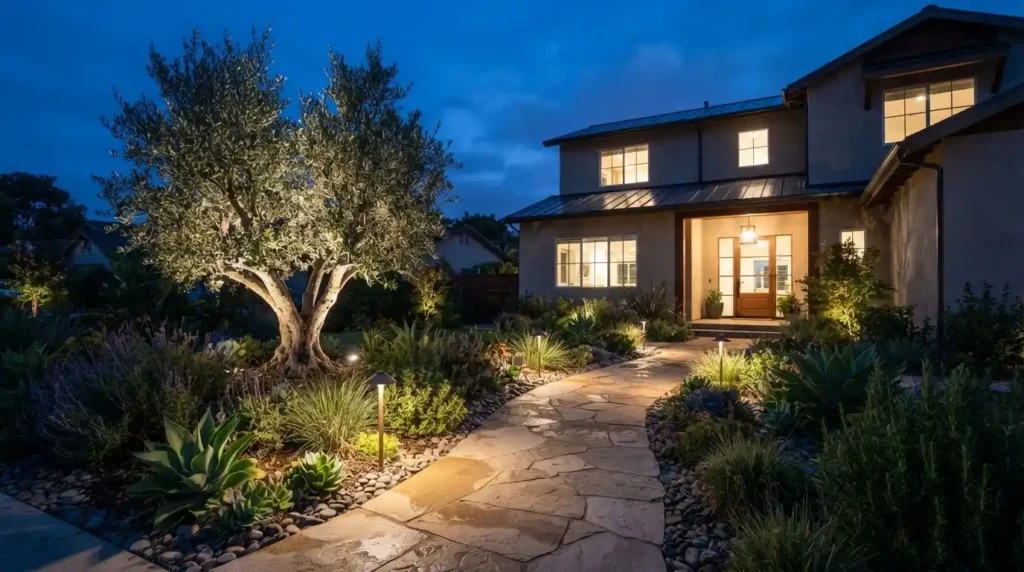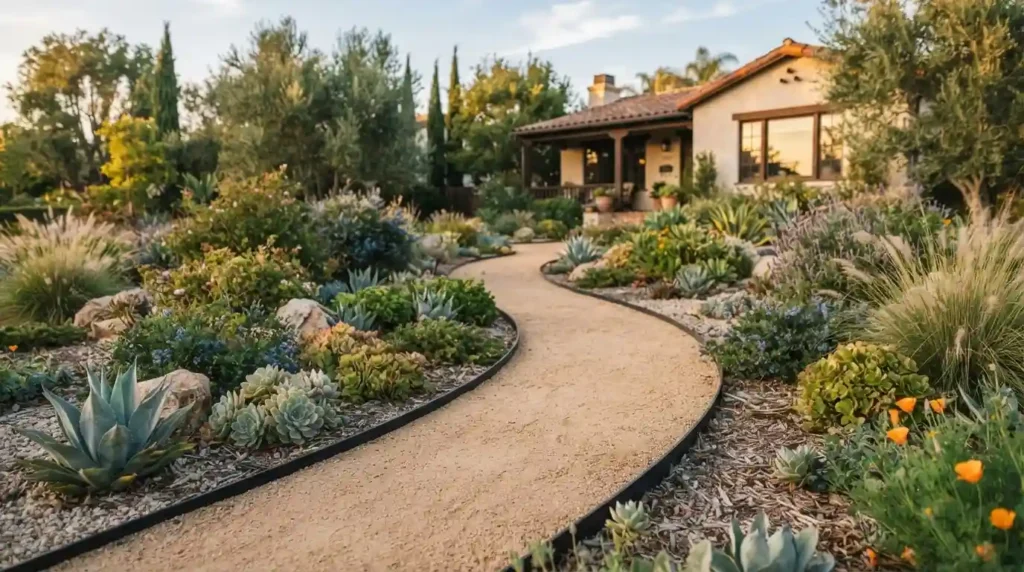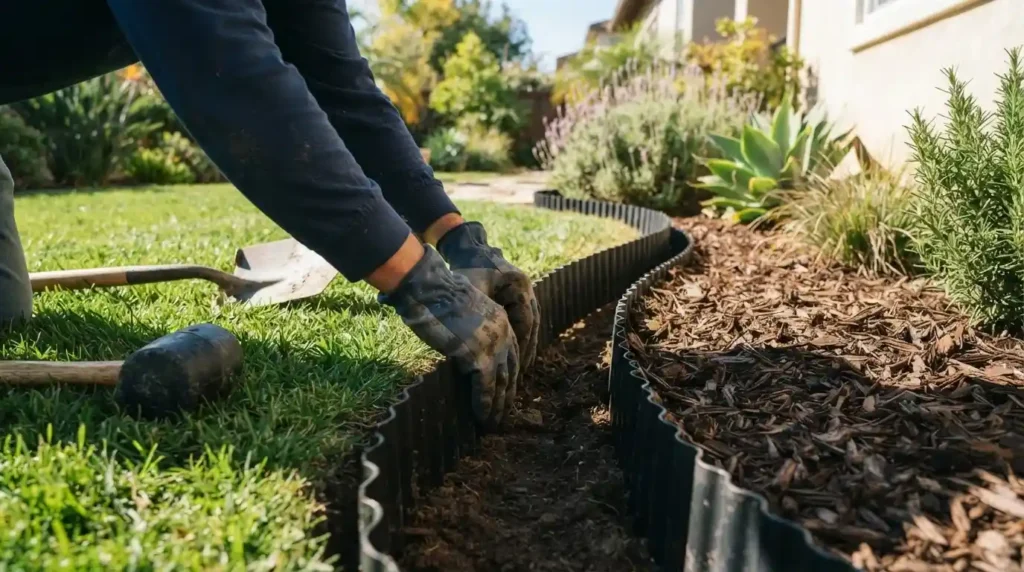
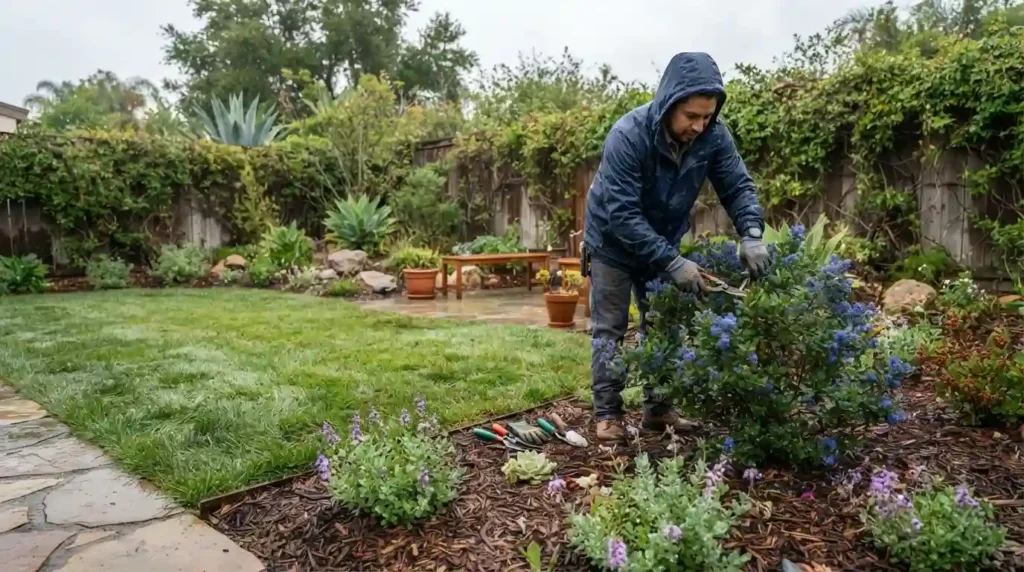
In San Diego County, landscapers keep working in winter. They shift from weekly mowing to weed control, dormant pruning, cool-season planting, irrigation changes, drainage checks, and yard cleanup. On dry days, they also build projects like artificial turf and patios. Winter is a working season, not a shutdown.
This guide covers local weather, task lists by yard type, and how to book work. Use it to plan the next three months.
Key Takeaways
- Landscapers in San Diego County work through winter. The pace and the tasks change.
- Winter here means rain and cool nights, not snow. Work follows the weather.
- Core winter jobs are weed control, pruning, planting, irrigation changes, drainage checks, and cleanup.
- Projects such as artificial turf, pavers, and patios continue on dry days. Wet soil can delay base work.
- Each yard type needs different care. Lawns, beds, trees, and artificial turf are not the same.
- Winter planning sets up your yard for spring.
What Is Winter Landscaping?
Winter landscaping is the yard care, planting, and building work done in the cool, wet months. In San Diego County, that usually means December through February. A landscaper is a professional who maintains, plants, and builds outdoor spaces for homes and businesses.
In winter, a landscaping company changes its schedule. Weekly mowing slows down. Seasonal care and project work take its place. Winter landscaping is not a different trade. It is the same trade on a different calendar.
Do Landscapers Work in the Winter?
Yes. Landscapers in San Diego County can work through winter because the ground does not freeze in most areas. The National Weather Service describes snow as practically unknown at its San Diego office.
The County has more than one climate. The Defensible Space program notes that winter storms bring rain at lower elevations and often snow above 5,000 feet. Mountain areas see slower winter schedules. Coastal and inland valley yards stay open for work.
Rain is the real limit. Crews do not like to work in heavy rain. Wet soil is hard to dig, hard to compact, and easy to damage. So winter work follows the forecast.
The Dry, Wet, Drying rule
This simple rule explains how a winter week often runs.
- Dry days: Crews prune, plant, mulch, install, and build.
- Wet days: Crews usually stay out of the yard. Many companies use these days for estimates, planning, and equipment care.
- Drying days: Crews check storm damage and drainage first. Heavy base work waits until the soil firms up.
This is a general industry pattern, not a rule for every company. Ask your landscaper how they handle rain delays.
onsectetur adipiscing elit. Ut elit tellus, luctus nec ullamcorper mattis, pulvinar dapibus leo.
Winter Landscaping Quick Facts
These quick facts sum up winter work in San Diego County.
Topic | Detail | Fact |
San Diego (National Weather Service office) | Snowfall | Practically unknown |
San Diego | Average annual rainfall | About 9.8 to 9.9 inches |
San Diego region rainfall | Share that falls December to March | More than 80 percent, per the Water Authority |
Mountain areas above 5,000 feet | Winter precipitation | Often snow |
Winter annual weeds | Main growing season | Fall and winter |
One winter annual weed plant | Seed output | Often hundreds of seeds |
Mulch after weed clearing | UC Master Gardener depth | 3 to 5 inches |
Deciduous fruit trees | Main pruning time | Winter dormant season |
Citrus trees | Winter leaf status | Keep leaves, need different pruning |
Bare-root fruit trees | Typical planting time | Winter, often January |
California native plants | San Diego County planting window | Cooler months before and during the rains |
Irrigation controller | Winter setting | Fewer watering days and times |
Wet soil | Effect on base compaction | Harder to compact, so base work waits |
Artificial turf | Mowing need | None |
Landscaper | Winter schedule | Shifts from mowing to seasonal care and projects |
Why Does Winter Work Matter?
Winter work matters because yards keep changing in the cool months. Weeds sprout, rain exposes drainage problems, and new plants build roots. A yard that is ignored in winter often needs more work in spring.
- Weeds keep growing. UC Agriculture and Natural Resources states that winter annual weeds grow in fall and winter, then set seed and die by summer. One plant can drop hundreds of seeds. Those seeds sprout the next year.
- Rain shows what is wrong. A yard that pools after a storm has a drainage problem. Winter is when that problem is easy to see.
- Cool weather helps new plants. UC Riverside Cooperative Extension notes that plant growth comes to a near halt in December until about February. Dormant plants can be moved and pruned with less stress.
- Water use drops. Rain supplies water, so irrigation can be cut back. The San Diego County Water Authority encourages residents to adjust their systems in the rainy season. Read our guide on the importance of landscaping for more on why upkeep pays off.
How Does a Winter Service Cycle Work?
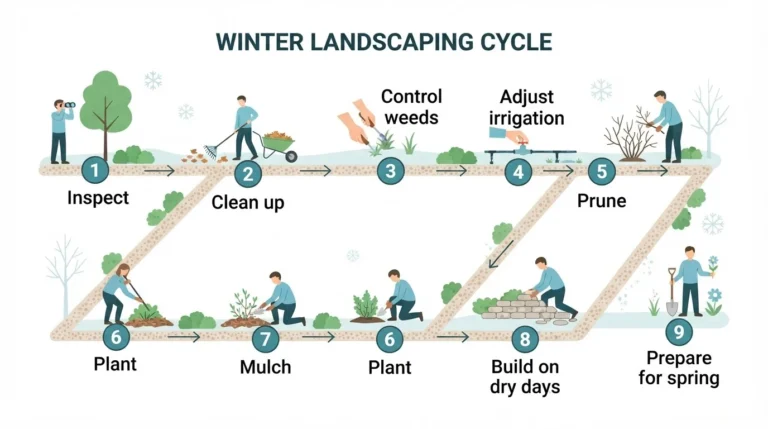
A winter service cycle is the order of jobs a landscaper follows from the first rains to early spring. Here is a typical sequence.
- Inspect after the first storms. Check drainage, slopes, downspouts, and sprinkler zones.
- Clean up. Remove leaves, fallen branches, and storm debris.
- Control weeds while small. Pull or treat winter weeds before they flower.
- Adjust irrigation. Cut watering days and times to match the rain.
- Prune what needs it. Focus on dormant plants such as deciduous fruit trees.
- Plant for the season. Add natives, trees, and cool-season plants.
- Mulch. Cover cleared soil to slow weeds and hold moisture.
- Build on dry windows. Schedule turf, pavers, and patios around the forecast.
- Prepare for spring. Check equipment, plan beds, and fix problems found earlier.
What Tasks Do Landscapers Do in the Winter?
Lawn and turf care
Lawn care in winter is lighter, but it does not stop. Many San Diego lawns use warm-season grasses. These slow down when nights turn cool, so mowing happens less often.
UC IPM states that weeds rarely become a problem in well-managed, healthy turfgrass. A thick lawn crowds out weeds. Winter care keeps the lawn thick for spring.
Artificial turf is different. It needs no mowing. Winter care means clearing leaves and brushing the fibers. First rains also show whether the drainage works. Read our guide on how artificial turf drains water to know what to look for.
Winter weed control
Winter weed control is one of the biggest jobs. UC sources list chickweed, little mallow, and annual bluegrass as common winter annual weeds in California. UC Weed Science notes that many sprout in Southern California after the fall rains.
UC advice is to remove weeds while they are small and before they flower. A landscaper may pull or hoe them. After clearing, UC Master Gardeners suggest 3 to 5 inches of mulch.
Some crews apply a preemergent herbicide. This product stops seeds from sprouting. Always follow the label and local rules.
Pruning and tree care
Winter pruning has limits. The main winter job is dormant pruning of deciduous fruit trees. UC Master Gardeners explain that winter pruning helps reduce disease and shape the tree.
Citrus trees keep their leaves in winter. UC Master Gardeners note they need different pruning. The Defensible Space program adds that many California woody plants grow during the wet season, so deep winter is often the wrong time to prune them.
A good landscaper does not prune everything in winter. They prune by plant type.
Planting
Winter is a planting season in San Diego County. The County’s sustainability office says the cooler months and approaching rains are ideal for planting natives, cool-season vegetables, bare-root fruit trees, and trees.
UC Master Gardeners in San Luis Obispo County note that bare-root fruit trees are typically planted in winter, often in January. Rain helps new roots settle, which cuts the need for hand watering.
Irrigation and water
A landscaper changes the sprinkler schedule in winter. The controller is the device that sets watering times. In the rainy season, crews cut watering days and times.
The San Diego County Water Authority says to check your local water agency for winter watering rules. Rebates for weather-based controllers and soil moisture sensors may be available through SoCal WaterSmart.
Project Clean Water also warns that overwatering and rain can wash pollutants like pet waste, trash, and motor oil into local waterways. Less irrigation helps protect them.
Drainage and erosion checks
Rain tests your yard’s drainage. Landscapers walk the property after storms. They look for pooling water, washed-out soil, clogged downspouts, and slopes that slip.
Fixes may include regrading, redirecting downspouts, or adding drainage. Permeable surfaces can also help water soak in. Read our guide on permeable pavers for one option.
Mulch and cleanup
Mulch is a layer of wood chips or similar material that covers soil. It slows weeds and holds moisture. Winter is a good time to refresh it after clearing weeds.
Cleanup is steady work in winter. Storms drop leaves, palm fronds, and branches. Clearing them keeps drains open and the yard safe.
Projects: turf, pavers, and patios
Winter is a workable time for building projects when the weather is dry. Crews can install artificial turf, pavers, and patios in dry windows. See our guide to the benefits of hardscaping for what these projects add.
Rain adds limits. Base material needs to be compacted, and saturated soil does not compact well. Most crews wait for the soil to dry before base work. Plan for a few weather delays.
Winter Tasks by Yard Type
Yard element | Winter condition | What a landscaper does | Rain effect |
Natural lawn | Slower growth, winter weeds | Less mowing, weed control, cleanup | Mowing waits for dry grass |
Artificial turf | No growth | Clear debris, brush fibers, check drainage | Rain flushes dust, shows drainage |
Planting beds and shrubs | Cool, mostly slow growth | Weed, mulch, plant, prune by type | Wet beds delay heavy work |
Fruit trees | Dormant (deciduous) | Prune and clean up | Pruning waits for dry days |
Irrigation system | Less demand | Cut run times, check heads | Controller may pause for rain |
Hardscape (pavers, patios) | Stable | Install on dry days, clean surfaces | Base work waits for firm soil |
Slopes and drains | Storm stress | Inspect, clear, regrade | Rain shows weak spots |
Is Winter a Good Time for a Landscaping Project?
Yes, for many projects. Winter suits planting and dry-day building. It is less ideal for work that needs warm weather or dry soil for a long stretch.
Project | Good in winter? | Why |
Planting natives and trees | Yes | Cool weather and rain help roots |
Bare-root fruit trees | Yes | Winter is the usual planting time |
Artificial turf installation | Yes, on dry stretches | Base needs firm, dry soil |
Pavers and patios | Yes, on dry stretches | Base compaction needs dry ground |
Concrete work | Depends on the forecast | Rain can disrupt a pour |
New warm-season lawn | Usually better later | Warm-season grass grows best in warm weather |
Some companies may also have lighter winter schedules. Method, a business software company, notes that some landscaping companies offer discounts when demand is lower. Ask any company about their winter calendar. If a company also pours concrete, see why landscapers that do concrete work are common.
Real-World Examples
These are typical scenarios, not records of specific jobs.
Example 1: The yard that pools after the first storm
A homeowner notices standing water by the patio after the first heavy rain. A landscaper walks the yard, checks downspouts, and looks at the grade. They find a downspout dumping water onto flat ground. The fix is a drain line and a small regrade. Winter showed the problem. Summer would have hidden it.
Example 2: The turf project before spring
A homeowner wants new artificial turf ready for a spring event. They book a January start. The crew watches the forecast and shifts days around rain. They wait for the soil to firm before compacting the base. The project finished on time because the schedule had room for delays.
Common Mistakes
- Assuming landscapers shut down. Seasonal work continues in San Diego County.
- Overwatering in the rainy season. Rain does much of the work. Check your controller.
- Pruning everything in winter. Prune by plant type, not by calendar.
- Letting winter weeds set seed. One plant can drop hundreds of seeds.
- Ignoring drainage after storms. Pooling water gets worse, not better.
- Waiting until spring to book. Trade reports say customers start calling in spring, so schedules fill.
Winter Yard Checklist
Use this list from December through February. For low-cost ideas, see our cheap landscaping hacks.
- Walk the yard after each major storm and note pooling water.
- Clear downspouts, gutters, and drain openings.
- Pull or treat weeds while they are small.
- Cover cleared soil with 3 to 5 inches of mulch.
- Cut irrigation run times and check your water agency’s winter rules.
- Prune deciduous fruit trees. Leave other plants until you know their needs.
- Plant natives and trees if the soil is workable.
- Brush and clear artificial turf of leaves and debris.
- Request quotes for spring projects now.
Tools and Resources
- UC IPM (University of California Integrated Pest Management): Weed identification and lawn weed management guides.
- UC Agriculture and Natural Resources: Guides on controlling winter weeds. Controlling Winter Weeds
- County of San Diego Sustainability: Winter planting tips.
- San Diego County Water Authority: Residential rebates and watering guidance.
- County Waterscape Rebate Program: Rebates for residents of unincorporated areas.
- National Weather Service San Diego: Local climate data.
- California Contractors State License Board: Check any contractor’s license before you hire.
How to Hire a Landscaper for Winter Work
Hiring in winter is the same as hiring any other time, with a few added questions.
- Check the license. Look up the contractor on the California Contractors State License Board website.
- Ask about rain policy. How do they handle weather delays? Do they reschedule at no charge?
- Get a written scope. It should list materials, base work, drainage, and cleanup.
- Ask about the schedule window. Winter dates can shift. Ask for a realistic range.
- Ask about drainage. A good plan covers where water goes during storms.
SD Home Turf provides landscaping services in San Diego County, along with artificial turf and hardscaping. If you want to plan a winter project, contact SD Home Turf for a quote.
Conclusion and Next Steps
So, what do landscapers do in the winter in San Diego County? They keep working. They control weeds, prune the right plants, plant for the season, adjust watering, check drainage, and build on dry days.
Your next steps are simple. Walk your yard after the next storm. Use the checklist above. If you want help or a quote for a spring project, contact SD Home Turf. Winter is a good time to plan.
FAQs
Do I still need lawn care in winter?
Often yes, but less of it. Grass growth slows in cool months, so mowing happens less often. Weeds keep growing, and leaves and storm debris still pile up. A natural lawn needs weed control, cleanup, and adjusted watering. Artificial turf needs only debris removal and brushing.
Is winter a good time to landscape?
For many projects, yes. Cool weather and rain suit planting natives, trees, and bare-root fruit trees. Building projects like turf, pavers, and patios work well on dry stretches. Warm-season lawns and concrete work depend more on weather. Ask your landscaper to match each project to the forecast.
What do landscapers do on rainy days?
Crews usually avoid yard work in heavy rain. Wet soil is hard to work and easy to damage. Many companies use rain days for estimates, planning, ordering materials, and equipment care. Crews return when the soil drains. After a storm, they often check drainage and storm damage first.
Should I water less in winter?
Usually yes. Rain supplies much of the water plants need, and cool weather slows growth. The San Diego County Water Authority encourages residents to cut watering days and times in the rainy season. Check your local water agency for winter watering rules before you change your schedule.
What can I plant in San Diego in winter?
The County of San Diego says the cooler months and approaching rains suit planting natives, cool-season vegetables, bare-root fruit trees, and trees. Plant when the soil is workable. Match each plant to its sun and soil needs, and ask a nursery or landscaper which natives fit your yard.
Can artificial turf be installed in winter?
Yes, on dry days. Installation needs a firm, compacted base. Saturated soil does not compact well, so crews wait for it to dry. Winter rain also shows how your yard drains. A good installer plans for rain delays and gives you a flexible schedule.