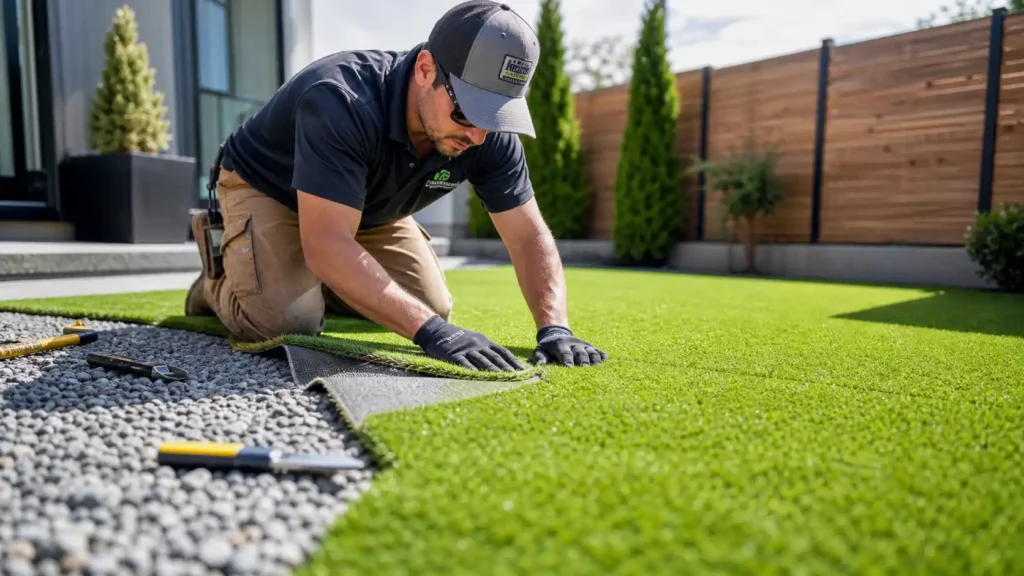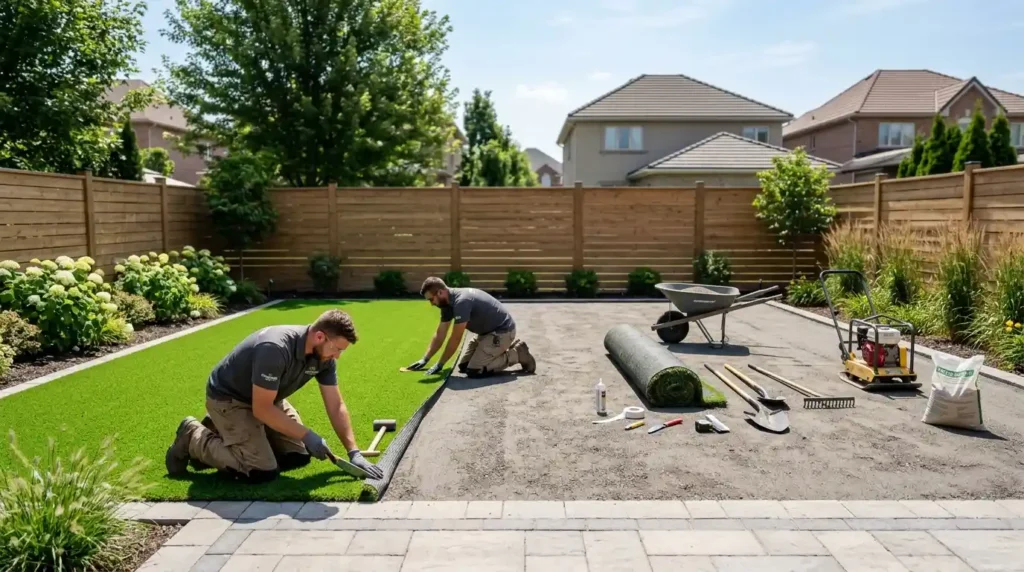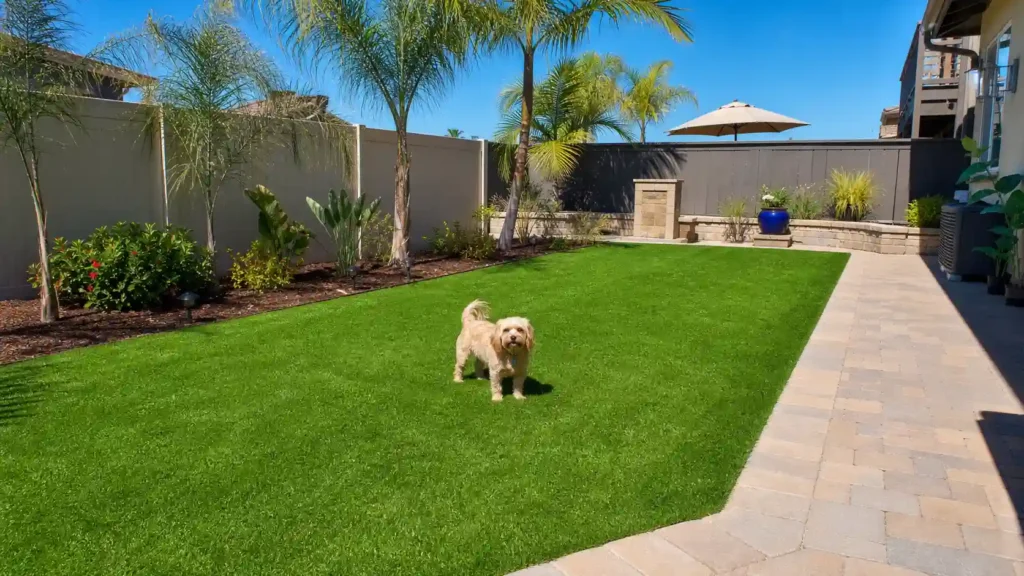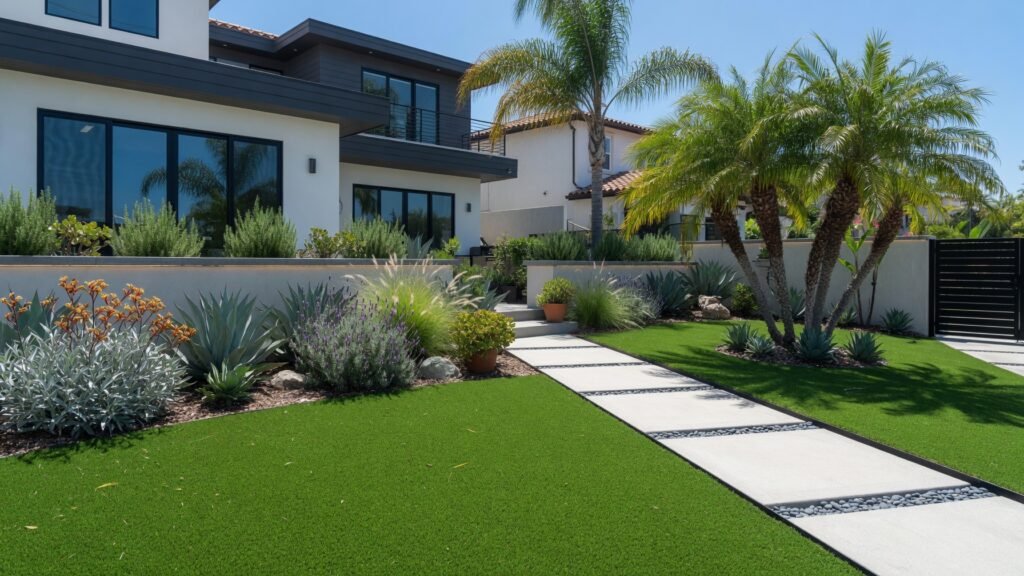
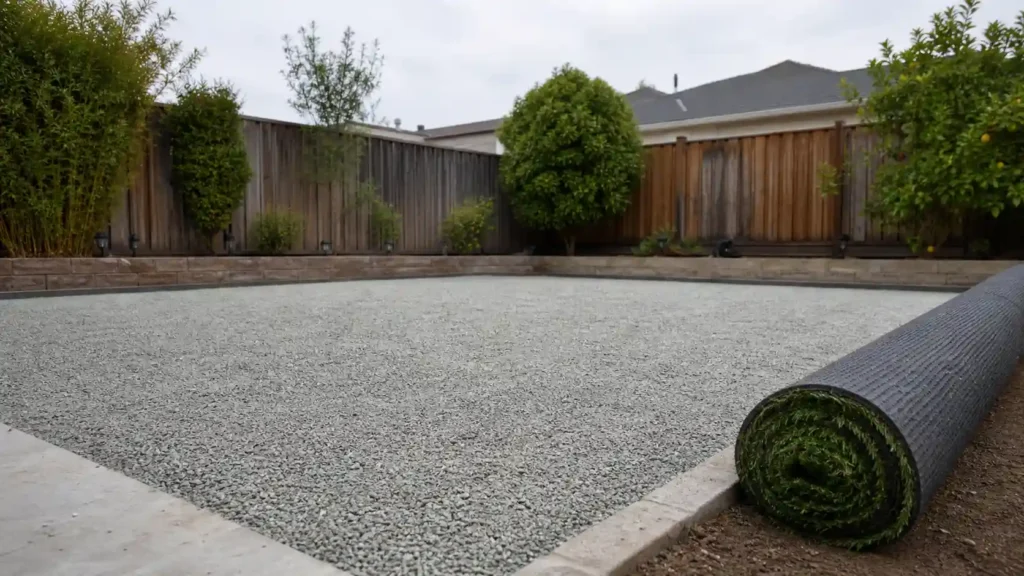
For most permanent artificial grass installations over natural soil, yes, you need a properly prepared and compacted sub-base. It gives the turf a stable foundation, helps control drainage, and reduces settling, soft spots, and uneven areas.
The answer changes when turf is installed over a sound concrete slab, patio, or another stable hard surface. In those cases, a traditional aggregate base may not be needed. The right choice depends on the surface, soil, drainage, traffic, and installation system.
Do You Need a Sub-Base for Artificial Grass? The Quick Answer
If you are installing artificial grass over dirt, soil, or an existing lawn, a sub-base is normally part of a proper permanent installation.
Installation surface | Traditional aggregate sub-base |
Natural soil | Usually needed |
Existing lawn | Usually needed after excavation |
Clay or unstable soil | Needed with extra ground preparation |
Concrete slab | Usually not needed |
Stable pavers or hardscape | Usually not needed |
Temporary turf | Depends on the use |
Rooftop | Depends on the approved system |
Sloped site | Depends on site conditions |
The reason is simple. Turf does not correct weak soil underneath it. If the ground moves, settles, or holds water, those problems can show through the finished lawn.
A good sub base for artificial turf creates a firm layer between the prepared soil and the synthetic grass. It also gives the finished surface a more consistent shape.
The main factors are:
- Installation surface
- Soil condition
- Drainage
- Expected foot traffic
- Base material
- Required thickness
- Compaction
- Ground stability
So, the answer is not just about whether turf needs “rock.” It is about building the right foundation for the site.
What Is a Sub-Base for Artificial Grass?
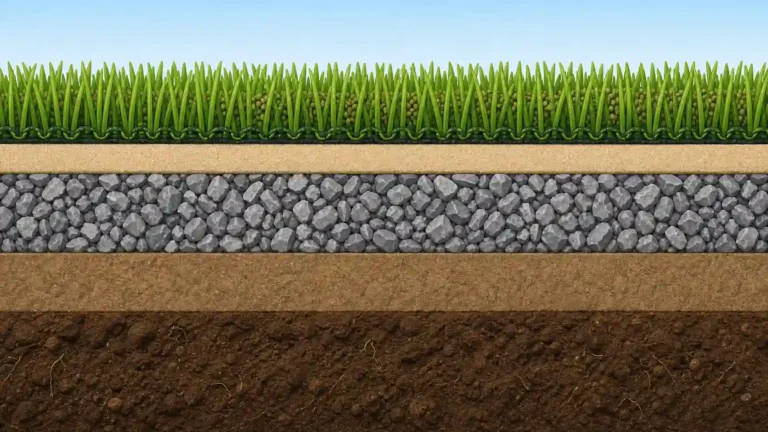
A sub-base is the compacted layer of aggregate that sits between your prepared ground and your artificial turf. It’s the part nobody sees once the job is done, but it does most of the work.
Think of it as layers stacked on top of each other. Native soil sits at the bottom. Above that is the graded subgrade. Then comes the compacted sub-base. Some installs add a thin leveling layer next. The artificial turf goes on top, and infill finishes the system.
An artificial grass sub-base is not the same thing as infill or leveling sand. Infill sits inside the turf fibers. Leveling sand smooths small surface bumps. The sub-base is the structural layer that carries the load underneath everything else.
What Does a Sub-Base Actually Do?
A well-built sub-base for artificial turf does four jobs at once.
- Provides ground stability. It carries foot traffic, furniture, and daily wear without shifting.
- Prevents settling. Compacted aggregate resists the soft spots and depressions that raw soil develops over time.
- Supports drainage. Water moves through it instead of pooling on the surface.
- Creates a consistent surface. It gives you a level, smooth base so the turf backing lays flat.
The Synthetic Turf Council’s base system guidelines describe the subgrade as the stable foundation that every layer above it depends on. Skip that foundation, and everything built on top of it inherits the problem.
Can You Install Artificial Grass Directly on Dirt?
You can physically place turf over dirt, but that does not make it a good permanent installation method.
Untreated soil can settle, shift, hold water, and support weed growth. Dirt can also become soft when wet and hard when dry.
That creates several risks:
- Uneven settling
- Soft areas
- Poor drainage
- Mud or soil movement
- Weed growth
- Turf movement
- Surface depressions
A temporary turf installation is different. A removable lawn used for a short-term event or rental property may use a simpler system.
Permanent residential turf needs a stronger foundation.
A sub base for artificial lawn should therefore be selected based on the actual site rather than copied from a generic installation recipe.
When Can You Skip a Traditional Aggregate Sub-Base?
Not every turf project requires a traditional rock base.
Concrete and Concrete Slabs
A sound concrete slab already provides structural support. You may not need a conventional aggregate sub-base on top of it.
However, the slab still needs inspection and preparation.
Check for:
- Major cracks
- Loose sections
- Drainage problems
- Uneven areas
- Surface damage
Water must also have a suitable path to drain.
Installing turf over a damaged or poorly drained slab does not solve the slab’s problems.
For a detailed installation method, see our guide on how to install artificial grass on concrete.
Existing Pavers, Patios, and Other Hardscape
Stable pavers, patios, and decking may also support turf without a traditional aggregate foundation.
The existing surface must be stable first.
Loose pavers, sinking sections, poor drainage, or large height changes need to be addressed before turf goes down.
Alternative Base Systems
Some rooftops, slopes, and limited-access areas require different systems.
Lightweight base panels or other engineered systems can reduce the amount of loose aggregate that needs to be moved into a difficult area.
These projects should be judged by the site and the base system being used. Do not assume a standard residential soil installation method works everywhere.
What Is the Best Sub-Base for Artificial Grass?
There is no single material that is best for every project.
The best sub base for artificial grass depends on soil, drainage, traffic, material availability, and the required finish.
Class II Road Base
Class II road base is a graded aggregate commonly used for stable base construction.
It can contain different-sized crushed particles and fines that help the material compact into a firm layer.
It is a strong option for many residential landscape applications when properly graded and compacted.
Crushed Miscellaneous Base (CMB)
CMB is another common base material.
It may contain crushed recycled concrete, asphalt, and other aggregate materials. Its performance depends on the material mix and local specifications.
CMB can provide good stability when properly installed, but the exact material should be checked before purchase.
Decomposed Granite
Decomposed granite, or DG, consists of weathered granite particles.
It can create a smooth, compact surface and is useful in some landscape applications.
DG should not be selected simply because it sounds like a premium material. Drainage, soil conditions, and the required finish still matter.
Crushed Rock
Crushed rock and crushed stone provide another base option.
Particle size and grading matter. A material made only of large rock does not behave the same way as a well-graded aggregate containing smaller particles and fines.
The goal is a material that can form a stable, compacted foundation.
Limestone-Based Materials
Limestone chat and other limestone-based aggregates can work in certain areas.
Their suitability depends on local material properties, drainage needs, and site conditions. A material that works well on one project may not be the best choice on another.
How Thick Should the Sub-Base Be?
A 3 to 4 inch compacted sub-base is common for many residential soil installations.
That does not mean every project needs exactly four inches.
The required base thickness can change with:
- Soil condition
- Drainage
- Expected traffic
- Ground stability
- Existing grade
- Application
- Local site conditions
The excavation depth must account for the full finished system, not just the rock layer.
Also remember that loose aggregate and compacted aggregate are not the same. Material settles as it is compacted, so the amount delivered to the site should account for that change.
Do not add extra thickness just because “more base must be better.” The base should match the site and the installation system.
How Do You Know If the Ground Is Ready?
Before you add a single scoop of aggregate, check the ground itself.
- Look for soft or spongy spots. These often mean the soil hasn’t been compacted or graded properly.
- Check for standing water. Water that doesn’t drain within a few hours points to a grading problem you need to fix first.
- Watch for existing settlements. Old sunken patches or dips will keep sinking under a new sub-base if you don’t correct them.
- Test the soil type. Clay and other expansive soils shift more with moisture changes and often need extra depth or a geotextile fabric layer. The USGS expansive soils research summarized by Geology.com shows how widespread clay shrink-swell problems are across the U.S., which is why soil type matters before you build anything on top of it.
- Confirm the grade. The subgrade should slope slightly away from structures so water has somewhere to go.
A firm, well-graded subgrade before compaction saves you from redoing the whole job later.
How Is an Artificial Grass Sub-Base Compacted?
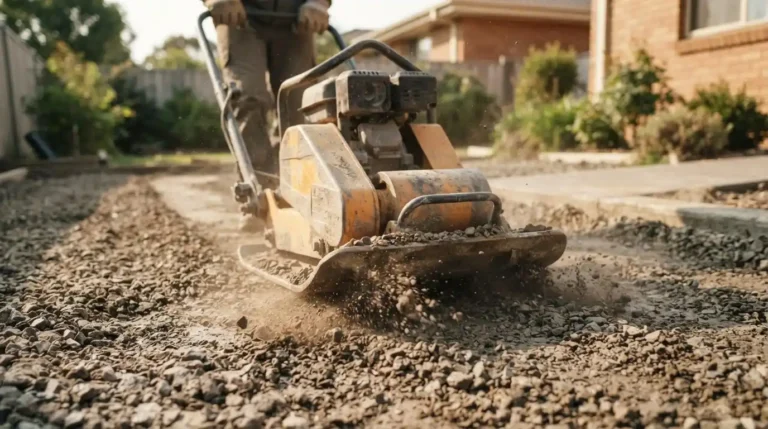
Compaction is one of the most important parts of the base work.
The general process is:
- Spread the aggregate evenly.
- Build the base in manageable lifts.
- Add suitable moisture when the material requires it.
- Compact with a vibratory plate compactor or suitable equipment.
- Check for low spots and movement.
- Recompact areas that remain soft.
A plate compactor helps reduce voids and locks the aggregate together.
A roller may be useful in larger areas. A hand tamper can help in tight locations where larger equipment cannot reach.
The goal is not simply to make the rock look flat. The goal is a dense, stable base that does not shift under normal use.
What Happens If You Skip the Sub-Base?
Skipping the base on a soil installation can create problems that appear after the turf is already installed.
Common symptoms include:
- Uneven settling
- Soft spots
- Depressions
- Puddling
- Drainage problems
- Turf movement
- Wrinkles or buckling
- Premature wear
- Repair costs
This is why base preparation often matters more than the turf itself.
A high-quality turf product cannot compensate for unstable ground below it.
Does the Base Change Depending on How You Use the Turf?
The core principles stay the same, but the details shift by application.
Application | Main base consideration |
Residential lawn | Stability and everyday drainage |
Pet area | Fast drainage, often no weed barrier |
High-traffic yard | Extra compaction and depth |
Playground | Stability plus fall-safety requirements |
Putting green | Smooth, level finish, often decomposed granite |
Sports or play area | Load-bearing strength and consistent surface |
Sloped yard | Erosion control and base retention |
Rooftop | Lightweight panel systems instead of loose rock |
Sub-Base vs. Leveling Sand vs. Infill: What's the Difference?
These three terms get mixed up constantly, so here’s the short version.
Layer | Job |
Sub-base | Structural foundation beneath the turf |
Leveling sand | Smooths minor surface irregularities where needed |
Infill | Sits inside the turf fibers to support them and add weight |
The sub-base for artificial turf carries the structural load. Infill never replaces it, no matter how much you add.
Common Sub-Base Mistakes
- Treating sand as a structural base instead of a proper aggregate
- Choosing a material based on price alone, ignoring drainage needs
- Skipping compaction to save time
- Building over soft or unstable ground without fixing it first
- Ignoring the site’s natural drainage pattern
- Using the wrong thickness for the traffic level the lawn will get
Most turf failures trace back to one of these shortcuts, not the turf itself.
How to Choose the Right Base Material
Before choosing your base material, answer seven questions:
- What surface is underneath the turf?
- Is the native soil stable?
- Does water drain properly?
- What aggregate suits the site?
- How thick should the compacted base be?
- How much traffic will the turf receive?
- Are there special conditions such as slopes, rooftops, or limited access?
This approach is better than choosing a material because another installer used it.
The right base provides enough stability, drainage, and compaction for the actual installation.
What Does a Sub-Base Cost?
Current 2026 cost guides place artificial turf base material around $1.20 to $2.25 per square foot in many projects, although local prices vary by material, delivery, access, excavation, and labor. Angi’s current national data lists that range for base material.
That means a 500-square-foot area could represent roughly $600 to $1,125 for the base portion alone at that range.
Do not treat that as a complete installation price. Excavation, soil removal, disposal, drainage work, delivery, compaction, edging, turf, infill, and labor can add substantially to the final cost.
The cost of base work is money spent on the part of the lawn that you will barely see. It is also one of the parts that most affects how the finished turf performs.
Getting the Base Right in San Diego County
Soil conditions across San Diego County vary block to block, from sandy coastal lots to dense clay further inland. That variation is exactly why a cookie-cutter base depth doesn’t work for every yard here.
If you want it done right the first time, SD Home Turf offers artificial turf installation services in San Diego County built around your actual soil and drainage, not a one-size-fits-all spec sheet. Contact SD Home Turf for a free site evaluation and get a base plan suited to your yard, not a guess.
Frequently Asked Questions
Can you put artificial grass directly on soil?
You can physically lay it there, but it’s not recommended for a permanent lawn. Expect settling, drainage problems, and a shorter lifespan.
How thick should an artificial grass sub-base be?
Around 3 to 4 inches compacted is common for residential yards. Heavy traffic or poor drainage may call for more.
Can you install artificial grass over concrete without a sub-base?
Usually yes, if the slab is sound and drains properly. A foam underlay typically replaces the aggregate layer.
Can you use sand instead of a sub-base?
No. Sand alone doesn’t provide the structural stability a compacted aggregate base does, and it shifts more underweight.