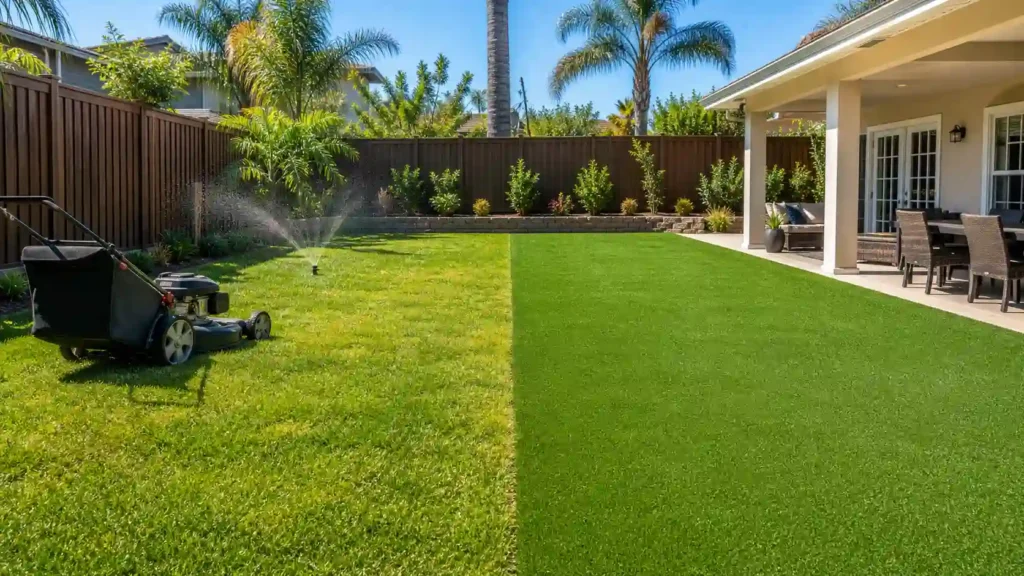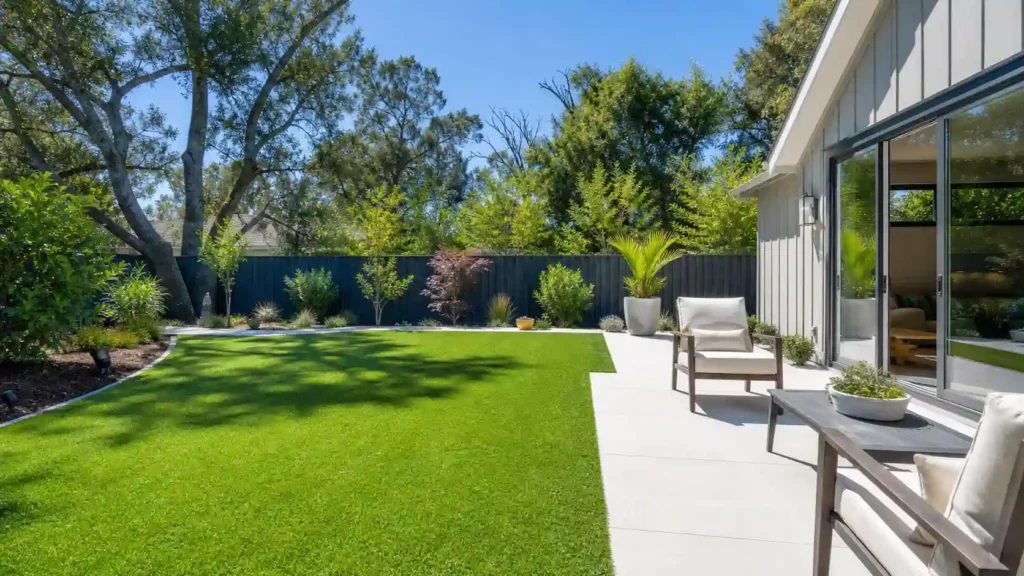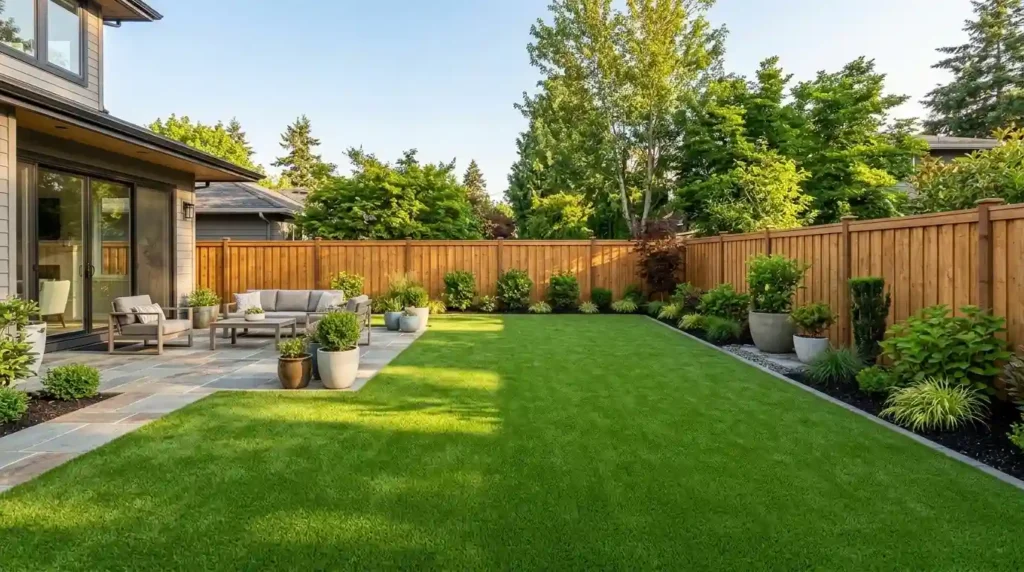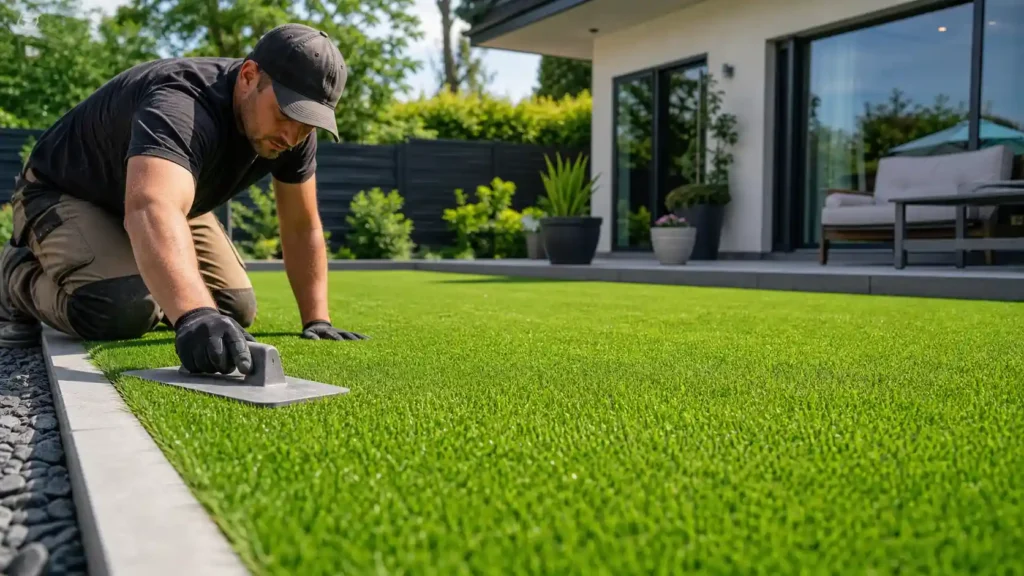
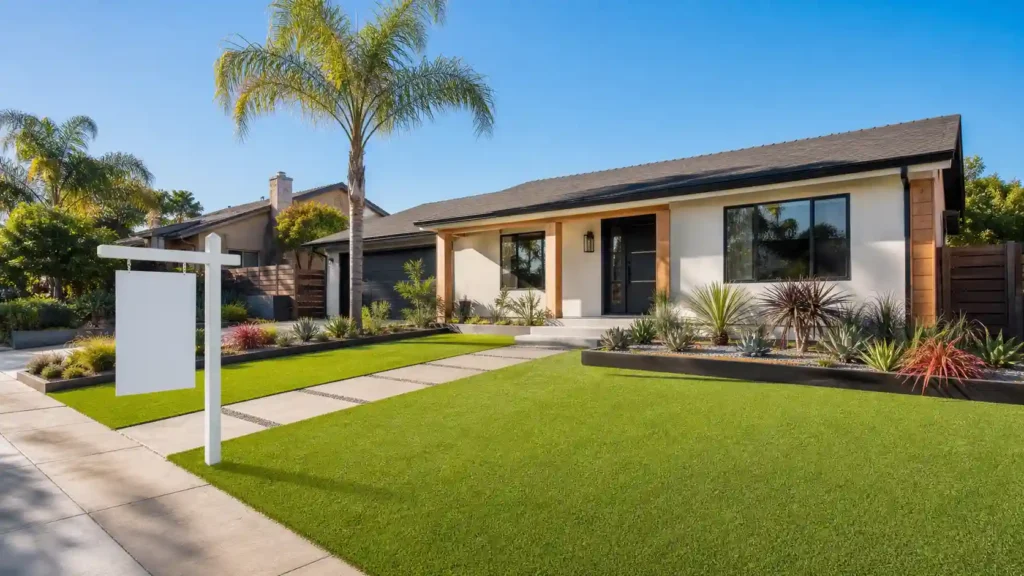
Does artificial turf increase home value? Not on its own. Turf can help a home sell by lifting curb appeal and catching the eye of potential buyers. But no proof shows it adds a set amount to resale value. The result depends on your home, your street, and how good the turf looks.
Four things decide the outcome: how the home is valued, how the yard looks, who is buying, and what you spend. This guide covers each one for homeowners in San Diego County. You will also learn when turf makes sense before a sale.
Artificial Turf Can Affect Home Value, But It Is Not a Guaranteed Value Increase
Artificial turf is one landscaping feature inside a whole property. Buyers pay for the house, the lot, the location, and the overall condition. The yard is one piece of that price.
Many owners ask, “does artificial grass increase home value?” and hope for a simple yes. The honest answer is that it can support value, but it does not guarantee it. Five things shape the result:
- Your current yard. Turf that replaces a dead natural lawn helps more than turf that replaces a healthy one.
- Local buyer preferences. Some areas love turf. Others still want real grass.
- Installation quality. Neat work looks like an upgrade. Sloppy work looks like a problem.
- Cost. A feature buyers like is still a poor deal if you overpaid.
- Market value. An attractive yard does not mean the appraisal rises by what you spent.
Say you spend $10,000 on turf. Comparable sales nearby may not show a $10,000 gap between homes with and without it. Turf can shape how buyers see the home, but property value follows the market.
Home Value, Curb Appeal, Buyer Perception and ROI: What Each Means
These four terms get mixed up often. Each one measures something different.
Term | What it measures | How turf affects it |
Home value (market value, appraised value, sale price) | What the home is worth, what an appraiser reports, and what a buyer pays | Indirect. Turf may support the sale price but rarely sets it. |
Curb appeal | How the home looks from the street | Direct. A green, even yard makes a strong first impression when the turf looks good. |
Buyer perception | What buyers think a feature means for them | Mixed. Some see less work and lower water bills. Others prefer natural grass. |
ROI | Money back compared with money spent | Uncertain. Savings count, but a resale premium is not proven. |
A yard can score high on curb appeal and still not change the appraisal. Keep the four ideas apart as you read.
ipsum dolor sit amet, consectetur adipiscing elit. Ut elit tellus, luctus nec ullamcorper mattis, pulvinar dapibus leo.
How Appraisers Treat Artificial Turf
An appraiser values a home mostly through comparable sales, called comps. They study similar homes nearby that sold recently. Then they adjust for size, age, and condition.
Turf rarely gets its own dollar line. Fannie Mae’s appraisal guidance points to comps and rates property condition and quality as a whole, not by one upgrade. Appraisers think in terms of contributory value, which is how much one feature adds to the total. For turf, that amount is often small or hard to prove.
Turf can still lift the way the property’s condition and presentation read. The Appraisal Institute advises homeowners to keep yard design in line with comparable properties nearby. That means neighborhood norms matter. Turf fits well on a street where many homes have it. Worn turf lowers the condition rating anywhere. The Appraisal Institute links curb appeal and landscaping to resale potential, but it does not give a fixed turf percentage.
Curb Appeal: Where Turf Helps and Where It Does Not
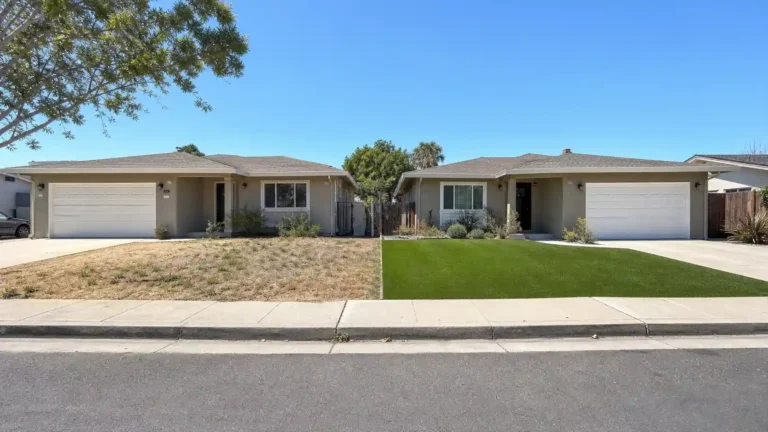
Turf helps most in the first ten seconds. A green yard stays green all year. It never shows drought browning or a patchy lawn. Buyers often see your home online first, so listing photos and online listings matter. Turf looks the same in every season of photos.
That is where a strong first impression starts. The wider list of daily perks is in our guide on the benefits of artificial turf for a residential backyard.
Turf does not help when it looks fake. Shiny blades, wrinkles, and visible seams tell buyers the yard was done cheaply. Faded color does the same. A neat natural lawn can beat worn turf. Curb appeal only counts when the turf looks good.
How Buyers See Homes With Artificial Grass
Buyers react to homes with artificial grass in different ways. Three groups tend to like it:
- Busy households that want their weekends back.
- Water-conscious buyers who care about water conservation.
- Owners who dislike mowing and yard work.
Water bills drive much of this interest. Outdoor use takes about 30 percent of a typical household’s water, and up to 60 percent in dry areas like the Southwest. Synthetic grass skips the gallons of water a natural lawn needs. For San Diego County buyers, low-maintenance appeal and water savings can become strong selling points.
Other buyers prefer natural grass. They want a soft, real lawn for kids, dogs, or gardening. Some still picture the stiff “AstroTurf” of old and doubt that modern turf looks real. In a neighborhood where natural lawns are the norm, turf can stand out for the wrong reason.
Our guide on the pros and cons of artificial turf shows both sides of that trade-off. A local real estate agent can also tell you how buyers on your street respond.
What Makes Turf Add Value or Take It Away

Buyers judge turf with their eyes and nose. Here is what they notice:
- Seams: Visible lines between rolls look cheap.
- Wrinkles and ripples: These suggest weak work underneath.
- Faded color: Sun-bleached synthetic turf looks old.
- Pile quality: Thin, flat blades look fake. Dense, mixed-tone blades look real.
- Standing water: Puddles point to a drainage problem.
- Odor: Pet smells turn buyers away fast.
- Heat: Turf in full sun can feel hot underfoot in summer.
- Turf age: Matted, worn turf signals a coming replacement bill.
- Installer and warranty: A known installer and a written warranty build trust.
Good turf shows none of these problems. That is the gap between turf that helps a sale and turf that hurts it.
Is Artificial Turf Worth It as an Investment?
Treat turf like a budget, not a promise. First, find the cost. Installation cost per square foot changes with site work, materials, and yard size. Our guide on how much it costs to install artificial turf explains the main factors.
Second, count what you save. Turf cuts water bills and maintenance costs. You skip mowing, fertilizer, and most watering. These water savings and maintenance savings add up to real cost savings.
Third, check turf lifespan. Turf with many years left is an easier sell. Read how long artificial turf lasts to plan around it.
Here is an example with made-up numbers. Turf costs $9,000 and saves $900 a year in water and upkeep. The payback period is about ten years. If you sell after three years, the savings cover only part of the cost.
So, does artificial turf increase home value enough to repay its cost at sale? Often the yearly savings do more work than any resale premium.
No proven resale percentage exists for turf. Be careful with sites that quote one. Most landscaping figures cover plants, trees, and lawn care, not turf. The National Association of Realtors tracks projects like lawn care and irrigation systems in its outdoor features report.
Should You Install Turf Before Selling Your Home?
Install if | Skip if |
Your natural lawn is dead, patchy, or costly to water | Your lawn is healthy and neat |
Nearby homes already have turf | Neighbors keep natural lawns and buyers expect them |
Your HOA rules allow it in writing | HOA rules block or limit turf |
You will stay a few years and enjoy the savings | You plan to sell within months on a tight budget |
Talk to your listing agent before you decide. Get HOA approval in writing first. Then look at the shape of your existing lawn. A worn yard gains the most from a change.
If you installed artificial turf years ago, gather your records. Buyers like proof. Keep these together:
- The warranty, and the terms on warranty transfer to a new owner.
- Installer details.
- Receipts.
- Care instructions and care notes.
Thinking about artificial turf installation in San Diego County? SD Home Turf builds turf that looks natural and holds up in local sun. Contact SD Home Turf today to request a quote and see what turf could do for your yard.
So, Does Artificial Turf Increase Home Value?
It can help, but it is not guaranteed. Turf works best when it looks natural, fits the neighborhood, and costs a sensible amount. Judge it by curb appeal, buyer appeal, and long-term savings, not by a promised percentage.
Ready to plan your yard? Explore our artificial turf installation services.
FAQs
Will an appraiser add value for artificial turf?
Rarely as a separate line. Appraisers compare your home with recent nearby sales. Good turf can support the overall condition rating. Hand over your records to help.
How much value does artificial turf add?
No proven percentage exists. The effect depends on your market, your yard, and the turf quality. Treat any fixed number as a guess.
Can artificial turf lower a home’s value?
Yes. Visible seams, wrinkles, odor, standing water, or worn turf can turn buyers away. Poor work costs you.
Do buyers prefer artificial grass or natural grass?
It varies. Busy and water-conscious buyers often like turf. Buyers who want a soft real lawn may not.
Does artificial turf help a home sell faster?
It may, mainly through better listing photos and a neat first impression. No study proves it. A local agent can tell you how turf fares in your area.