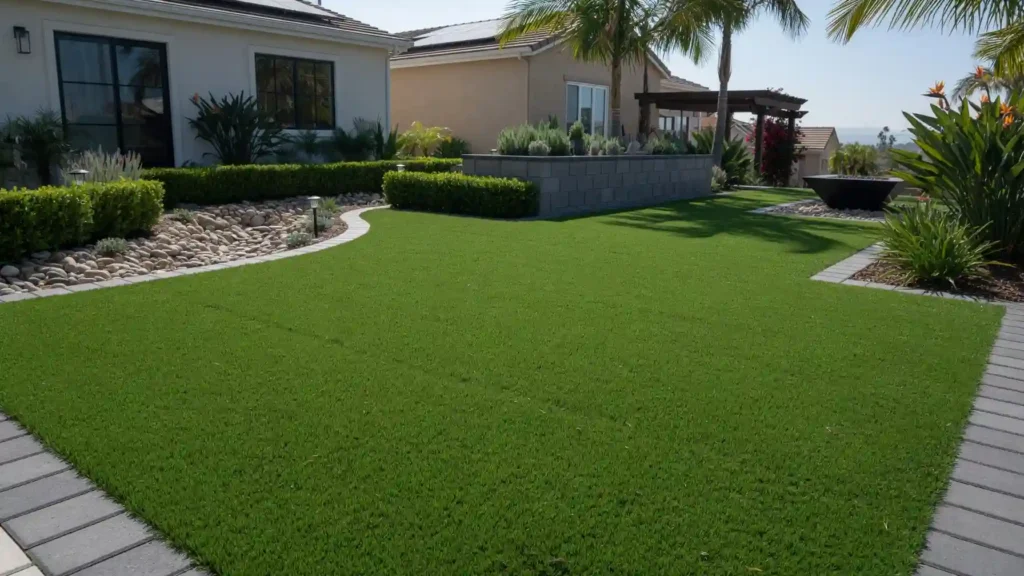
Most quality artificial turf can last about 10 to 20 years outdoors. Premium residential products may last longer, while heavy traffic, poor drainage, strong UV exposure, or weak installation can shorten useful life.
If you are asking how long does artificial turf last, there is no single number. Turf quality, installation, use, sunlight, climate, drainage, and maintenance all affect the result. This guide breaks down what actually decides your turf’s lifespan.
How Long Does Artificial Turf Last?
For a typical residential lawn, a useful planning range is about 10 to 20 years. Well-made turf with good UV protection, a sound base, proper drainage, and regular care can stay useful toward the longer end of that range.
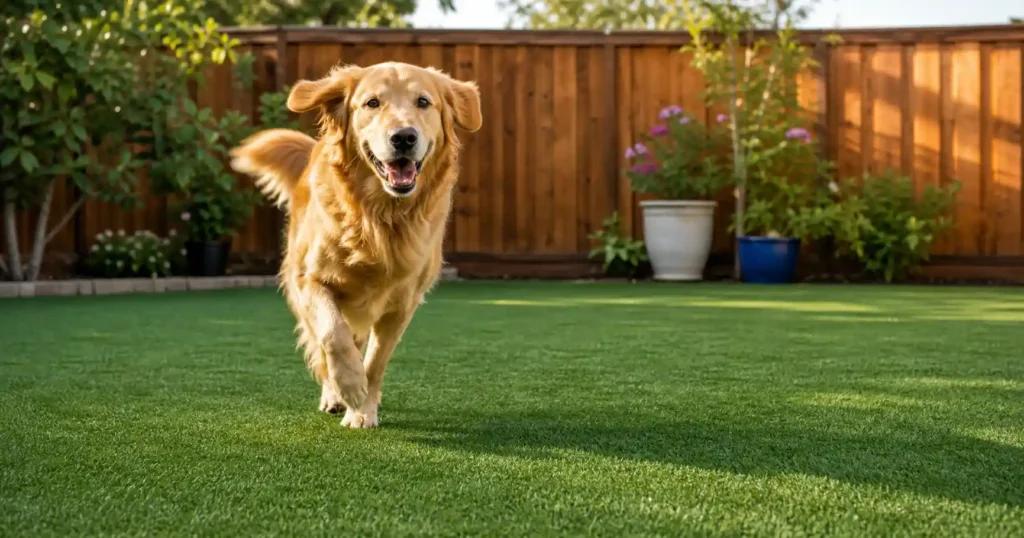
High-traffic areas can wear sooner. Pet areas may also need more care because of repeated traffic, digging, urine, cleaning, and infill movement. Sports and commercial spaces face even more repeated use.
The word useful matters. Artificial grass does not normally stop working on one set date. Fibers may flatten before the backing fails. A seam may need repair while the rest of the lawn still looks good.
That means the lifespan of artificial turf should be judged as a complete system. The life expectancy of artificial turf depends on the product, installation, usage, environment, and maintenance.
Artificial Turf Lifespan at a Glance
Application | General planning range | Main wear factors |
Low-traffic residential lawn | 15–20+ years | UV exposure, light traffic |
Typical residential lawn | 10–20 years | Traffic, sun, maintenance |
High-traffic residential yard | 8–15 years | Frequent walking, children, pets |
Pet area or dog run | 8–15 years | Traffic, urine, cleaning, infill |
Playground | 10–15 years | Heavy foot traffic, impact, maintenance |
Sports or commercial area | 8–12+ years | Repeated traffic, equipment, maintenance |
These are general planning ranges, not expiration dates. Actual results vary with turf construction, installation quality, climate, usage, drainage, and care.
A product warranty should also be checked before purchase. Warranty terms vary between turf products and manufacturers.
What Is the Life Expectancy of Artificial Turf?
The life expectancy of artificial turf comes down to how the fibers and backing hold up over time under sun, foot traffic, and weather. It’s less about a fixed number of years and more about when the material starts to visibly break down. A well-built lawn ages slowly and gradually. A cheap one fades and flattens fast.
What Determines the Lifespan of Artificial Turf?
Turf Quality and Fiber Construction
The first factor is the quality of the turf itself. Artificial grass uses synthetic yarn, backing, and infill. Each part affects long-term performance.
Polyethylene is common in residential turf because it can provide a soft feel with good outdoor performance. Nylon is known for strong recovery after pressure and is often used where higher performance is needed. Polypropylene is often found in lower-cost products and some specialty uses.
Fiber material alone does not tell the whole story. Also look at the yarn, denier or dtex, fiber density, pile height, face weight, backing, and UV stabilizers.
A dense turf with good UV protection and strong backing can handle outdoor exposure better than a low-quality product. Ask for the product data sheet before making a choice.
These construction details also help explain artificial grass durability.
Installation Quality
Good turf can still perform poorly when installation is weak.
A lasting installation starts with proper base preparation. The site may need an aggregate or crushed rock base. That base must be placed and compacted correctly.
Drainage is also critical. Water needs a clear path away from the surface. Poor preparation can lead to wrinkles, sinking, standing water, edge lifting, or seam problems.
Seams need proper alignment and bonding. Adhesive, where required, must be used correctly. Edges need secure edge restraint or anchoring. A weed barrier may also be suitable for some installations.
The turf is only one part of the finished lawn. The base, drainage, seams, and edges all affect useful life.
Foot Traffic and Usage
A decorative front lawn gets different wear from a backyard used every day.
Think about your use:
- Low traffic: decorative lawns and occasional walking.
- Medium traffic: family yards, children, and common walkways.
- High traffic: dog runs, busy play areas, sports, and commercial use.
Repeated foot traffic can bend fibers and move infill. Heavy use can also place more stress on seams and edges.
Children and pets often create concentrated wear. Sports areas can experience repeated running, turning, and equipment use.
Sunlight and UV Exposure
Sunlight is one of the most important outdoor factors.
UV radiation can slowly affect synthetic fibers. Long exposure can contribute to UV degradation, fading, brittleness, and reduced fiber performance.
Quality turf uses UV stabilizers or UV inhibitors to help limit this damage.
When comparing products, ask about UV protection and the product warranty. A yard in full sun can age differently from one that receives shade for part of the day.
Drainage and Moisture
Good drainage protects the entire turf system.
Artificial turf normally uses drainage holes in the backing. Beneath it, an aggregate base helps create a stable surface and drainage path.
If water cannot move away, pooling can occur. Trapped moisture can contribute to odors and conditions that encourage mold or mildew.
Drainage is especially important for pet areas. Dog urine should pass through the turf system rather than remain trapped near the surface.
Maintenance
Artificial turf needs less work than natural grass, but it is not maintenance-free.
Regular brushing can help lift fibers in busy areas. Remove leaves and other debris before they build up. Rinsing helps remove dust and light residue.
Clean pet waste promptly. Check the infill for low or compacted areas. Clean spills before they become harder to remove.
Simple care can help preserve both appearance and performance.
What Makes Artificial Grass Durable?
Artificial grass durability comes from a few things working together: strong fiber material, a solid backing, UV protection, and a well-built base underneath. Durable turf resists matting, holds its color, and keeps its shape under regular foot traffic. Cutting corners on any one of these shortens the life of the whole system, even if the rest is high quality.
How Long Does Turf Last Outside?
Outdoor turf faces sunlight, UV exposure, heat, rain, temperature changes, moisture, and daily traffic.
The key question is not only whether a product is made for outdoor use. You also need to consider the turf, backing, installation, drainage, and expected use.
A shaded yard with light traffic can experience different wear from an exposed yard with daily foot traffic. A well-drained site can also perform better than one where water remains trapped below the surface.
Outdoor weathering is normal. The goal is to choose materials and an installation system that fit the conditions.
How Climate Affects Artificial Turf Lifespan
Sun and UV Exposure
More sun hours mean more UV stress on the fibers. Regions with intense, near year-round sunshine need turf built with strong UV stabilizers to avoid early fading.
Heat and Surface Temperature
High heat can soften fibers during the hottest part of the day. This doesn’t damage quality turf, but it can make the surface hot to the touch until it cools down at night.
Rain and Drainage
Heavy rain tests the drainage system. A properly built base moves water through quickly. Poor drainage leads to pooling, soggy spots, and faster wear at the base level.
Humidity and Moisture
Humid climates raise the risk of mold and mildew, especially in shaded areas that don’t dry out fully between rains.
Freeze-Thaw Conditions
In colder regions, repeated freezing and thawing can stress seams and the base if the install wasn’t done correctly.
Artificial Turf Lifespan in San Diego
San Diego has its own outdoor conditions. Many properties receive strong sun, warm weather, outdoor traffic, and long dry periods. Coastal properties can also face salty air, wind-blown debris, and moisture.
San Diego Sun and UV Exposure
Direct sunlight should be considered when choosing turf in San Diego.
Look for strong UV protection and a clear product warranty. A shaded backyard and a fully exposed yard should not be expected to age at the same rate.
Heat and Outdoor Surface Conditions
Artificial turf can feel much warmer than the surrounding air on sunny days. This is normal for synthetic surfaces.
For long-term performance, the bigger concerns are repeated exposure, turf construction, UV protection, and backing quality.
Coastal Conditions
Coastal properties may experience salty air, wind, debris, and moisture.
These conditions do not create one fixed lifespan. They make good product selection, cleaning, and drainage more important.
Rain and Drainage
San Diego has long dry periods, but rain can be intense when it arrives. A good drainage path helps move water away from the turf.
Poor drainage can create problems regardless of turf quality.
Residential Traffic and Pets
A family yard, dog run, and decorative lawn have different wear patterns.
If pets use one small area every day, that area may need more cleaning and brushing than the rest of the yard.
For San Diego homeowners, the best approach is to match the turf, base, drainage, and maintenance plan to the property rather than promise one exact lifespan.
Does an Artificial Turf Warranty Equal Its Lifespan?
No. A warranty period is not the same thing as an expiration date.
A manufacturer warranty may cover certain product defects, UV performance, or other listed conditions. An installation warranty may cover workmanship.
Before buying turf, review the product warranty, coverage period, exclusions, claim rules, and any conditions for proper maintenance.
For example, HomeTurf currently lists a 15-year turf warranty and a two-year workmanship warranty on some of its service pages. Those are warranty terms, not a promise that every lawn must be replaced at year 15.
This distinction also helps separate normal wear from a manufacturing defect.
For a closer look at how these terms work across brands, the Synthetic Turf Council publishes technical guidelines worth reviewing before you buy.
What Wears Out First on Artificial Turf?
- Turf Fibers: Fibers may flatten, fade, lose some recovery, or become brittle after long exposure and heavy use.
- Backing: The backing holds the yarn in place. Damage or deterioration can affect stability.
- Infill: Infills can move, compact, or become uneven. Pet areas may need more frequent cleaning and infill care.
- Seams: Seams can separate when bonding, base preparation, or heavy use creates problems. Small seam failures can often be repaired.
- Base and Drainage: The base supports the entire turf system. If it settles or drains poorly, you may see low spots, wrinkles, pooling, or movement.
A useful way to judge turf aging is:
component → failure → visible symptom → possible repair
That gives you a better answer than looking only at the age of the turf.
Signs Your Artificial Turf Needs Replacement
- Persistent matting: fibers stay flat after proper brushing.
- Severe fading: large areas have lost noticeable color.
- Brittle or damaged fibers: fibers break or feel less flexible.
- Bald or thinning areas: yarn coverage has become visibly poor.
- Backing deterioration: the backing is cracking, separating, or losing strength.
- Repeated seam separation: repairs do not solve the same problem for long.
- Persistent drainage problems: water keeps pooling after drainage work.
- Widespread deterioration: problems affect much of the lawn.
One damaged spot does not always mean the whole lawn needs replacement.
Can Artificial Turf Be Repaired Instead of Replaced?
Yes, when the damage is localized.
A small damaged section may be cut out and replaced. A seam can be repaired. Edge damage can often be corrected. Infill can be added or redistributed.
Some drainage correction may involve fixing the affected area. In more serious cases, the base repair may be needed.
Replacement makes more sense when deterioration is widespread, the backing has failed across large areas, fibers have lost too much performance, or the base has major problems.
Inspect the turf and base before replacing an older lawn. A proper repair may extend useful life without replacing material that is still in good condition.
How to Make Artificial Turf Last Longer
- Brush High-Traffic Areas: Brush against the direction of flattened fibers to help them stand up.
- Remove Leaves and Debris: Keep organic debris from building up. This also makes cleaning easier.
- Rinse the Turf: Use clean water to remove dust and light residue when needed.
- Clean Pet Waste Promptly: Remove solid waste quickly and rinse areas used often by pets.
- Maintain Infill: Check for low or compacted areas and restore infill when the product calls for it.
- Check Drainage: Watch for slow drainage or pooling after rain. Fix small problems before they grow.
- Inspect Seams and Edges: Look for loose seams, lifted edges, or movement during routine cleaning.
- Address Small Problems Early: A small seam or drainage issue is usually easier to fix than a larger failure.
For homeowners planning a new lawn, artificial turf installation services in San Diego County can help address turf selection, base preparation, drainage, seams, and edges before the lawn is finished. SD Home Turf serves San Diego County and offers artificial turf installation among its listed services.
Ready to replace an old lawn or install new turf? Contact SD Home Turf for a free consultation and a project-specific recommendation for your San Diego County property.
Artificial Turf vs. Natural Grass: Which Lasts Longer?
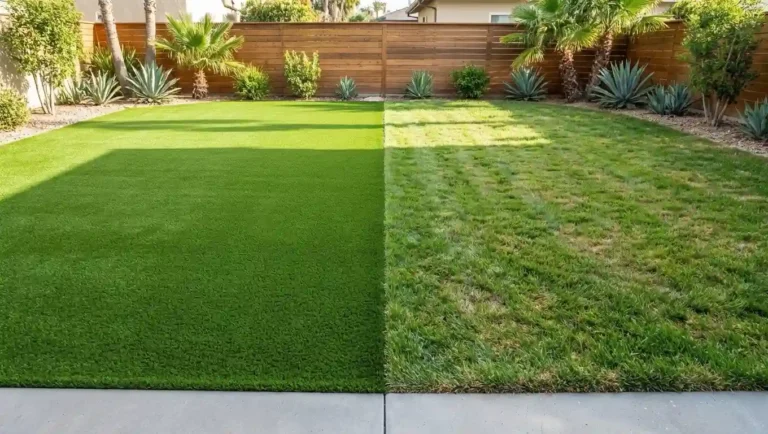
Both systems can provide years of service, but they age in different ways.
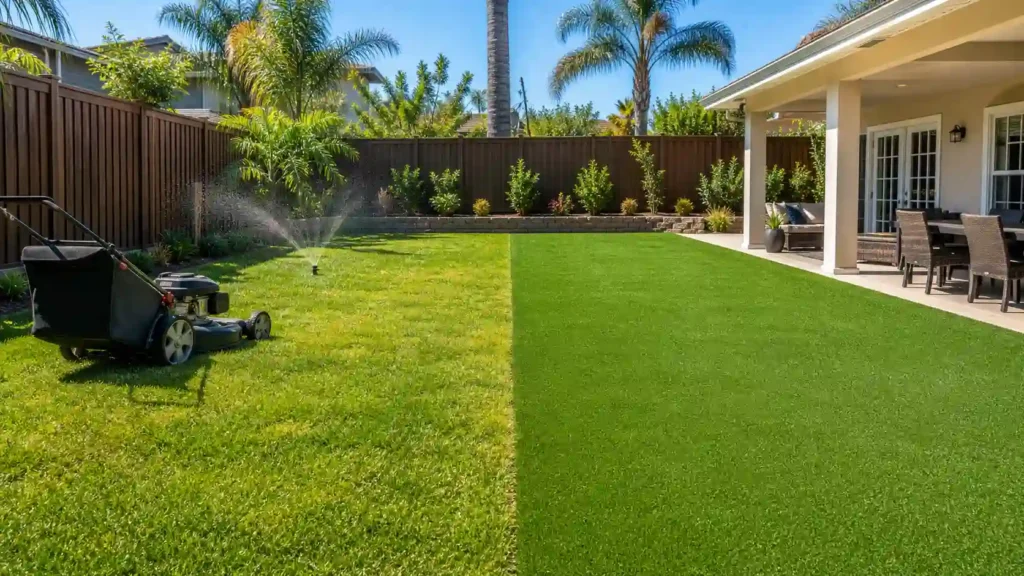
Artificial turf does not need mowing, routine watering, or fertilizer to keep its green appearance. Natural grass can recover from some wear through growth, but it needs ongoing care such as irrigation and mowing.
The cost also depends on the project.
Recent 2026 San Diego estimates place standard professional artificial turf installation around $9 to $13 per square foot. Another current local estimate gives a broader range of about $11 to $26 per square foot, depending on the turf, site work, project size, and installation details.
That means a 1,000-square-foot project could cost roughly $9,000 to $26,000 before rebates or unusual site costs.
If a $12,000 installation remains useful for 15 years, the simple installation-only average is about $800 per year. This does not include maintenance, repairs, financing, or future replacement.
San Diego also maintains water-conservation rebate programs. Check current eligibility before adding a rebate to your budget. City of San Diego rebate information
Bottom Line: How Long Should You Expect Artificial Turf to Last?
The best answer is not one number. A typical residential lawn can often be planned around 10 to 20 years of useful service. Traffic, pets, sunlight, climate, installation quality, drainage, and maintenance can move that result higher or lower.
For a San Diego property, focus on UV exposure, heat, drainage, traffic, pets, and installation quality. Choose the turf system for how you will actually use the yard.
If you already have an older lawn, do not judge it by age alone. Inspect the fibers, backing, seams, infill, and base. A repair may be enough. If problems are widespread, replacement may provide better long-term value.
If you are planning a new installation, SD Home Turf can help you select a turf system based on your yard, use, and local conditions. Request a free consultation to discuss your San Diego County project and get a project-specific recommendation.
Frequently Asked Questions
Does artificial turf fade in the sun?
It can fade over time. Quality UV-resistant fibers are designed to reduce sun-related color loss and fiber damage.
Does heavy foot traffic shorten artificial turf’s lifespan?
Yes. Heavy traffic can flatten fibers, move infill, and place more stress on seams and edges.
Does artificial turf last longer with maintenance?
Regular brushing, debris removal, cleaning, pet waste care, infill checks, and drainage inspections can help preserve the turf system.
Does an artificial turf warranty mean it will last that long?
No. A warranty sets out the manufacturer’s coverage for stated conditions. It is not an expiration date.
How often does artificial turf need to be replaced?
There is no fixed replacement schedule. Inspect the fibers, backing, seams, infill, drainage, and base. Replace the lawn when repairs are no longer practical.
Can artificial turf be repaired?
Yes. Localized seam, edge, infill, drainage, and turf damage can often be repaired. Widespread failure may justify replacement.