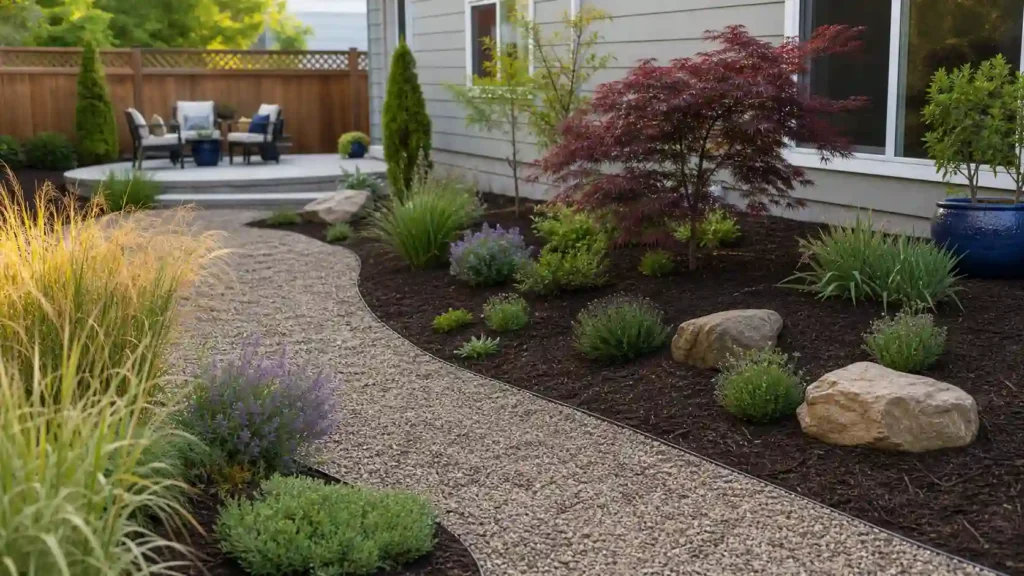
The best cheap landscaping hacks start with what you already have. Reuse old bricks and pots, divide plants from your own beds, and hunt for free mulch or salvaged stone. Cut crisp bed edges and build simple paths from gravel or wood chips. Then clean and prune what is already there before you buy anything new.
The biggest changes come from reuse, cleanup, clear edges, and smart planting, not costly add-ons. Each hack below helps you spend less and still get a polished look.
1. Start With What You Already Have
Before you buy anything, walk the yard. Check the garage, the shed, and every existing bed. You will likely find extra bricks, stones, wood, and old planters. Garden structures like a spare trellis or gate can work again too. Existing containers can hold new plants after a quick scrub or a coat of paint. Existing plants can move to a better spot, and existing soil from one bed can fill another.
Repurposing saves twice. You skip the cost of new materials, and you skip the cost of hauling old ones away. Gardenista makes the same point: reuse and salvage before you shop. This habit is the base of inexpensive landscaping. Existing landscaping materials often look fine after a good cleaning.
2. Get Free or Nearly Free Landscaping Materials
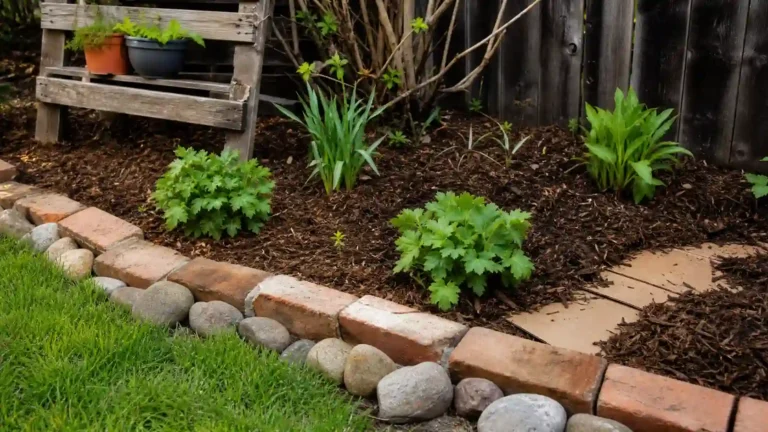
Materials add up fast. These three sources cost little or nothing.
Look for free mulch and compost
Mulch and compost are the easiest free finds. Many cities turn yard waste into both municipal recycling and green-waste facilities. Check your city or county website for free pickup sites and dates. Free mulch and compost are the heart of low cost landscaping, since they feed soil and cover bare dirt.
In San Diego, the City runs the Miramar Greenery. City residents can self-load up to two cubic yards of compost or mulch per visit with proof of residency. Check current hours and rules before you go. Residents of other cities can browse the San Diego County compost and mulch hub. You can also ask local tree trimmers about fresh wood chips.
Find salvaged hardscape materials
Bricks, concrete pavers, natural stone, and boulders are hard, the hard parts of a yard. See what hardscaping includes if you want the full list. Hunt for reclaimed bricks and reclaimed wood at salvage yards. Watch curb alerts and local marketplace or community giveaway groups. Construction leftovers are another good source. Ask nearby job sites before the crew hauls them off. Boulders are heavy, so plan how you will move them first.
Ask landscaping crews about usable leftovers
Landscaping contractors often finish a job with extras. That can mean excess mulch, extra stone, or partial paver quantities. Ask if they have leftover landscaping materials they would rather give away than haul. Be polite and flexible on pickup time. Not every crew has extras, but asking costs nothing.
3. Divide Plants Instead of Buying More
Dividing plants cuts costs for real. Dig up a mature perennial, split the clump, and replant the pieces. Ornamental grasses and daylilies divide well. Hostas do too, but they prefer mild, shady yards, so skip them in hot, dry spots.
Plant cuttings are another form of plant propagation. Snip a healthy stem and root it in water or soil. Succulents are an easy start. Trade your extras with neighbors. Plant swaps and neighbor exchanges let you try new plants for free, and community gardens often host swaps.
When you must buy, pick smaller pots. They cost less and fill in over time. Check nursery clearance racks and fall sales, where some plants drop by half.
4. Use Cardboard and Mulch to Control Weeds Cheaply
Cardboard is a free, no-dig weed barrier. It blocks light, so the weeds under it die back. This is one of the best cheap landscaping ideas for large bare areas. Follow these steps:
- Remove tape and labels from flattened cardboard.
- Lay it over the weeds, and overlap the edges so no light gets through.
- Wet it down well so it stays flat.
- Cover it with a 3-inch layer of organic mulch, like wood chips or shredded bark.
Oregon State University Extension advises plain brown cardboard, not glossy or printed sheets. Newspaper or plain paper works too, in a thick layer. Over time, the cardboard breaks down and feeds the soil. Keep mulch a few inches off plant stems to prevent rot.
Cardboard is not a cure for every weed. Persistent perennial weeds can push through and may need extra control. Skip it where it could block drainage, like low spots where water needs to flow, or where it would cover irrigation parts.
5. Create Clean Edges Without Buying Expensive Edging
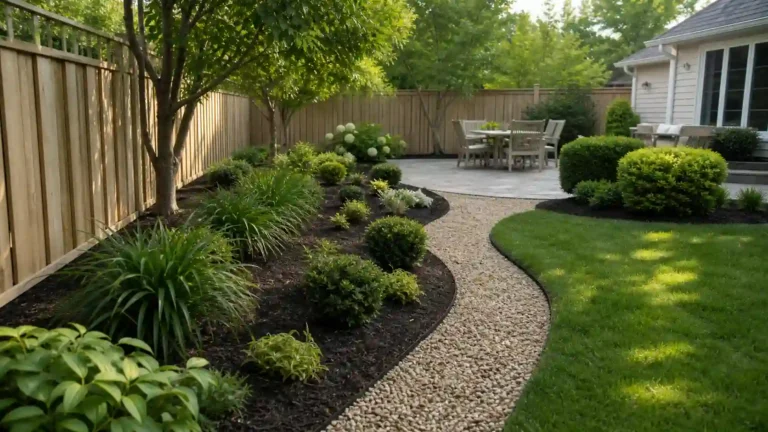
A sharp edge makes a yard look planned. You do not need plastic or stone lawn edging to get one. Use a flat spade and cut a trench about 4 inches deep between the lawn and the garden bed. Slope the lawn side at about 45 degrees. This forms a neat mulch trough that holds mulch in place. The clear bed line makes even a simple yard look cared for.
Plan the shape first. Lay a garden hose on the grass and bend it into a smooth curved border. String or spray paint works too. Step back, adjust the curved bed layout, then dig along the line. Gentle curves look better than tight wiggles.
6. Use Gravel or Wood Chips for Simple, Low-Cost Paths
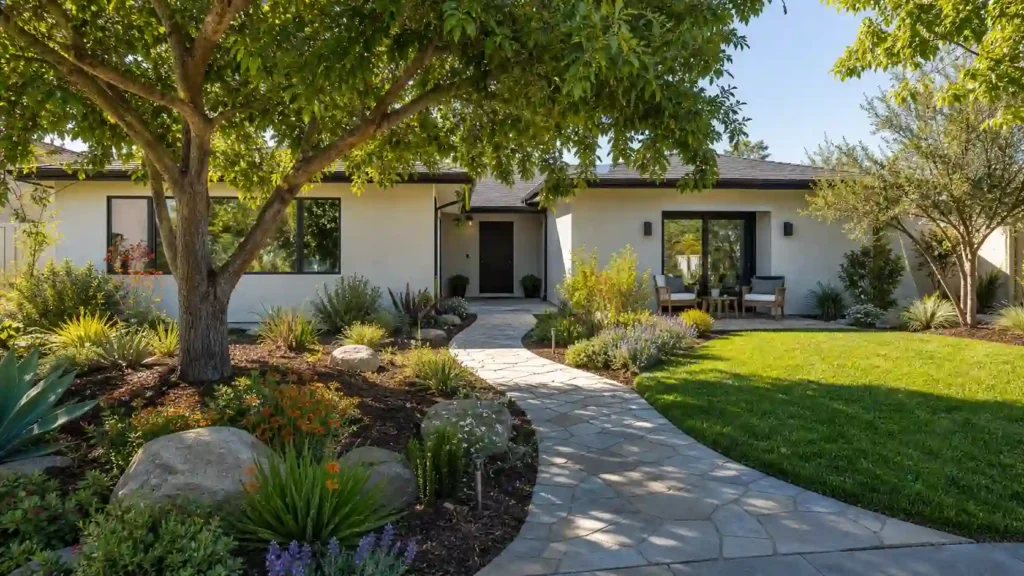
Loose materials make easy garden paths. Pea gravel and wood chips cost far less than poured concrete or flagstone. A simple gravel path also gives a yard clear structure, one of the benefits of hardscaping in a small, cheap form.
Level the soil and tamp it down first. This base preparation keeps the path from sinking. Lay landscaping fabric under gravel to slow weeds. Add stepping stones where people walk most. Simple path edging, like a spade-cut line or a row of salvaged bricks, keeps loose material in place. Make sure water drains off the path and does not pool on it.
The cheapest material is not always the cheapest job. If the site needs heavy grading, drainage fixes, or extra stabilizing, costs climb fast.
7. Make One Focal Point Instead of Buying Many Features
One of the best cheap ways to make your yard look expensive is to pick a single focal point. Scattered decor splits the eye. One strong feature gives it a place to land. Designers call this visual hierarchy.
Try one of these:
- A specimen plant with bold shape or color
- One large container with an ornamental plant
- A small grouping of decorative stone
- A simple seating area
- A clean planting bed
Use repetition to support it. Plant grouping works better than scattered singles. Repeat the same plant in a tight group, and the bed looks planned.
8. Clean and Prune Before You Replace Anything
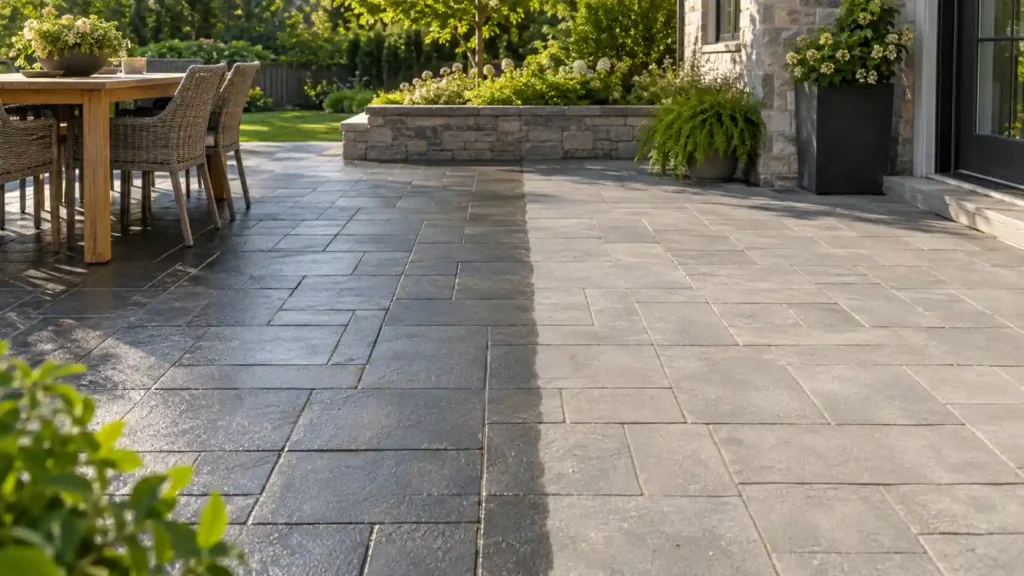
Dirty does not mean worn out. Pressure washing brings back concrete, pavers, and fences in an afternoon. Rent a pressure washer with a surface cleaner attachment for flat spots like driveways, so the results come out even. Test a small area first, since soft stone and old wood can scar. Pavers in good shape clean up well, but loose or cracked ones need repair first. Hardscape often looks new once the grime is gone.
Then comes strategic pruning. Remove dead growth and cut back overgrown shrubs. Trim low tree branches where it is safe, and call an arborist for large limbs. This opens sightlines and lets in light. Together, cleaning and pruning lift curb appeal without installing anything new.
9. Choose Plants That Save Money After Installation
A cheap plant that keeps dying is not cheap. Count water, maintenance, and plant replacement, not only the price tag. Native plants and other climate-adapted plants need less water and care once they settle in. Drought-tolerant plants and hardy perennials fit that list. Ground cover can fill bare soil and cut weeding. Colorado State University Extension notes that ground covers help reduce soil erosion. Check each plant’s water requirements before you buy, since water use drives long-term costs in San Diego County.
To cut water bills further, swap a thirsty strip of grass for gravel, sand, and drought-tolerant succulents. This xeriscaping move needs far less watering. A drip line, which puts water right at the roots, saves more.
10. Improve Your Yard in Phases
Landscaping on a budget works best in steps. Doing the whole yard at once is how money runs out halfway. Work in landscaping phases:
- Pick the most visible or problem area. The front yard and entry are common starts.
- Finish it well, including edges and mulch.
- Reuse leftovers and lessons from that area.
- Move to the next zone, like the backyard or other garden beds, when money allows.
Set your budget allocation by priority areas. Sketch future expansion, including hardscape like paths, so early work fits later work.
Cheap Landscaping Hacks That Give the Biggest Visual Return
Start at the top of this list if time is short:
- Clean, defined bed edges
- Fresh mulch
- One focal plant
- Plants grouped, not scattered
- Simple gravel or wood chip paths
- Clean existing hardscape
- Strategic pruning
- Reused or salvaged materials
- Consistent materials, not many different ones
Consistency and clear lines often look more expensive than extra features. Stick to two or three materials and repeat them across the yard.
Cheap Landscaping Hacks FAQs
What is the cheapest way to improve a yard?
Use what you already have. Add free mulch and compost, divided plants, a cardboard weed barrier, and salvaged materials. Cleaning and pruning costs only your time.
How can I make my yard look expensive on a budget?
Cut clean lines, add fresh mulch, group plants, and pick one focal point. Remove clutter and keep materials consistent.
What landscaping materials can I get for free?
You can find mulch and compost from local programs, plant divisions and cuttings, salvaged stone, bricks, pavers, and contractor leftovers. What you find depends on where you live.
Is gravel cheaper than pavers for a landscaping path?
Yes, gravel costs less per square foot. Grading, drainage, and base prep can change the total, so compare the full job.
Can cardboard really be used as a weed barrier?
Yes. Wet it, overlap the edges, and cover it with mulch. It struggles against persistent perennial weeds.
Should I upgrade my whole yard at once?
No. Phasing keeps spending in check and lets you adjust as you go.