
Can you install used artificial turf? Yes, if the turf is still sound and has enough usable pieces for your layout. The job is harder than laying new turf. Old wrinkles, cuts, adhesive, infill, and sun wear can all cause trouble, so check the condition before you start.
Most used artificial turf is reclaimed from past installs, mostly sports fields. It costs less and needs extra prep. One roll can weigh up to 2,000 pounds, so plan for a truck, straps, or a trailer.
Check the Condition of Used Turf Before Installing It
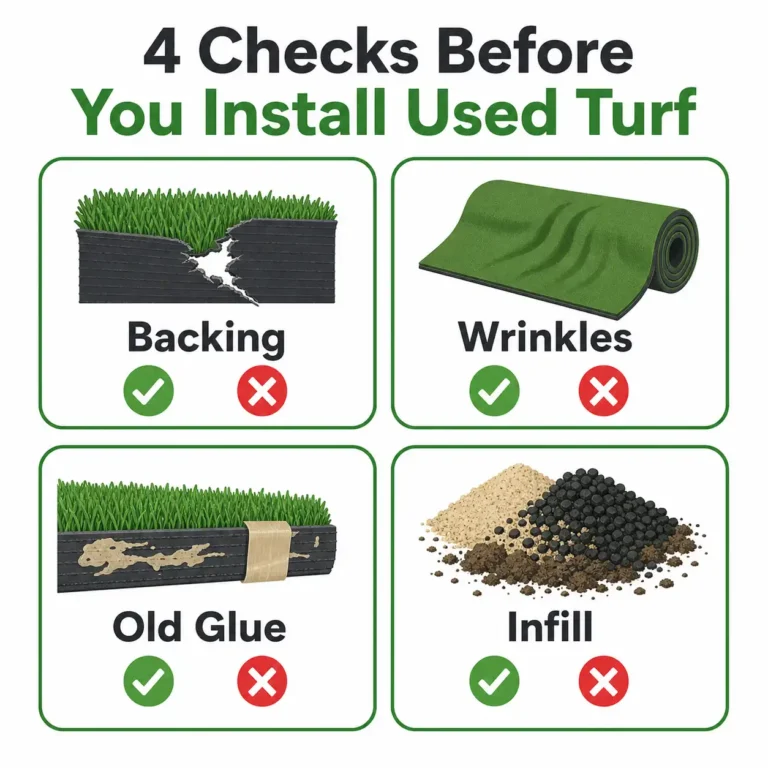
So, can you install used artificial turf in your yard? Not until you inspect it. Unroll the turf, or spread out each piece, and walk it slowly. Check the backing, fibers, edges, seams, and cuts. Look for wrinkles, old adhesive, leftover infill, and signs of wear, UV damage, or weathering. Sports turf takes a beating, so expect some flaws. Treat used synthetic turf like any used product. Find the problems before they end up in your yard.
Check the Backing for Damage
The turf backing anchors every tuft of grass blades. Look for tears, cracking, and spots where the layers have started to separate. Flex a section by hand. Tug a few tufts too. If they pull out with little effort, you have found a weakened area. Weak spots fail under foot traffic. Backing damage matters more than a faded surface, because it controls structural integrity. A tired surface can still work. A failing backing cannot.
Look for Wrinkles, Creases, and Distortion
Rolled turf often has wrinkles. Some are temporary creases. They relax when the turf sits flat in the sun, since warm turf softens. Permanent creases are different. Years of tight folding or poor storage cause backing distortion, and it stays visible after install as ridges. Lay each piece out for a few hours and check again. If a crease stays sharp, cut it out or skip that piece.
Check for Old Adhesive and Seam Damage
Turf from sports fields often keeps old seam tape and glue along its edges. Check every edge for adhesive residue. Old adhesive can keep new glue from bonding. Look at previous seams too. Peeled or ragged seams can hide backing damage underneath. Trim each edge back to clean backing. Then test how the cut edges meet. Seam alignment matters, because gaps and crooked rows show once the infill settles.
Check Leftover Infill and Contamination
Used turf often still holds old infill. Sports fields use silica sand, crumb rubber, or both. Push your fingers into the pile. Look for dirt, debris, clumps, and any bad smell. Contamination like this can clog the drain holes in the backing.
Some sports turf holds a deep root zone of sand and rubber, which adds a lot of weight. Crumb rubber comes from recycled tires, and federal agencies have studied it on fields. Read the EPA research page on tire crumb before you decide to keep it. If the infill looks clean, you can keep it or replace it. If not, remove it.
Make Sure the Used Turf Will Fit Your New Area

Square footage alone can fool you. What counts is the usable dimensions of each piece. Sports turf is cut into strips, so you may get previous cuts, irregular pieces, and worn edges you must trim off. Take measurements of every piece after you cut out damage. Then sketch your turf layout on paper before you haul anything.
Here is an example. Your yard is 15 by 20 feet, or 300 square feet. You find two 12 by 14 foot pieces, which total 336 square feet. That looks like enough. But each piece is only 14 feet long, so every 20 foot run needs a cross seam. The extra 3 foot strip needs more seams. More seams mean more places for problems.
Sellers of recycled artificial grass often list rough sizes only. Whether you buy from grass recyclers or pull rolls from sports facilities, ask for exact piece sizes. Trimming adds up to material waste, so plan for extra.
What Changes When You Install Used Turf?
The base work stays the same. The steps in our guide on how to install artificial grass still apply. Used turf adds one more job, because the material has already lived somewhere else.
Ground preparation still matters. You need to prepare the ground for artificial grass the same way. Remove plants and topsoil, then lay a weed barrier. Add a sub-base of crushed stone or decomposed granite. Finish the grading, then use compaction so the base stays firm and drains well.
Weight changes the job too. Use a truck, a trailer, and straps. Get help before you move a roll.
Here is what changes during turf placement:
- Inspect and clean the turf. Brush it, rinse off dust, and cut away anything damaged.
- Remove or assess old infill. Shaking out old sand or rubber makes heavy turf easier to move. Clean infill can stay.
- Plan around existing cuts. Put old cuts and seams where they cause the least trouble.
- Fit pieces carefully. Roll out the turf and use a utility knife for cutting. Trim away old sports lines, and trim edges straight so pieces meet cleanly.
- Repair or avoid damaged sections. Cut them out, or leave that piece unused.
- Make new seams where needed. Use seam tape and fresh adhesive on clean backing.
- Secure the edges. Edge securing keeps the turf from shifting. Lay every piece with the grass blades leaning the same way. Then fasten edges and seams with 5 inch or 8 inch nails or galvanized spikes set every few inches.
- Add new infill. Spread silica sand or fresh infill evenly. Brush it in with a broom so the blades stand up.
How UV Exposure and Previous Use Affect Used Turf
Sun and weather break down turf fibers over time. Watch for fading, fiber wear, and brittleness. Bend a few grass blades and rub them with your fingers. Blades that snap, flake, or shed color are near the end of their life.
Any artificial turf used on a field faced sun, rain, and cleats. Wear is not even. Turf from a goal area took heavy foot traffic, while turf from a sideline barely did. Two pieces of the same age can look nothing alike. That is why an age rule, like “under ten years is fine,” fails. Judge each piece by its own fibers.
Natural grass can regrow after wear. Real grass hides damage over time. Turf cannot, so thin spots in high traffic zones stay thin. For general turf guidance, visit the Synthetic Turf Council.
When Used Turf Is Not the Best Choice
Used turf can be cost effective, and reuse means reduced waste. Those perks only count when the turf passes the checks above. Use this table to decide.
Condition | Better choice |
Good backing, usable pieces, minor wear | Used turf may work |
Minor wrinkles that relax in the sun | Used turf may work |
Significant backing damage | New turf |
Permanent wrinkles or severe creases | New turf |
Excessive wear or severe weathering | New turf |
Contaminated infill you cannot clean out | New turf |
Damaged seams or extensive damaged sections | New turf |
Pieces too small for your layout (insufficient dimensions) | New turf |
Excessive waste after trimming | New turf |
Installation limitations add up too. Used rolls are heavy, you cannot buy more of the same turf later, and seams show more. Ask whether any warranty comes with the turf. Cheap recycled artificial turf is no bargain if you lose half of it to trimming.
Used turf works best when the backing is sound, the pieces fit, and the wear is mild. Batting cages, side yards, and storage areas forgive rough turf. Pet areas need clean backing and clean infill, since dirty infill is not easy to clean.
New artificial grass offers a clean start, with no old glue, no hidden damage, and a layout you control. Choose new turf when the condition is doubtful, the layout needs clean pieces, or the backing and seams look bad.
Final Answer
So, can you install used artificial turf? Yes, as long as its backing, fibers, seams, size, and overall condition suit your new space. What matters is not that the turf was used before. What matters is how well it holds up.
The extra weight and trimming make this a bigger job than it looks. Think hard about whether you can install artificial grass yourself or should hire help. If you want a pro to check your site or price new turf, see our page on artificial turf installation in San Diego County, or visit SD Home Turf. Either way, synthetic grass cuts mowing and other lawn care.
FAQs
Can you move and reinstall turf from your own yard?
Yes, but expect work. Glued edges must be cut back to clean backing. Some infill gets lost during removal, so plan to add fresh infill. Stretched or damaged seams may not line up again, so inspect them like any used piece. Rebuild the base first, then lay the turf in its old direction.
Can you seam used turf to new turf?
You can, but it rarely looks perfect. A shade mismatch shows first, because sun fades old turf. A pile height mismatch comes next, since worn blades sit lower. Seam strength depends on clean backing on both sides. Use fresh tape and adhesive. Put the seam in a low-visibility spot, like a back corner.