SD Home Turf

4.8
★ ★ ★ ★ ★
(90 Ratings & Reviews)

Proudly Serving

San Diego County, CA

Call or Text

4.8
★ ★ ★ ★ ★
(90 Ratings & Reviews)

Author name: prolocal08@gmail.com

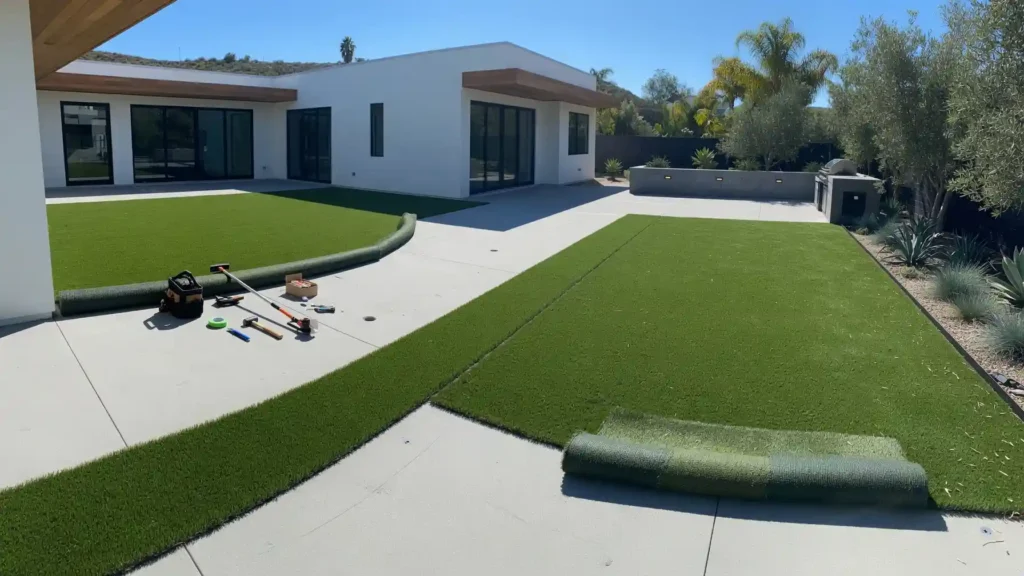
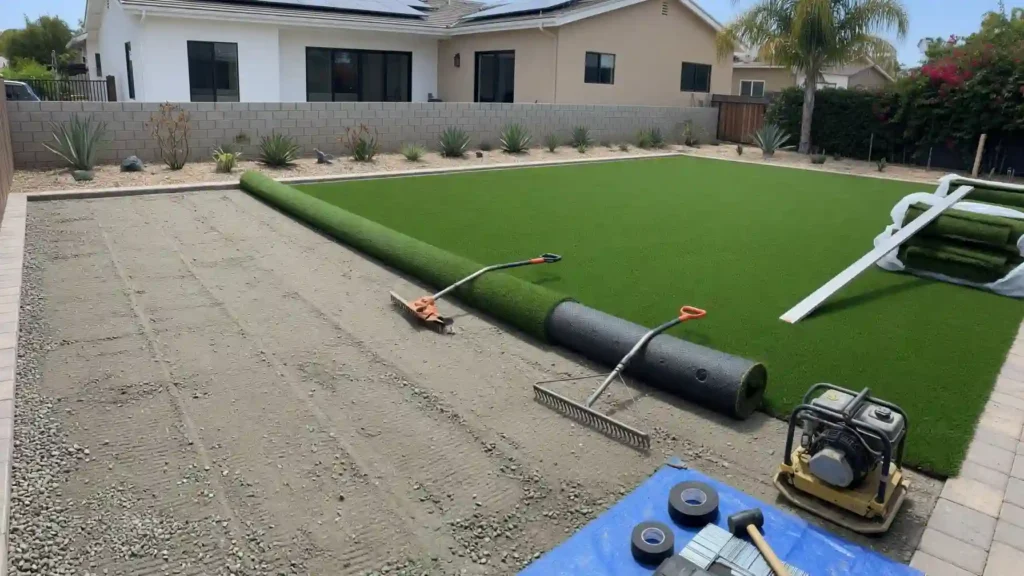
Prepared base for artificial grass installation in a backyard
Artificial Turf Installation

The Best Base for Artificial Grass

Underneath the bright green turf of any artificial grass is one of the most important components of successful turf installation: the base layer. This layer facilitates drainage, adds long-lasting structures, and makes artificial grass pristine and enjoyable for years. But every backyard has unique requirements and considerations when choosing a base for artificial grass, and that’s where HomeTurf shines. We go the extra mile to install high-quality materials and ensure the finished product is built for your unique San Diego property. Learn more about popular base materials and how to compare them. Types of Bases and Their Considerations Every artificial grass lawn needs artificial grass base material. It provides stability and can help hold the artificial turf in place. Just imagine how much artificial turf could shift and wrinkle as soil directly beneath it moves and compacts throughout seasonal rain or long drought stretches. Base layers also counteract movement from lots of foot traffic and outdoor furniture. Another important reason to add base material is for cushioning and comfort (as well as a more realistic sensation of grass under your feet). Even if you have a deck or concrete surface underneath and don’t need artificial grass base material for structural support, some options provide cushioning for a gentler footfall. Consider these different types of popular artificial grass bases and their benefits: Class II Road Base Class II road base is one of the most popular base materials because it is rigorously tested with recycled concrete and asphalt material. It is a premium alternative to CMB. It is finer than CMB and may include new material instead of recycled material. Decomposed Granite (DG) Decomposed granite is a relatively fine mixture of broken granite that has particles ranging in size from gravel to sand and silt. This blend creates a smooth finish but is significantly more expensive than CMB and Class II road base. Landscapers typically reserve it for putting greens and other surfaces that must be incredibly consistent. Choosing the Right Base for Artificial Grass The right choice for your yard will vary based on the factors that most matter to you. Consider these different factors: Smoothness: If you have a backyard putting green or other precision recreation areas, decomposed granite creates the smoothest and most consistent finish of the popular bases for artificial turf. Drainage: If you’re worried about pooling water on your property, decomposed granite has the best drainage characteristics, followed by a Class II road base. High traffic: If you have a lot of foot traffic across your yard or installing artificial turf in a commercial location or public space on a multi-family property, a Class II road base is often the best choice for reliability and low maintenance requirements over time. HomeTurf: Your Expert in Artificial Grass Solutions Still, trying to figure out what base material is right for you? Call in the experts at HomeTurf. We specialize in determining what is the best base for artificial turf and managing all other aspects of your artificial grass installation project. Reach out today to learn more about turf installation or to schedule an onsite visit.
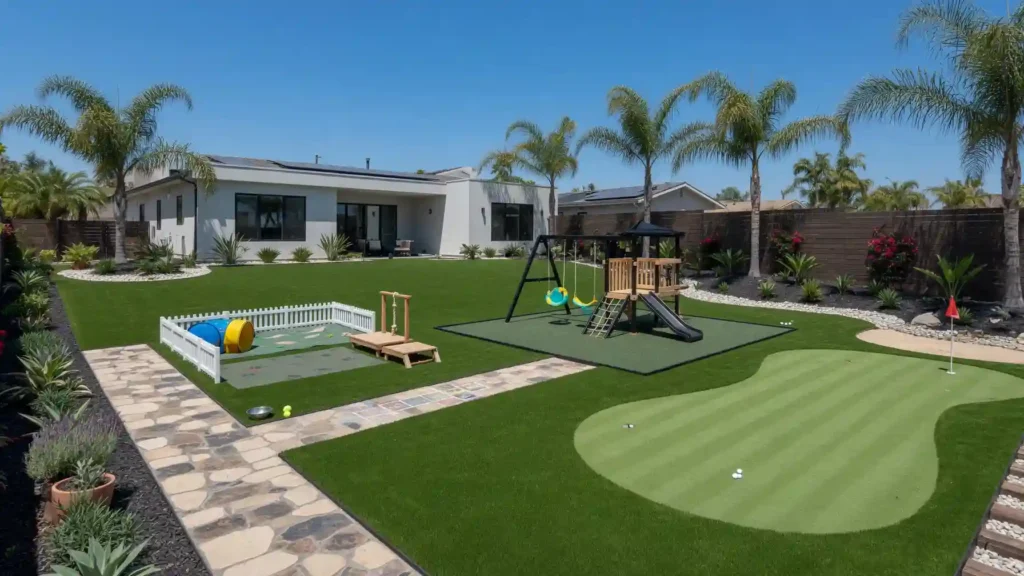
Artificial grass backyard with playground and putting green in San Diego
Artificial Turf Installation

5 ways to Use Artificial Grass for Your San Diego Home

Every homeowner should feel proud of their home, inside and out. And although most outside-of-the-house looks are similar, there’s a way that you can stand out from the crowd and have the most beautiful yard in the neighborhood. With artificial grass, there are a multitude of ways that you can make your home one to be envious of. Here are just some of the ways you can use artificial grass to enhance your San Diego home. PET’S PLAY SPACE Your beloved pets are guaranteed to love your new artificial grass lawn. Artificial grass lawns look and feel like natural grass, making it an ideal soft surface for dogs to lay and play on. The synthetic fibers are built to withstand digging, prevent discolorations, and never stains. With the implemented drainage systems, pet urine and other liquids will flow straight through, meaning there will be no flooding or muddy paws! KID-FRIENDLY PLAYGROUNDS Artificial grass is an excellent playscape alternative because it is extremely durable and can withstand the roughest of kids’ play, as well as offer soft padding to help protect kids from impact injuries and falls. Synthetic turf is non-toxic, allergen-free, certified lead-free, insect-free, and mud-free! Our playground systems also feature an artificial grass infill that is coated in silicone and has antimicrobial properties to ensure a clean and sanitary outdoor play area for children. UNIQUE STONE PATHWAYS Although artificial grass is durable enough to handle people walking on it on a daily basis and still be perfectly fine, adding in unique stone pathways is a simple and functional way to give your yard dimension, and enhance the look and feel. You can wrap them around gardens, pools, playgrounds, or any other way. The possibilities are limitless. MINI PUTTING GREEN COURSES Have dreams of becoming a professional golfer? Or maybe you love to practice your short game but wish you could do it in the comfort of your own home. Luckily for you, our artificial grass putting green products allow you to get the most out of your landscape with a fun game for all. Each putting green product offers a different height and weight for golfers of any skill level. The grass fibers simulate the feel, roll, and speed from mini-golf to PGA-level courses. IMPRESSIVE YARD GOALS If you have a big yard and have no idea what to do with it, sometimes the answer is to make it green and full of life. The possibilities are truly limitless with artificial grass, and you can proudly design a yard that is unlike any other. When you work with a great team to help deliver your yard goals, you’ll end up with a home that everyone will be envious of. Have an idea about how you want to improve your home with artificial grass? SD HomeTurf is here for you! Give us a call today at (619) 467-7784 for your artificial grass installation in San Diego.

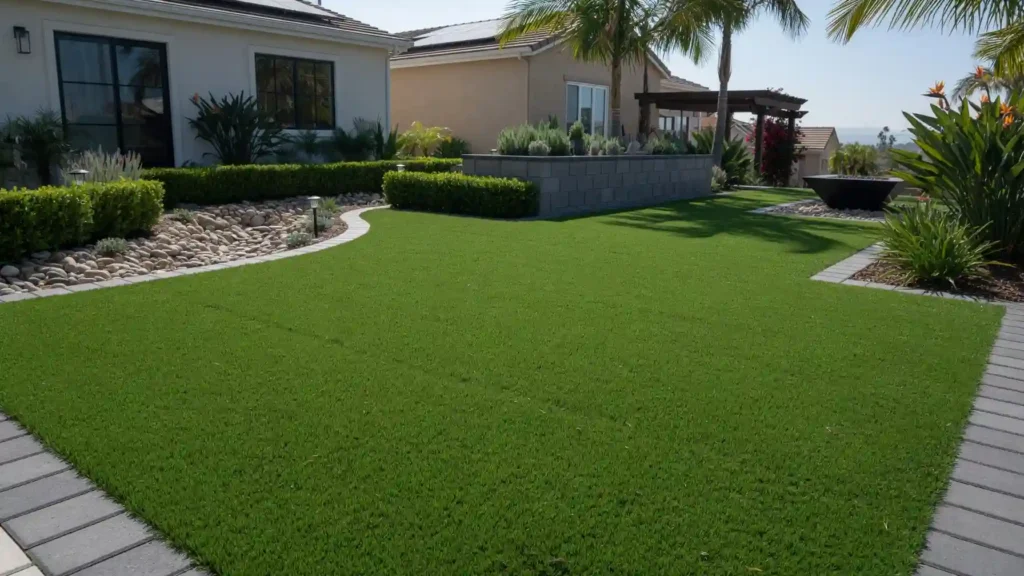
Synthetic turf lawn in a San Diego residential landscape
Artificial Turf Installation

Synthetic Grass / Artificial Turf History, Applications, Advantages & Technical Information

Artificial turf, or synthetic turf, is a man-made surface manufactured from synthetic materials, made to look like natural grass. It is most often used in arenas for sports that were originally or are normally played on grass. However, it is now being used on residential lawns and commercial applications as well. Background David Chaney who moved to Raleigh in 1960 and later served as dean of the North Carolina State University College of Textiles headed the team of RTP researchers who created the famous artificial turf. That accomplishment led Sports Illustrated to declare Chaney as the man “responsible for indoor major league baseball and millions of welcome mats.” Artificial turf first came to prominence in 1965, when AstroTurf was installed in the newly-built Astrodome in Houston, Texas. The use of AstroTurf and similar surfaces became widespread in the 1970s and was installed in both indoor and outdoor stadiums used for baseball and gridiron football in the United States and Canada. Maintaining a grass playing surface indoors, while technically possible, is prohibitively expensive, while teams who chose to play on artificial surfaces outdoors did so because of the reduced maintenance cost, especially in colder climates with urban multi-purpose “cookie cutter” stadiums such as Cincinnati’s Riverfront Stadium, Pittsburgh’s Three Rivers Stadium and Philadelphia’s Veterans Stadium. Landscaping Since the early 1990s, the use of synthetic grass has moved rapidly beyond athletic fields to residential and commercial landscaping artificial lawns. The idea to use synthetic grass for residential landscaping can be traced back to a Las Vegas based company named Envy Turf. Lyle Johnston, the owner of Envy Turf, saw a golf course being converted to synthetic turf, and decided it had an appropriate use in landscaping, due to the drought conditions Las Vegas has been under since the early nineties. He began purchasing and installing turf in 1992. This trend has been driven primarily by two functions: the quality and variety of synthetic grasses that are available has improved dramatically, and cities and water conservation organizations have begun realizing the value of artificial grass as a conservation measure. Advantages Artificial turf can be a better solution when the environment is particularly hostile to natural grass. An arid environment or one where there is little natural light are examples. Ideal for holiday homes when maintenance of lawns is not practical. It is also a solution for elderly homeowners who find the upkeep of lawns too much hard work. Suitable for roof gardens and swimming pool surrounds. Artificial turf is expected to last up to twenty-five years. Some artificial turf systems allow for the integration of fiber-optic fibers into the turf. This would allow for lighting or advertisements to be directly embedded in a playing surface, or runway lighting to be embedded in artificial landing surfaces for aircraft AstroTurf is a brand of artificial turf. Though the term is a registered trademark, it is sometimes used as a generic description of any kind of artificial turf. The original AstroTurf product was a short pile synthetic turf while the current products incorporate modern features such as antimicrobial protection, rubber infill, backing systems and nylon yarn fibers. History AstroTurf was co-invented in 1964 by James M. Faria and Robert T. Wright, employees of Monsanto. It was patented in 1967 and originally sold under the name “Chemgrass”. It was renamed AstroTurf after its first well-publicized use at the Houston Astrodome stadium in 1966.In 1986 Monsanto consolidated its AstroTurf management, marketing, and technical activities in Dalton, Georgia, as AstroTurf Industries, Inc. In 1988 Balsam AG purchased all the capital stock of AstroTurf Industries, Inc. In 1994 Southwest Recreational Industries, Inc. (SWRI) acquired the AstroTurf brand. In 1996 SWRI was acquired by American Sports Products Group Inc. (ASPG). In 2001, SWRI launched a turf system called NexTurf. In 2003 SWRI changed its name to SRI Sports and one year later filed for bankruptcy and the parent company, ASPG, retained the AstroTurf rights. In 2005 Textile Management and Associates (TMA) acquired the AstroTurf assets and intellectual property from ASPG and began marketing the AstroTurf brand under the company AstroTurf, LLC. In 2006 GeneralSports Venue (GSV) became TMA’s marketing partner for the AstroTurf brand for the American market. AstroTurf, LLC handles the marketing of AstroTurf in the rest of the world. Product Timeline 1964 The Moses Brown School in Providence, Rhode Island, installs AstroTurf. 1965 The Houston Astrodome opens with natural turf and a glass roof which causes glare for the fielders. The glass panes with a view of the sun are painted white, and the grass soon dies. The field’s dead grass is replaced with AstroTurf the next year. 1966 AstroTurf was first installed in the Houston Astrodome. The infield was in place in April, but due to lack of supply, the outfield was not completed until July, when the Astros were sent on an extended road trip. The all-synthetic field is ready for play following the All-Star break in July. The first football game played on AstroTurf occurs when the Houston Cougars beat the Washington State Cougars. 1967 AstroTurf is first installed in an outdoor stadium – Indiana State University Stadium, Terre Haute, Indiana. 1968 AstroTurf manufacturing facility opens in Dalton, GA. Husky Stadium at the University of Washington in Seattle becomes the second major sports facility in the U.S. to install AstroTurf. 1974 Miami Dolphins play the Minnesota Vikings on AstroTurf in Super Bowl VIII – Rice Stadium, Houston, TX. 1975 AstroTurf is installed at the New Orleans Louisiana Superdome and Pontiac Silverdome. First international field hockey game played on AstroTurf at Molson Stadium, Montreal The Cincinnati Reds play the World Series on AstroTurf. 1976 Cincinnati Reds play back-to-back World Series’ on AstroTurf. 1978 Dallas Cowboys defeat the Denver Broncos (27-10) on AstroTurf in Super Bowl XII – Superdome, New Orleans, LA. 1980 1980 World Series was first to be entirely played on AstroTurf as the Philadelphia Phillies (Veterans Stadium) defeated the Kansas City Royals (Royals Stadium) in six games. 1981 Oakland Raiders play Philadelphia Eagles on AstroTurf

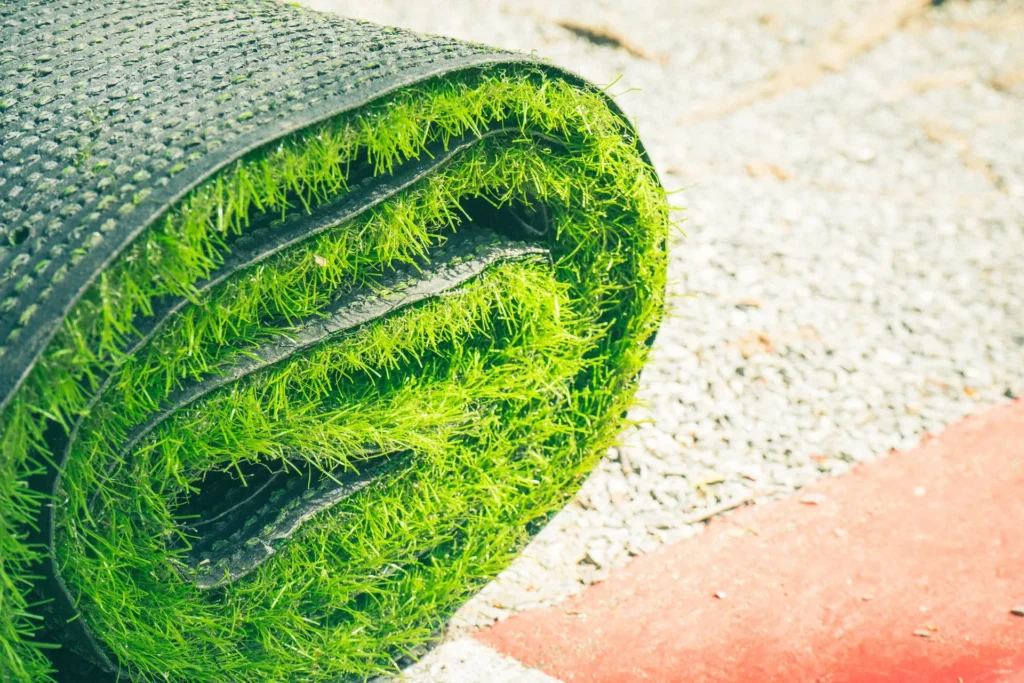
Artificial grass being installed over a concrete backyard patio
Artificial Turf Installation

How to Install Artificial Grass on Concrete: Step-by-Step Guide

To install artificial grass on concrete, clean and repair the slab, give water a path out, lay the turf, glue the edges and seams, and brush in infill. The slab must be stable. Water must have somewhere to go. This guide covers each step, from the pre-install checks to the final brushing. It also covers drainage, heat, cost, and when to hire a pro. Our crews install turf on San Diego County patios, pool decks, and rooftops. The steps below work in any climate. Project Overview     Skill level Moderate. Seams and glue are the hardest parts Time 1 to 2 days for a small patio, plus glue cure time Biggest risk Water trapped under the turf Can You Install Artificial Grass on Concrete? Yes. Concrete is a firm, flat base. You skip the digging and base work that soil needs. That makes the job faster. The trade-off is water. Concrete does not absorb it. Every install needs a plan for where the water goes. That plan is the main skill in this job. A stable slab that sheds water is ready for turf. A slab that rocks, sinks, or holds puddles is not. Turf hides those flaws for a while. Then they show up as lifted seams and soggy spots. Is Your Concrete Ready for Artificial Grass? Run four checks before you buy anything. They take about 30 minutes. You need a garden hose, a tape measure, chalk, and a cup of water. Check 1: Walk the Slab Walk the whole surface and step on every section. Look for cracks, holes, flaking spots, and crumbling edges. Feel for any section that rocks or sits higher than the next one. A hairline crack that sits flat is fine. Fill any crack wider than 1/4 inch. A crack with one side higher than the other means the slab is moving. That movement will show through your turf. Mark every expansion joint with chalk. These joints are built to move. Plan your seams around them. Check 2: Run the Hose Test Soak the slab for five minutes. Then watch where the water goes. It should flow toward a drain, lawn, or garden bed. A slight slope away from the house is good. About 1/8 to 1/4 inch per foot works well. Circle any spot where water still sits after 20 minutes. Turf does not fix a low spot. It hides it, and trapped water leads to odor and mold. The drainage section below covers the fixes. Check 3: Measure Every Edge Turf, glue, and any pad add height. Measure the drop from the slab to the bottom of each door sill, gate, and step. Plan on at least 2 inches. Less than that can block a door, push water toward the house, or create a trip edge. Also check these spots. Each one changes how you cut and secure the turf: Pavers and walls Pool edges Drain covers Posts Garden borders Look at stucco walls too. They have a metal weep screed at the base that must stay clear of the finished surface. Turf raises that surface. Ask your city for the exact clearance. Check 4: Test for Sealer, Paint, and Grease Sprinkle water on a few bare spots. If it beads up, the slab has a sealer or coating. If it soaks in within a minute, the concrete is bare. Glue cannot hold on sealer, paint, or oil. Grind coated concrete down to bare concrete. Scrub oil stains with a degreaser. Pass or Fix: Quick Guide What You Check Pass Fix First Cracks Hairline cracks that sit flat and flush One side is higher, or the slab rocks or sinks Drainage Water clears within 20 minutes Puddles remain after 20 minutes Surface Solid, clean, and sound Flaking, crumbling, or holes Expansion joints Marked and planned around Wide, uneven, or shifting joints Door and edge clearance At least 2 inches of drop Less than 2 inches at doors or gates Sealer or paint Water soaks in Water beads on the surface What to Do If Your Slab Fails Fill small cracks and chips with concrete patching compound. Rocking sections, raised cracks, and deep dips mean the base under the slab has failed. Patching will not hold. Have a pro look at it and replace that section before you buy turf. If your slab passes all four checks, move on to choosing your turf. Tools and Materials You Need Concrete jobs use glue instead of stakes and a gravel base. The list is shorter than a soil install. Category What You Need Cleaning Broom, hose or pressure washer, concrete degreaser Repair Concrete patching compound, self-leveling compound Measuring Tape measure, chalk line, long level or straight board Cutting Utility knife with sharp hooked blades Bonding Polyurethane turf adhesive, seam tape, notched trowel Underlay Foam shock pad or drainage mat, if needed Finishing Stiff push broom, silica sand infill, roller or weights Safety Gloves, knee pads, eye protection Use a polyurethane adhesive made for turf. MAPEI notes that one-part turf adhesives cure slower in cold or dry air, while two-part products cure fast and predictably in harsh conditions. Read MAPEI’s turf adhesive guide and your turf maker’s rules before you buy. Do not use indoor carpet glue or general construction adhesive. They break down outdoors. Double-sided turf tape works for light use, such as a rental patio. How to Choose Artificial Grass for Concrete Match the turf to how you will use the space. Use: A decorative patio needs a good look and a soft feel. A pet area needs easy cleaning. A play area needs a safe surface system (see the next section). Pile height: Shorter pile leaves more room at doors. The taller pile feels softer. Density and backing: Choose dense turf for heavy traffic. Pick a perforated backing so water passes through. Warranty: Read what it covers, including sun fade and wear. Maker rules: Check the install guide for the turf, glue, tape, and pad you buy. Glues are not

How Long Does Artificial Turf Last? Residential artificial turf lawn in a San Diego backyard
Artificial Turf Installation

How Long Does Artificial Turf Last? Lifespan Guide

Most quality artificial turf can last about 10 to 20 years outdoors. Premium residential products may last longer, while heavy traffic, poor drainage, strong UV exposure, or weak installation can shorten useful life. If you are asking how long does artificial turf last, there is no single number. Turf quality, installation, use, sunlight, climate, drainage, and maintenance all affect the result. This guide breaks down what actually decides your turf’s lifespan. How Long Does Artificial Turf Last? For a typical residential lawn, a useful planning range is about 10 to 20 years. Well-made turf with good UV protection, a sound base, proper drainage, and regular care can stay useful toward the longer end of that range. High-traffic areas can wear sooner. Pet areas may also need more care because of repeated traffic, digging, urine, cleaning, and infill movement. Sports and commercial spaces face even more repeated use. The word useful matters. Artificial grass does not normally stop working on one set date. Fibers may flatten before the backing fails. A seam may need repair while the rest of the lawn still looks good. That means the lifespan of artificial turf should be judged as a complete system. The life expectancy of artificial turf depends on the product, installation, usage, environment, and maintenance. Artificial Turf Lifespan at a Glance Application General planning range Main wear factors Low-traffic residential lawn 15–20+ years UV exposure, light traffic Typical residential lawn 10–20 years Traffic, sun, maintenance High-traffic residential yard 8–15 years Frequent walking, children, pets Pet area or dog run 8–15 years Traffic, urine, cleaning, infill Playground 10–15 years Heavy foot traffic, impact, maintenance Sports or commercial area 8–12+ years Repeated traffic, equipment, maintenance These are general planning ranges, not expiration dates. Actual results vary with turf construction, installation quality, climate, usage, drainage, and care. A product warranty should also be checked before purchase. Warranty terms vary between turf products and manufacturers. What Is the Life Expectancy of Artificial Turf? The life expectancy of artificial turf comes down to how the fibers and backing hold up over time under sun, foot traffic, and weather. It’s less about a fixed number of years and more about when the material starts to visibly break down. A well-built lawn ages slowly and gradually. A cheap one fades and flattens fast. What Determines the Lifespan of Artificial Turf? Turf Quality and Fiber Construction The first factor is the quality of the turf itself. Artificial grass uses synthetic yarn, backing, and infill. Each part affects long-term performance. Polyethylene is common in residential turf because it can provide a soft feel with good outdoor performance. Nylon is known for strong recovery after pressure and is often used where higher performance is needed. Polypropylene is often found in lower-cost products and some specialty uses. Fiber material alone does not tell the whole story. Also look at the yarn, denier or dtex, fiber density, pile height, face weight, backing, and UV stabilizers. A dense turf with good UV protection and strong backing can handle outdoor exposure better than a low-quality product. Ask for the product data sheet before making a choice. These construction details also help explain artificial grass durability. Installation Quality Good turf can still perform poorly when installation is weak. A lasting installation starts with proper base preparation. The site may need an aggregate or crushed rock base. That base must be placed and compacted correctly. Drainage is also critical. Water needs a clear path away from the surface. Poor preparation can lead to wrinkles, sinking, standing water, edge lifting, or seam problems. Seams need proper alignment and bonding. Adhesive, where required, must be used correctly. Edges need secure edge restraint or anchoring. A weed barrier may also be suitable for some installations. The turf is only one part of the finished lawn. The base, drainage, seams, and edges all affect useful life. Foot Traffic and Usage A decorative front lawn gets different wear from a backyard used every day. Think about your use: Low traffic: decorative lawns and occasional walking. Medium traffic: family yards, children, and common walkways. High traffic: dog runs, busy play areas, sports, and commercial use. Repeated foot traffic can bend fibers and move infill. Heavy use can also place more stress on seams and edges. Children and pets often create concentrated wear. Sports areas can experience repeated running, turning, and equipment use. Sunlight and UV Exposure Sunlight is one of the most important outdoor factors. UV radiation can slowly affect synthetic fibers. Long exposure can contribute to UV degradation, fading, brittleness, and reduced fiber performance. Quality turf uses UV stabilizers or UV inhibitors to help limit this damage. When comparing products, ask about UV protection and the product warranty. A yard in full sun can age differently from one that receives shade for part of the day. Drainage and Moisture Good drainage protects the entire turf system. Artificial turf normally uses drainage holes in the backing. Beneath it, an aggregate base helps create a stable surface and drainage path. If water cannot move away, pooling can occur. Trapped moisture can contribute to odors and conditions that encourage mold or mildew. Drainage is especially important for pet areas. Dog urine should pass through the turf system rather than remain trapped near the surface. Maintenance Artificial turf needs less work than natural grass, but it is not maintenance-free. Regular brushing can help lift fibers in busy areas. Remove leaves and other debris before they build up. Rinsing helps remove dust and light residue. Clean pet waste promptly. Check the infill for low or compacted areas. Clean spills before they become harder to remove. Simple care can help preserve both appearance and performance. What Makes Artificial Grass Durable? Artificial grass durability comes from a few things working together: strong fiber material, a solid backing, UV protection, and a well-built base underneath. Durable turf resists matting, holds its color, and keeps its shape under regular foot traffic. Cutting corners on any one of these shortens the life of

Artificial Turf Installation

Why Artificial Turf is the Future of Modern Landscapes

Maintaining a lush, emerald-green lawn has long been considered the hallmark of a well-kept home. However, as environmental concerns mount and our schedules become increasingly packed, the traditional “white picket fence and natural grass” dream is becoming a logistical nightmare. Between the relentless mowing, the expensive fertilizers, and the constant battle against weeds, homeowners are looking for a better way. As more property owners realize the benefits of a “set it and forget it” yard, the demand for professional fake grass installers has reached an all-time high. Understanding the Shift: Environmental and Financial Impact of Natural Grass To understand the shift toward synthetic solutions, we have to look at the sheer volume of resources required to keep natural grass alive. In arid climates or during summer heatwaves, a standard lawn becomes a massive drain on local water supplies. The scale of this consumption is even more evident when looking at sports facilities. According to AstroTurf, maintaining a single natural grass football field can demand a staggering 600,000 to 1.5 million gallons of water every year. While a residential lawn is smaller, the cumulative effect of millions of homes using drinkable water to irrigate grass is an environmental challenge that many municipalities are now addressing through restrictive watering schedules. Beyond water, natural grass requires: Chemical Inputs: Pesticides and herbicides that can run off into local waterways. Carbon Emissions: Gas-powered mowers and trimmers contribute significantly to air pollution. Constant Expenditure: Seed, sod, mulch, and seasonal treatments add up to thousands of dollars over the lifespan of a home. Exploring the Variety: Specialized Turf Solutions One of the reasons homeowners seek out expert turf installers is the sheer variety of products available today. No longer a “one size fits all” product, artificial turf is now engineered for specific lifestyles and use cases. Pet-Friendly Surfaces Pet owners are often the biggest advocates for synthetic grass. Natural lawns suffer from “urine burn” (those unsightly yellow spots) and become muddy pits after a rainstorm, leading to muddy paws inside the house. Pet-friendly turf features a highly permeable backing for rapid drainage and antimicrobial properties to neutralize odors, ensuring a clean environment for both the dog and the owner. Safe Playground Areas Safety is paramount in play areas. Specialized playground turf is installed with “fall zone” padding underneath, providing a cushioned surface that meets safety standards for impact. Unlike wood chips or gravel, it doesn’t displace, meaning the protection remains consistent even in high-traffic areas. Custom Putting Greens For the golf enthusiast, having a professional-grade green in the backyard is the ultimate luxury. Skilled fake grass installers can customize the “stimp” (the speed of the ball) and incorporate undulations, bunkers, and fringe grass to create a practice facility that rivals a private country club. Commercial Zones From boutique gyms needing indoor sled-pull tracks to commercial office complexes wanting a vibrant, low-maintenance courtyard, commercial-grade turf is built to withstand extreme foot traffic without matting or fading. Analyzing the Process: Anatomy of a Professional Installation While it might be tempting to view turf as a DIY weekend project, the longevity of the product depends entirely on what happens underneath the green. Professional turf installers follow a rigorous multi-step process to ensure the surface remains flat, drains well, and stays anchored for decades. Excavation and Site Prep: The existing grass and soil must be removed to a specific depth to make room for the new base. Base Layering: A crushed stone or decomposed granite base is spread and compacted. This is the “skeleton” of your yard; it provides the stability needed to prevent sinking or shifting. Weed Barrier: A heavy-duty geotextile fabric is laid down to ensure no persistent weeds poke through the new blades. Seaming and Securing: This is where the artistry happens. Installers must hide the seams where two rolls of turf meet, ensuring the “grain” of the grass is all pointing in the same direction. Infill Application: Tiny granules (silica sand, acrylic-coated sand, or cork) are brushed into the blades. This infill helps the blades stand upright and provides the “bounce” felt when walking on the surface. Creating Cohesion: Integrating Turf into a Total Landscape Design Artificial turf rarely lives in a vacuum. To create a truly stunning outdoor living space, it should be integrated into a broader hardscaping and landscape design. Professional fake grass installers often work in tandem with designers to create a cohesive aesthetic that blends various textures and functions. Modern Hardscape Integrations Pairing the soft texture of turf with the clean lines of a stone patio or a paver walkway creates a modern, high-contrast look. Using “turf strips” or “ribbons” between large concrete pavers is a popular trend that adds greenery to a driveway or courtyard without the maintenance of real grass. Functional Walls and Lighting Turf is an excellent solution for sloped yards where mowing natural grass is dangerous. By installing retaining walls to create leveled tiers and covering those tiers with synthetic grass, you turn unusable hills into functional play spaces. Adding exterior lighting ensures that your pristine lawn is visible and usable long after the sun goes down. Sustainable Irrigation Synergies When you combine turf installation with drought-tolerant landscape design and efficient landscape irrigation for your remaining garden beds, you create a property that is remarkably resilient to climate shifts. Ensuring Lasting Quality: Why Experience Matters The market is flooded with various grades of synthetic grass, but the best material in the world will fail if the drainage isn’t handled correctly. This is why vetting your fake grass installers is critical. You want a team that understands local soil conditions—whether you’re dealing with heavy clay that retains water or sandy soil that shifts easily. Qualified installers provide: Warranty Guarantees: Protection against UV fading and manufacturing defects. Advanced Equipment: Heavy-duty compactors and power brooms that a homeowner can’t easily rent. Artistic Precision: The ability to cut turf around curved flower beds, trees, and complex hardscaping without leaving gaps. Protecting Your Investment: Long-Term Maintenance It is important to clarify that “low

Artificial Turf Installation

Ditch the Mower: The Ultimate Guide to Fake Grass Installation

Artificial turf has become an increasingly popular choice for homeowners and businesses alike, offering a sustainable and aesthetically pleasing alternative to natural grass. From saving on water bills to reducing your carbon footprint, the advantages of artificial grass are innumerable. As more people recognize these benefits, the demand for hiring an expert fake grass installation company has spiked, leading us to compile this detailed manual on how these specialists complete the job. Let’s dive into the world of synthetic lawns and discover how a professional crew can redefine your experience with nature in your own backyard. Understanding the Benefits of Fake Grass Cost Savings Over Time The initial investment in artificial turf can appear steep, but significant cost savings blossom over time. Reduction in water bills is one of the primary financial benefits, as natural lawns can be water-intensive, particularly in dry climates. Moreover, the absence of routine maintenance costs such as mowing, trimming, and fertilizing contributes to long-term savings. According to Iowa State University Extension, natural grass can grow rapidly in spring and may need mowing more than once a week, adding to maintenance costs. By delegating your yard transformation to a specialist in fake grass installation, you enjoy not only financial savings but also valuable time freed from regular lawn care duties. Decreased Maintenance Requirements With synthetic turf, the cumbersome and time-consuming task of lawn maintenance becomes a thing of the past. Forget about mowing, aeration, and reseeding; artificial lawns maintain their lush appearance with minimal care. Regular cleaning, such as blowing away debris and rinsing with water, is usually sufficient to keep it looking pristine. This aspect is particularly appealing to those with busy lifestyles or those who would rather spend their free time enjoying their outdoor spaces rather than maintaining them. The convenience and ease of upkeep make a professional fake grass installation an attractive option for those seeking to simplify their lives while maintaining a beautiful outdoor aesthetic. Effect on Curb Appeal Artificial turf can significantly enhance the curb appeal of your home or business, creating an inviting and polished appearance. Its lush, evergreen look is attractive year-round, ensuring your property always looks well-kept and inviting. Additionally, premium synthetic grass is designed to mimic the look and texture of real grass, providing visual appeal without the headaches of natural grass care. Booking a professional fake grass installation can boost property value, making it a savvy investment for those considering resale potential. Planning Your Artificial Turf Installation Assessing Your Space Before a crew embarks on the physical setup, it’s critical for a specialist to assess the space you plan to transform. Experienced estimators consider the size and shape of the area, as well as any unique features such as trees, flower beds, or pathways that might affect the layout. By taking precise measurements and photos of your space, the project manager can better plan the quantity of turf and materials needed. Identifying potential obstacles and planning around them is key to a successful fake grass installation. A thorough professional assessment ensures that you choose the right type and amount of artificial grass for your needs, avoiding unnecessary expense and waste. Choosing the Right Type of Turf With the variety of artificial turfs available, having an expert guide your selection is crucial to achieving the desired look and functionality. A knowledgeable coordinator will evaluate factors such as color, pile height, and durability based on your specific needs, whether it’s for aesthetics, function, or both. For high-traffic areas, they might recommend a denser, more durable turf, while a softer pile might suffice for an ornamental space. Technicians assess the backing material and ensure it has a good drainage system, particularly if your area experiences heavy rainfall. Budgeting for the Project Effective budgeting is an essential step in planning your property upgrade. An estimator will outline the comprehensive costs of materials, including turf, adhesives, and infill, as well as the commercial machinery required for the job. Labor costs are a primary component when you hire professional crews, which is highly beneficial for ensuring that large or complex projects are executed without flaws. A turnkey company will also allocate funds for any additional features, such as custom edging or improved drainage systems, that can enhance the overall result. A realistic professional quote helps prevent unexpected financial strain and ensures you invest wisely in high-quality materials and workmanship. Preparing the Ground for Installation Clearing the Area The first step the crew takes in preparing the ground for fake grass installation is thoroughly clearing the area of any existing vegetation, debris, and obstacles. Laborers remove old grass, rocks, and deep roots to ensure a smooth, uniform base for your synthetic lawn. This typically involves operating professional machinery, such as heavy shovels, hoes, or a motorized sod cutter for large projects. Proper clearing performed by a professional team also helps prevent weed growth beneath the turf, contributing to its longevity and appearance. The result is a completely clean slate, ready for the subsequent technical steps involved in the process. Leveling the Surface After ensuring proper drainage, achieving a level surface is key to a smooth, professional-looking finish. Uneven surfaces can lead to lumps and bumps, detracting from the visual appeal and potentially creating trip hazards. Crews use industrial grading rakes to even out the surface, removing any excess soil or filling in low spots as necessary. A compacting roller or diesel-powered plate compactor is then operated by the team to ensure a firm, uniform base layer. Professional leveling is crucial, as it provides a solid foundation, enhancing the durability and final appearance of the fake grass installed on top. Laying and Securing the Fake Grass Measuring and Cutting the Turf Accurate measuring and cutting of the heavy turf sections are critical to ensure a seamless fit within the yard, which is why it is best executed by seasoned pros. Installers begin by rolling out the turf and allowing it to acclimatize, letting it lie out in the sun to relax the backing

Artificial Turf Installation

Artificial Turf Maintenance Tips for a Beautiful Lawn All Year

Every homeowner desires an attractive outdoor space to relax and entertain guests. According to GreenPal, 94% of Americans care about the appearance of their lawn. Maintaining a gorgeous yard takes effort, especially if you want it to remain vibrant through every season. Many residents in La Mesa and Santee choose synthetic grass to cut down on heavy labor, but zero maintenance is a myth. You still need to put in a little work to keep the blades standing tall and looking pristine. A proper artificial turf install lays the foundation for a durable yard, but regular upkeep guarantees it stays that way for years. Knowing how to clean and protect the fibers will heavily preserve your financial investment. To ensure your synthetic landscape remains a brilliant green focal point, we put together a comprehensive guide covering everything you need to know about year-round care. Understanding Why Consistent Upkeep Is Vital With Synthetic Grass While fake grass eliminates the need for mowing, watering, and fertilizing, it still requires attention to stay in top condition. An excellent artificial turf install provides a strong base, but environmental factors constantly interact with the surface. Dust, fallen leaves, and pet activity can take a toll on the overall appearance of the fibers over time. Ignoring these elements might lead to compacted blades or unpleasant odors. By dedicating just a few minutes each month to basic chores, you preserve the structural integrity of the backing material and the vibrancy of the grass. A well-maintained yard enhances your overall aesthetic and heavily boosts the curb appeal of your property. The effort you put into maintaining the surface directly translates into a much longer lifespan for your entire yard. Clearing Away Leaves With a Rake or Leaf Blower One of the most common issues you will face involves fallen leaves and organic debris scattered across your yard. Trees and bushes naturally shed foliage, which eventually settles on top of the synthetic fibers. If you leave this organic matter to decompose, it can create a breeding ground for airborne weed seeds and disrupt the smooth surface. To combat this, you should regularly clear the area using a plastic landscape rake or a standard leaf blower. Avoid using metal rakes, as they can severely damage the backing material of a recent artificial turf install. Blowing the leaves into a pile makes collection fast and straightforward. Keeping the surface free of organic buildup ensures that drainage systems function perfectly and water flows through unobstructed. Rinsing the Area With Water to Remove Settled Dust Even if your yard looks clean from a distance, microscopic dust and dirt particles constantly settle on the blades. Over the span of a few weeks, this fine layer of grime can dull the vibrant green color of your synthetic grass. An easy way to restore the original shine is by lightly spraying the entire area with a garden hose. A gentle rinse washes away the accumulated dirt and completely rejuvenates the overall look of your landscape. Every professional artificial turf install features a built-in drainage system designed to handle water runoff seamlessly. You do not have to worry about creating mud puddles or flooding your yard. Just a quick spray down a couple times a month keeps the fibers looking fresh and prevents any dirt from grinding into the infill layer. Brushing the Blades High With a Stiff Bristle Broom Foot traffic naturally causes the synthetic blades to bend and lay flat over time. Areas where people frequently walk or kids play will show signs of matting much faster than the untouched edges of your yard. To counteract this flattening effect, you should brush the grass fibers against their natural grain. Using a broom featuring stiff synthetic bristles works exceptionally well for this task. Never use tools featuring metal or wire bristles, because they will aggressively tear the material apart. Cross-brushing lifts the blades back to an upright position and redistributes the infill evenly across the surface. Completing this simple chore thoroughly revitalizes the plush texture of your artificial turf install and maintains a uniform appearance. Brushing the fibers every couple of weeks will absolutely prevent permanent creasing. Managing Pet Waste Quickly With the Right Cleaners Synthetic lawns are incredibly pet-friendly, making them a popular choice for homeowners with dogs. However, you must handle pet waste promptly to prevent lingering smells and bacterial buildup. Solid waste should be picked up as soon as possible, just as you would on a natural lawn. Afterward, spray the affected spot with a hose to wash away any remaining residue. For liquid waste, a thorough rinsing usually does the trick, but occasionally you might notice a persistent odor. In these cases, an enzyme-based cleaner designed specifically for synthetic grass will break down the odor-causing bacteria safely. A high-quality artificial turf install usually includes specialized pet infill to mitigate smells – but routine cleaning remains necessary. Your furry friends can enjoy the yard safely without any extra stress on your part. Preventing Weeds From Sprouting With Routine Inspections Although synthetic grass severely limits weed growth compared to natural soil, stubborn plants can occasionally find a way to emerge. Airborne seeds might settle into the infill or accumulate around the very edges of your landscape. If organic debris decomposes on the surface, it provides a perfect little bed for weeds to quickly take root. You should periodically inspect the perimeter of your yard to catch any unwanted sprouts early on. When you spot a weed, simply pull it out by hand gently so you do not disrupt the infill. For more persistent issues, a water-based weed killer can be applied directly to the problem areas. A meticulous artificial turf install typically includes a weed barrier underneath the backing, which successfully blocks out the vast majority of growth. Protecting the Fibers With Fast Action Against Spills Hosting gatherings outside often involves food, drinks, and the occasional accident. Dropped plates or spilled beverages can create sticky spots on your beautiful fake grass. The key

Artificial Turf Installation

How Lawn Installation Enhances the Functionality of Outdoor Spaces

Outdoor spaces play an important role in how people experience their homes and commercial properties. They provide places to relax, entertain guests, spend time with family, and enjoy nature. While landscaping often includes many different elements, a healthy lawn frequently serves as the foundation that ties the entire outdoor environment together. A thoughtfully planned and professionally executed lawn installation can do much more than improve appearance. It can significantly increase the functionality, comfort, and versatility of outdoor spaces. Many property owners focus on visual appeal when considering landscaping improvements, but functionality is equally important. An attractive outdoor space that cannot be used effectively may fail to meet the needs of those who occupy it. A professionally installed lawn creates a practical surface that supports a wide range of activities while contributing to the overall organization and usability of the landscape. Improve Everyday Outdoor Usability One of the most immediate benefits of lawn installation is the creation of a usable outdoor surface. Bare soil can become muddy after rainfall, dusty during dry conditions, and uneven over time. Hard surfaces may serve certain purposes, but they do not always provide the comfort or flexibility needed for a variety of activities. A properly established lawn creates a smooth and welcoming area that supports everyday outdoor use. Families can gather comfortably, children can play safely, and property owners can enjoy spending time outdoors without dealing with the inconveniences often associated with unfinished landscapes. The versatility of grass makes it suitable for many different purposes. It can function as an entertainment area during social gatherings, a place for outdoor recreation, or simply a comfortable space for relaxation. This flexibility allows outdoor environments to serve multiple functions without requiring extensive modifications. Create Comfortable Recreation Areas Outdoor recreation is an important part of many lifestyles. Whether hosting gatherings, spending time with family, or providing a place for pets to roam, property owners often rely on their outdoor spaces for enjoyment and leisure. A professionally completed lawn installation helps create comfortable recreation areas that encourage outdoor activity. Grass provides a naturally cushioned surface that feels inviting underfoot and supports a variety of uses. Compared to harder landscaping materials, lawns often create a more relaxed and welcoming atmosphere. Families frequently appreciate having a designated area where children can play and explore. Likewise, pet owners often value a grassy environment that allows animals to move comfortably throughout the property. The natural softness of grass contributes to a more enjoyable experience for everyone using the space. A functional recreation area can also encourage healthier lifestyles by promoting outdoor activities and creating opportunities for relaxation away from indoor environments. As a result, a lawn often becomes one of the most frequently used parts of a property. Support Effective Landscape Organization Successful landscape design involves more than simply adding plants and decorative features. Functional outdoor spaces typically require thoughtful organization that allows different areas to serve specific purposes while maintaining a cohesive appearance. A professional lawn installation can help establish structure throughout the landscape. Grass often serves as the connecting element that links pathways, gardens, seating areas, and other outdoor features together. This creates a sense of flow that improves both appearance and usability. For example, lawns can help define gathering spaces, separate recreational areas from planting beds, and provide visual balance throughout the property. These distinctions make outdoor environments easier to navigate and more pleasant to use. Organized landscapes often feel larger and more functional because each area has a clear purpose. Property owners can enjoy a greater sense of order while maximizing the practical value of their available outdoor space. Enhance Environmental Performance Modern landscaping increasingly emphasizes environmental responsibility alongside functionality and beauty. Property owners are often interested in solutions that support sustainability while still providing practical benefits. A carefully planned lawn installation can contribute to these goals. Healthy grass helps stabilize soil and may assist with managing water movement across the property. Properly established lawns can also support natural absorption processes that reduce certain drainage concerns. Environmental awareness continues to influence landscaping decisions. According to The Freedonia Group, Fact 224654 indicates that many younger consumers place significant value on environmentally conscious lawn care practices and are willing to spend more to support sustainable solutions. This growing interest highlights the importance of selecting landscape approaches that balance functionality with environmental considerations. Professional lawn installers can recommend grass varieties and installation methods that align with local conditions and long-term sustainability objectives. Their expertise helps property owners create outdoor spaces that perform effectively while supporting responsible landscape management. Increase Property Comfort and Enjoyment Comfort is one of the most significant factors influencing how often outdoor spaces are used. An outdoor area may be visually appealing, but if it does not feel comfortable or inviting, it may see limited use. A professionally installed lawn contributes substantially to outdoor comfort. The natural appearance of grass creates a calming environment that many people find relaxing and enjoyable. Green spaces often promote a sense of tranquility that enhances the overall atmosphere of a property. The benefits of lawn installation extend beyond physical comfort. A healthy lawn can improve the visual experience of outdoor living by creating a consistent and attractive backdrop for landscaping features, outdoor furniture, and recreational activities. Many property owners find that a well-maintained lawn encourages them to spend more time outdoors. Whether enjoying a quiet morning, hosting friends, or simply appreciating the view from inside the home, the presence of a beautiful lawn can enhance everyday experiences. Increase Long-Term Property Value Landscaping improvements often represent investments in both present enjoyment and future property value. A professionally installed lawn can contribute positively to a property’s overall marketability and appeal. First impressions play an important role in how people perceive homes and commercial properties. A healthy lawn immediately communicates care, attention, and pride in ownership. Because lawns occupy a prominent portion of many landscapes, they often have a substantial impact on curb appeal. A quality lawn installation enhances more than visual attractiveness. It also improves

Artificial Turf Installation

Signs Your Lawn Care Strategy is Missing Great Landscape Design

Your carefully cultivated outdoor property holds incredible potential to serve as a stunning, functional extension of your living space. Many homeowners invest significant time and money into routine mowing, watering, and fertilizing, yet find that the overall aesthetic remains uninspiring. When your yard feels more like a chore list than a sanctuary, it is highly likely that your current lawn care strategy is missing the guiding principles of great landscape design. Bridging the gap between basic maintenance and professional design can completely transform your entire outdoor experience.   True property transformation involves looking past simple green grass and considering how every element interacts to create a beautifully cohesive ecosystem. Without a thoughtful layout, even the healthiest turf can look isolated, cluttered, or flat. By recognizing the critical indicators that your outdoor maintenance routine needs an artistic upgrade, you can shift your focus toward long-term beauty and functionality.   Evaluate Your Visual Cohesion   A truly stunning yard relies heavily on a unified aesthetic where every single plant and feature works in absolute harmony. When plants are selected haphazardly based purely on individual store purchases rather than an overarching vision, the visual appeal of your property suffers. It is vital to consider how mature sizes, varying foliage textures, and contrasting plant colors blend together. Without this strategic coordination, your thoughtfully structured garden beds risk looking like a chaotic assortment rather than a deliberate composition that elevates your standard lawn care routine.   Visual disconnect also manifests through clashing hardscape materials and inconsistent design themes across different areas of your property. If your brick patio clashes with a modern stone walkway, or if a formal garden abruptly transitions into a rustic woodland patch, your landscape lacks a central narrative. A professional design integrates paths, patios, and plant life under a single blueprint that complements your home’s architectural style. Establishing this thematic consistency ensures that your ongoing investment in lawn care yields a polished, breathtaking outdoor environment.   Optimize Your Spatial Layout   Efficient space utilization stands as a cornerstone of excellent landscape architecture, turning an ordinary yard into a highly usable outdoor living area. Homeowners frequently make the mistake of overcrowding flower beds or neglecting awkward corners and edges, leaving substantial portions of their property completely wasted. Plants require adequate spacing to ensure highly critical airflow, reduce disease risks, and allow each species room to thrive beautifully. By introducing deliberate layout planning, you can transform forgotten property boundaries into intentional seating nooks or vibrant focal zones.   This spatial optimization applies directly to your pathways and the overall footprint of your turf. Narrow, poorly constructed paths restrict movement and lower accessibility, while massive, overextended grassy areas often become tedious, high-maintenance burdens. Shifting away from a massive, singular turf area allows you to introduce distinct functional zones for dining, playing, and relaxing. Integrating these diverse spaces reduces the pure surface area requiring constant attention, improving the efficacy of your weekly lawn care schedule.   Define Your Garden Borders   Clearly defined borders provide the essential structure that keeps an outdoor space looking clean, organized, and intentionally styled. When garden edges blur directly into your turf, grass easily invades your flower beds, creating a messy appearance and complicating your routine maintenance. Utilizing high-quality edging materials like stone, brick, or metal establishes distinctly clean boundaries that prevent invasive root spreading. This crisp delineation not only protects your delicate plants but also makes your regular lawn care tasks significantly faster and more satisfying to complete.   Proper boundaries also include managing the vertical transitions and preventing your structural hedges or shrubs from becoming completely overgrown. Unchecked growth obscures important sightlines, minimizes walkway accessibility, and disrupts the overall aesthetic balance of your property. Incorporating clear transitional zones, such as low hedges or gravel borders, helps guide visitors seamlessly between different outdoor rooms. Maintaining these sharp boundaries shows a dedication to proactive management that ensures your beautiful green grass is properly framed by tidy, controlled greenery.   Introduce Striking Focal Points   A captivating landscape requires distinct visual anchors that intentionally guide the eye and create memorable impressions across your property. Without strikingly unique centerpieces, large yards can feel completely flat, monotonous, and uninspiring, regardless of how green the grass might be. You can introduce stunning focal points using architectural plantings, elegant water features, or unique sculptures that draw immediate attention. Elevating your front yard curb appeal and creating a beautiful entryway design sets a welcoming tone that celebrates your entire home.   Achieving year-round visual interest requires planning for changing seasons and installing strategic lighting features that extend your property’s beauty into the night. Relying solely on springtime blooms means your yard may look dull during autumn and winter months. Incorporating plants with vibrant fall foliage or striking winter bark ensures a dynamic display throughout the entire year. Pairing these seasonal highlights with balanced, layered landscape lighting accentuates your favorite features and brings safety to your evening lawn care views.   Respect Local Environmental Factors   Designing a successful outdoor space requires working in direct harmony with nature rather than constantly fighting against local conditions. Selecting non-native plants often results in a frustrating cycle of high resource consumption, constant chemical interventions, and disappointing plant health. Native species flourish naturally in local soils and weather patterns, offering incredible resilience and ecological benefits. Embracing these sustainable options minimizes your environmental footprint while providing a thriving habitat that invites vibrant local pollinators and native birds into your yard.   Environmental awareness also means addressing critical terrain elements like water drainage and distinct microclimates across your property. Ignoring proper grading or failing to redirect heavy rainfall can lead to severe soil erosion, pooling water, and drowned plant roots. By identifying specific sun traps, windy zones, or shaded areas, you can position your plants exactly where they will succeed best. This proactive environmental integration protects your property from severe weather damage and forms a solid foundation for an efficient, eco-friendly lawn care routine.   Balance Your Upkeep Demands   An overemphasis

Translate »