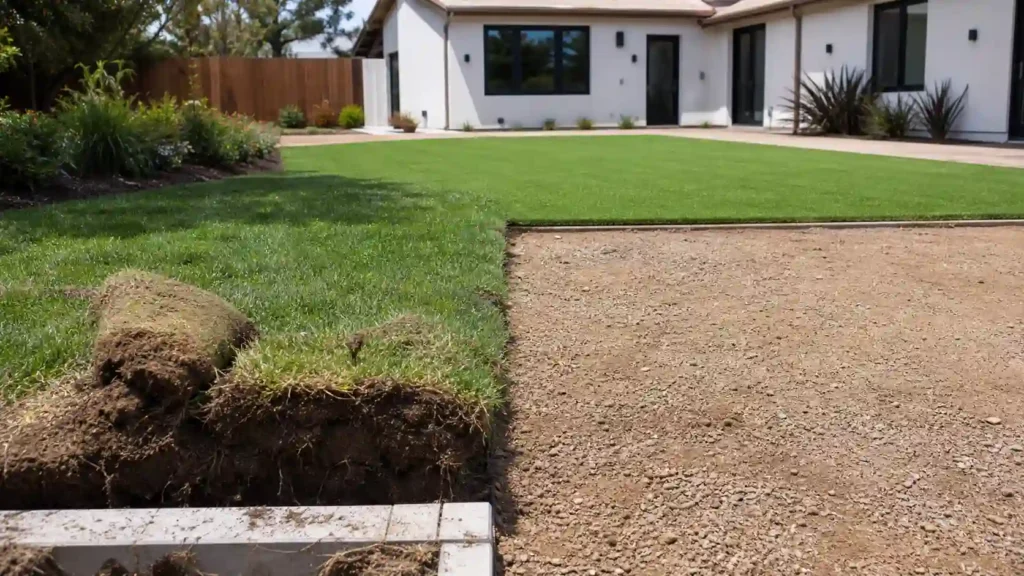
No, not for a proper permanent installation. You should remove the existing grass, roots, and organic material before installing artificial turf over soil. Leaving the old lawn underneath can lead to settlement, soft spots, weeds, and drainage problems later.
It may look like skipping grass removal will save time and money. In practice, it leaves an unstable layer underneath the turf. A good artificial lawn needs prepared soil and a compacted sub-base, not living or decomposing grass beneath it.
Can You Put Artificial Grass Directly Over Existing Grass?
You can physically lay artificial grass over a lawn, but that does not make it a sound permanent installation.
Natural grass is more than a green surface. Beneath it are roots, thatch, organic material, and soil that can change over time. Artificial turf does not stop those materials from breaking down or the ground from moving.
For a permanent artificial grass installation over soil, the existing lawn should be removed first. The exposed soil can then be checked, graded, prepared for drainage, and compacted before the sub-base is installed.
This is the key difference between what you can physically do and what should be done for a lasting installation.
When homeowners ask, “can you put artificial grass on grass,” the practical answer is no for a permanent lawn. The turf needs a firm, prepared surface below it.
A proper system is built in layers:
Prepared soil → compacted sub-base → artificial turf → infill
Existing grass does not belong in that structural system.
Why Should You Remove Grass Before Installing Artificial Turf?
The main issue is not the grass blades you can see. The bigger concern is what remains underneath them.
Existing Grass Can Decompose and Cause Settlement
Grass, roots, thatch, and other organic matter do not remain unchanged under an artificial lawn.
Once the old lawn is covered, the organic material can break down. As it loses volume, the ground above it can settle. That may create soft spots, small voids, or low spots beneath the turf.
The problem often develops slowly.
At first, the new artificial lawn may look fine. Months later, you may notice a low area or a softer section underfoot. The turf did not cause the settlement. The material underneath it changed.
That is why laying artificial turf on existing lawn is a poor choice for a permanent installation.
The basic chain is simple:
Grass and roots → decomposition → loss of volume → settlement → soft spots or low spots
Removing the organic layer gives the installer a much better surface to inspect and prepare.
Existing Grass Can Create an Uneven Surface
Artificial turf follows the shape of the surface below it.
It does not level an unstable subgrade.
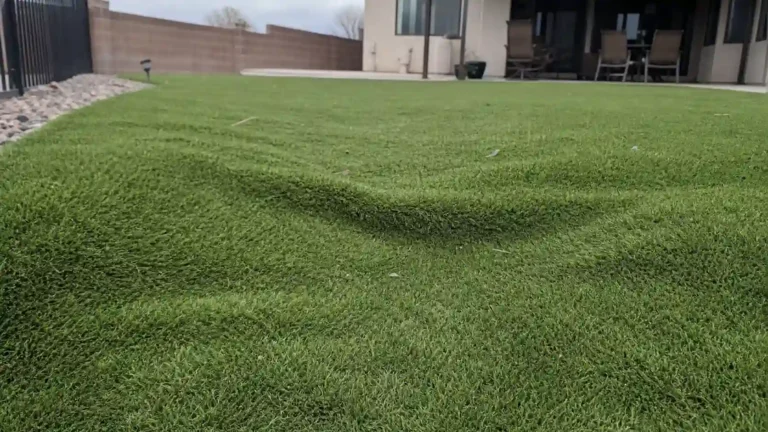
If the existing lawn has bumps, old roots, uneven soil, or areas that already settle, those conditions can remain below the turf. After installation, movement in the soil can show up as an uneven finished surface.
This is why proper artificial grass installation over grass starts with removal rather than covering.
Once the grass is gone, the subgrade can be inspected. Low areas can be addressed, the grade can be corrected, and the soil can be compacted where needed.
A stable surface also reduces the chance of turf movement, wrinkles, and visible low spots.
The goal is not simply to make the soil look flat. The goal is to create a firm surface that can support the complete turf system.
Roots and Weeds Can Create Problems
Removing the visible grass is not enough if a thick layer of roots and organic material remains.
Roots can leave loose material in the soil. Existing weeds can also continue to create problems if they are not dealt with before installation.
This matters around turf seams, edges, and small openings where vegetation may find a path upward.
A weed barrier can help reduce weed growth, but it should not be treated as a replacement for removing the existing lawn.
The better sequence is to remove the sod, roots, weeds, and loose organic material first. Then prepare the soil and use a suitable permeable weed barrier when the installation calls for one.
Existing Grass Can Interfere With Drainage
Artificial turf can allow water to pass through its backing, but that does not mean the ground underneath will drain properly.
Drainage starts below the turf.
The soil needs the correct grade, and the prepared base needs enough stability and permeability for water to move through the system.
If the old lawn covers soil that already holds water, simply laying turf over it does not solve the problem. You may end up covering the symptoms instead of fixing the cause.
A proper preparation sequence is:
Remove vegetation → inspect soil → establish grade → address drainage → compact the subgrade → install the sub-base
This gives the finished artificial lawn a better chance of handling normal rainfall without standing water or puddles.
What Happens If You Install Artificial Grass Over Existing Grass?
The problems are not always visible on installation day.
Here is what can happen when the existing lawn is left underneath:
- Grass decomposes. Organic material can break down beneath the turf.
- The surface can settle. As the underlying material changes, the finished surface may sink.
- Low spots may form. Areas that settle more than others can create depressions.
- The turf can become uneven. Artificial grass follows movement below it.
- Water may collect. Poor grade or weak soil can contribute to standing water and puddles.
- Weeds may appear. Remaining vegetation can create growth problems around gaps and edges.
- Repairs become harder. Once the turf, seams, and perimeter are installed, correcting the ground underneath means disturbing finished work.
These are the main artificial grass over grass problems to consider before choosing the shortcut.
A turf surface can only be as stable as the foundation below it.
This is also why poor preparation is one of the common causes of artificial turf failure. Ground movement, weak base preparation, and drainage issues can all show up after the turf has been installed.
What Should You Do Instead of Laying Artificial Turf on Existing Grass?
The correct approach is not complicated, but each layer has a job.
Remove the Existing Grass and Roots
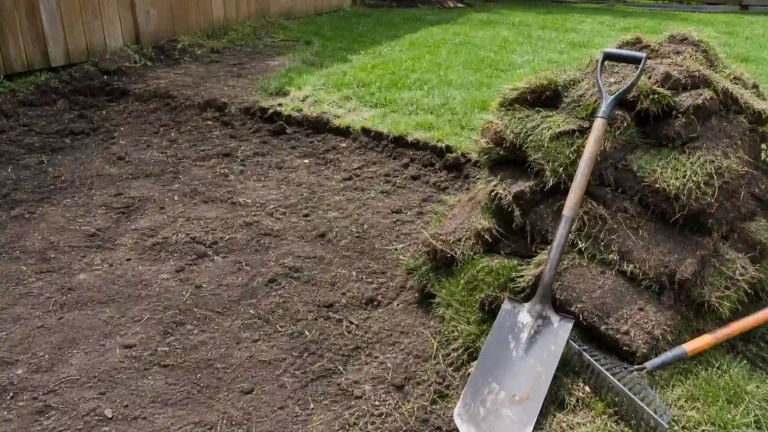
Start by removing the existing sod or lawn.
A sod cutter can make removal faster on larger areas, while hand tools may work for small sections. The goal is to remove the grass, roots, weeds, thatch, and excess organic material rather than simply cutting the blades short.
This is the point where many failed installations begin. Leaving a thin layer of lawn behind may seem harmless, but the material is still part of the ground beneath the turf.
The finished surface should be based on prepared soil, not buried vegetation.
Prepare the Soil
After the lawn is removed, inspect the exposed soil.
Look for:
- soft soil
- loose areas
- roots
- uneven ground
- drainage concerns
- low spots
- poor grade
The soil may need excavation before the artificial turf system is built.
Grading establishes the planned elevation and helps direct water where it needs to go. Compaction then creates a firmer subgrade for the base above it.
This is where artificial turf over soil preparation becomes important. The turf itself is not the part that fixes poor soil conditions.
For the full preparation process, see How to Prepare the Ground for Artificial Grass. It covers vegetation removal, excavation, grading, drainage, sub-base preparation, and compaction in greater detail.
Build a Stable Sub-Base
After the soil is prepared, the next layer is the sub-base.
Common materials include:
- aggregate
- crushed rock
- Class II road base
- decomposed granite
The right material depends on the soil, drainage needs, traffic, and the type of finished surface.
Class II road base is commonly used for residential turf work because graded aggregate can compact into a firm foundation. Decomposed granite can provide a fine, consistent surface and is useful for some applications where a smooth finish matters.
The important point is not choosing a material because it sounds like the “best” one for every yard. The base should match the site.
The sub-base must also be compacted correctly. Loose aggregate is not the finished foundation.
For a deeper comparison of base materials, see The Best Base for Artificial Grass.
Can You Install Artificial Grass on Grass Without Removing It?
For a permanent lawn, no.
Skipping grass removal does not eliminate the preparation work. It leaves organic material between the turf and the prepared ground, where it can decompose and change the surface over time.
A temporary decorative setup is different. Temporary turf used for an event or short-term display may have different requirements because long-term soil stability is not the same concern.
That should not be confused with a permanent residential artificial lawn.
If you are replacing a real lawn with synthetic grass for years of use, remove the existing vegetation first.
When Is Existing Grass Removal Especially Important?
Grass removal matters on every permanent soil-based installation, but poor site conditions make shortcuts even more risky.
Pay close attention when the yard has:
- thick lawn or heavy thatch
- deep roots
- existing weeds
- uneven ground
- soft soil
- poor drainage
- areas that already settle
- places where water collects after rain
A yard that already has puddles, soft areas, or uneven ground needs those conditions addressed before turf installation.
Covering them with artificial grass does not make them disappear.
What Does Grass Removal Add to the Project?
Removing an existing lawn does add labor to an artificial turf installation. That cost is part of building the foundation correctly rather than an unnecessary extra.
For a general 2026 planning figure, Angi reports professional grass removal at about $1 to $2.75 per square foot, with the final price affected by yard size, access, labor, disposal, and additional preparation. These are broad U.S. figures, not a fixed San Diego quote.
A small, open lawn with easy access is very different from a yard with narrow gates, thick sod, roots, poor soil, or difficult disposal.
That is why a reliable turf estimate should account for the actual site rather than applying one removal price to every yard.
The Correct Installation Sequence
Here’s the full order, start to finish:
Remove grass and roots → clear organic matter → excavate → grade the soil → address drainage → install and compact the sub-base → install the turf.
Once the existing lawn is removed and the ground is prepared, the turf installation follows. If you want to see that stage covered step by step, read our How to Install Artificial Grass: A Complete Installation Guide.
For broader guidance on soil and base standards used in synthetic turf projects, the Massachusetts turf field construction specifications outline why certified installers and proper sub-base prep are standard requirements, not extra steps. And if you’re weighing whether a weed barrier alone will solve your weed concerns, the University of Florida IFAS Extension’s review of landscape fabric is worth a read. It explains why fabric helps but isn’t a full substitute for proper removal.
When to Call SD Home Turf
If you are replacing a natural lawn in San Diego County, the first question should not be which turf roll to buy.
It should be what is underneath the lawn.
The soil condition, existing vegetation, grade, drainage, access, and base requirements all affect the finished installation. SD Home Turf provides artificial grass installation services in San Diego County with the ground preparation treated as part of the turf system, not as an afterthought.
If you are planning to replace an existing lawn, request a free consultation to discuss the site and installation requirements.
Final Answer
If your question is can you install artificial grass over existing grass, the answer for a permanent lawn is no.
Remove the existing lawn first. Then prepare the soil, correct the grade, address drainage, and build a compacted sub-base before laying the artificial turf.
That extra preparation is what separates a turf surface that looks good on installation day from one built to stay stable over time.
Frequently Asked Questions
Do you have to remove grass before installing artificial turf?
Yes, for a permanent soil-based installation. Removing the lawn prevents buried organic material from becoming part of the foundation and allows the soil to be properly graded and prepared.
Can artificial grass be installed over a lawn without digging?
You can physically place turf over a lawn, but skipping proper ground preparation is not recommended for a permanent installation. The existing vegetation still needs to be removed and the soil prepared.
Can you lay artificial turf over dead grass?
Dead grass should still be removed. Dead vegetation is still organic material, and leaving it below the turf can contribute to settlement as it breaks down.
Can you install artificial grass over grass roots?
For a permanent installation, remove the existing grass and as much of the root and organic layer as practical before preparing the subgrade. The goal is to build the turf system on prepared soil rather than buried vegetation.