Skip to content
How to Fix Drainage Problems Under Artificial Turf
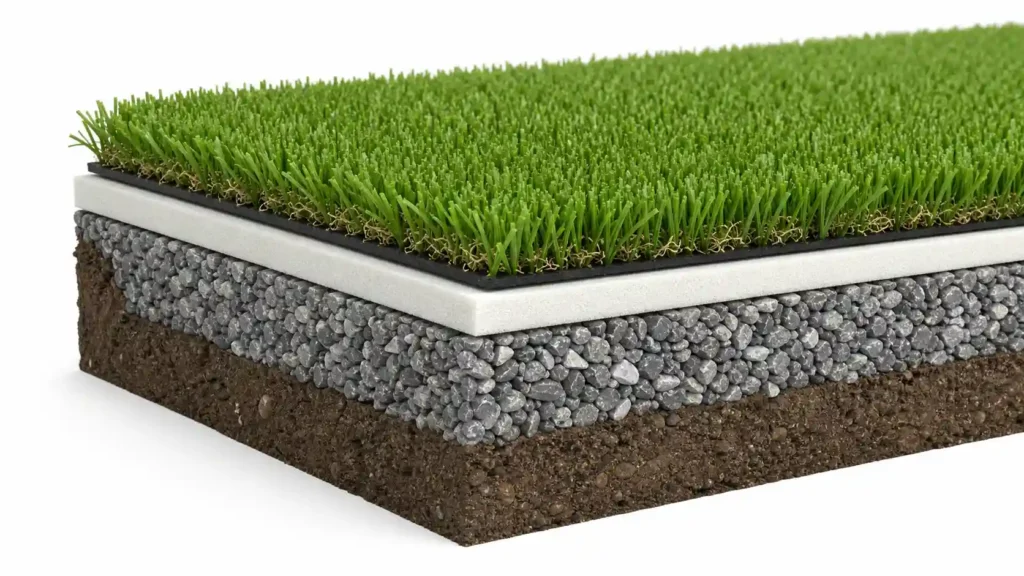
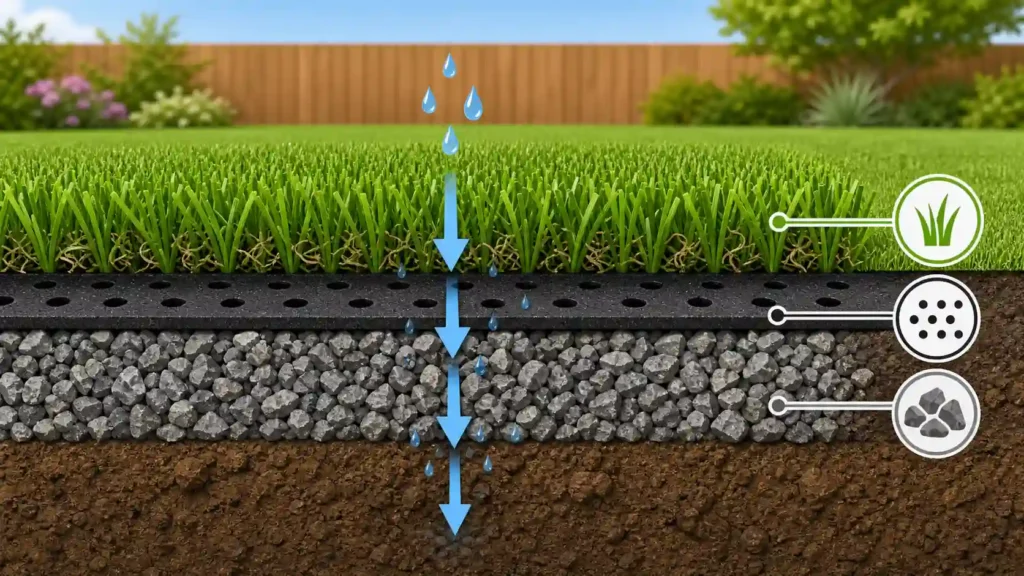
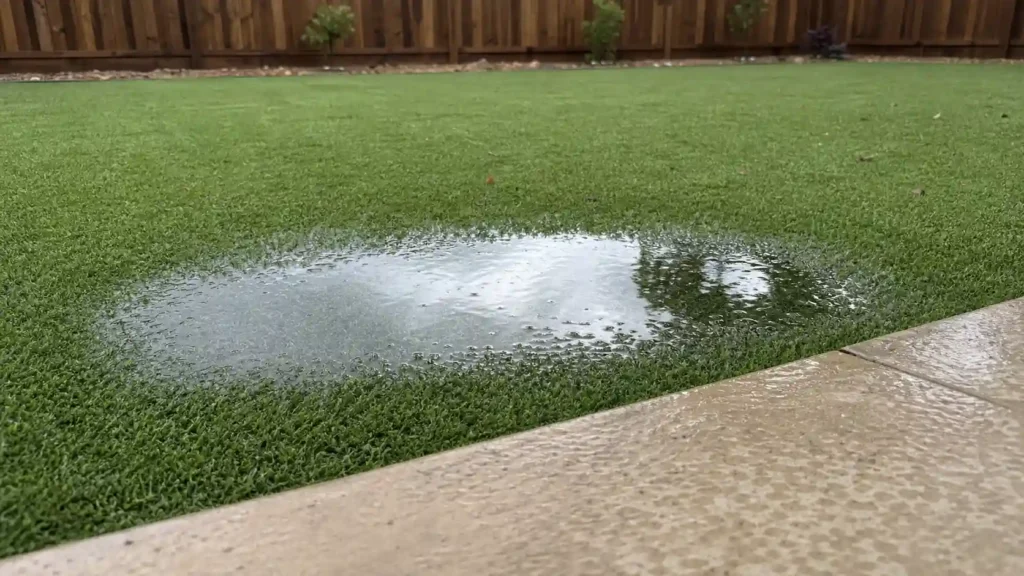
Water sitting on your lawn after rain is not normal, even with artificial turf. If you want to know how to fix drainage problems under artificial turf, the short answer is this: find the exact point where water stops moving, then fix that point. The cause is usually a blocked drainage hole, compacted soil, a weak sub-base, a low spot, poor slope, or pet urine buildup. Don’t guess and add a fix at random. A French drain will not help if the real problem is compacted soil three inches down. Find the failure point first, then apply the right repair. How to Tell If Your Artificial Turf Has a Drainage Problem Some drainage issues are easy to spot. Others only appear after a heavy rain. Look for these signs: Standing water that sits for more than 20 to 30 minutes after rain Slow drainage, where water moves but takes too long to disappear Puddles that show up in the same spot every time it rains Water collecting near a patio, wall, or other hard surface Soft or spongy areas when you walk across the lawn Water pooling near a pet’s favorite bathroom spot The location matters. A puddle in one low spot points to a different problem than water staying across the entire yard. If water disappears quickly from most of the turf but remains in one area, start with that area. The problem may be a low spot, poor grade, or a localized base issue. How Artificial Turf Is Supposed to Drain Water Before you fix anything, it helps to know the normal path water should take. Water moves through five layers, in this order: Turf surface → perforated backing → infill → sub-base → native soil (or a drainage outlet) Each layer has one job. The backing has drainage holes punched through it. The infill sits between the grass fibers and lets water pass instead of blocking it. The sub-base is a compacted layer of aggregate that holds the turf’s shape and lets water keep moving down. Below that is your native soil, which either absorbs water or lets it run off. A drainage problem means one of these layers stopped doing its job. Some of these issues start at the original build. If your turf was installed with the wrong slope or a shallow sub-base, drainage problems can show up months or years later. Reviewing a complete artificial grass installation process is a good way to check if your original build skipped a step that matters now. For a quick explanation of the normal water path, see our guide on how artificial turf drains water. It helps explain the system before you troubleshoot a failure. How to Fix Common Artificial Turf Drainage Problems Here is where we get specific. Each cause below needs a different fix. Don’t apply all of them at once. Match the fix to the actual problem you found. Fix Standing Water and Recurring Puddles First, figure out if the water sits in one exact spot or spreads across the whole lawn. One spot usually means a low area or a dip in the base. A spread-out problem usually points to a bigger issue below the surface. Check where the water is coming from. Is it just rain landing on the turf, or is water running in from a neighboring yard, patio, or downspout? You can’t fix turf drainage if the real source is water flowing in from somewhere else. Next, check if the turf itself drains but the ground underneath does not. Pour a bucket of water on the spot. If it disappears fast through the turf but reappears minutes later, the turf is fine and the ground below is the problem. In that case, don’t disturb the surface. The fix has to happen at the sub-base or soil level, which we cover next. Typical cost: Fixing one small low spot by lifting the turf and adding aggregate usually runs $150 to $400 for a standard residential yard, depending on size and access. Clear Blocked Drainage Holes and Backing Turf backing has small holes designed to let water pass through. Over time, dirt, dust, and fine sediment settle into these holes and slow the flow. To check this, peel back a small section of turf and look at the backing. If the holes look packed with debris, that’s your answer. Clear the visible debris by hand or with a soft brush. Avoid a high-pressure washer directly on the backing. Too much pressure can push debris deeper into the holes instead of clearing them, and it can loosen the seams. If clearing the surface debris does not restore normal water flow, the blockage is likely deeper in the infill layer, not just the backing holes. Typical cost: A professional deep clean and hole clearing service runs $200 to $450 for an average backyard. Correct Compacted Soil Under Artificial Turf This is one of the most overlooked causes, and it’s a big one. There’s a difference between turf that drains into the base and water that actually leaves the soil underneath. If your native soil is dense clay or has been compacted by years of foot traffic, water can pass through the turf and the base just fine, then get stuck right below. You’ll notice this as a soft, waterlogged feel that lasts for hours or days after rain, even though the surface looks dry. Sticking a screwdriver into the ground near the wet area is a quick test. If it’s hard to push in even a few inches, the soil is compacted. The fix means lifting the turf in that section, breaking up the compacted soil, and improving drainage before putting the base back. This is exactly why ground prep matters before turf ever goes down. If you’re rebuilding a section, our guide on how to prepare the ground for artificial grass walks through the grading and soil steps that prevent this from happening again. In some cases, this problem traces back to