No, artificial grass does not always need an underlay. A typical residential lawn installed over a properly prepared surface can perform well without foam beneath the turf. An underlay becomes useful when you want extra cushioning, a softer feel, or added impact protection.
The right choice depends on the surface and how you plan to use the area. Concrete, playgrounds, putting greens, and normal residential lawns can each call for a different approach.
What Is Artificial Grass Underlay? (Foam Underlay vs. Underfelt)
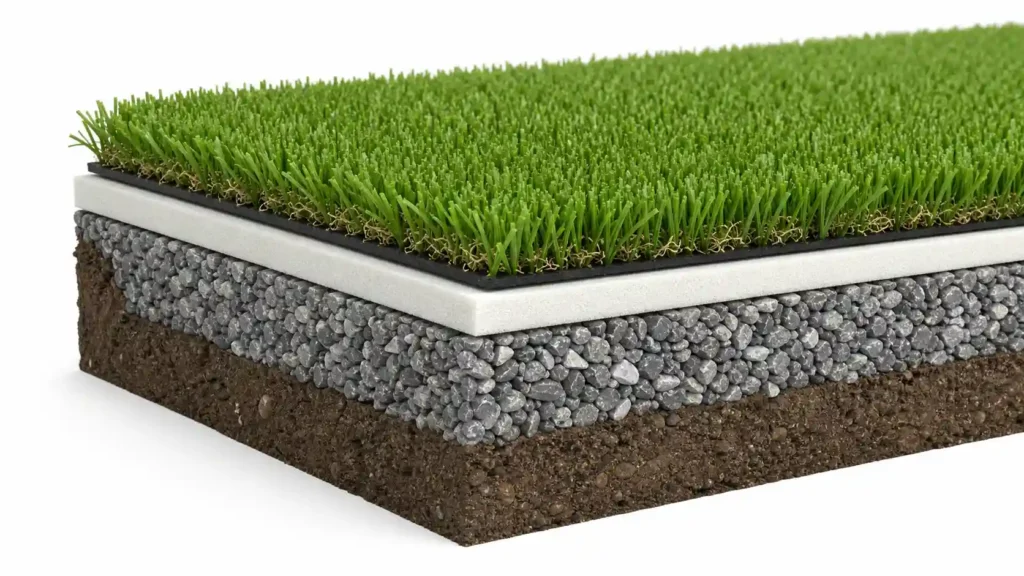
Underlay is a thin layer placed between the base and the turf itself. Most installers call it foam underlay. Some homeowners search for it as undervalued for artificial grass, borrowing the term from carpet fitting. It’s the same idea, but built for outdoor use.
Foam underlay is usually made from closed-cell foam, often XPE. It has small holes punched through it so water can pass right through instead of pooling. That matters because a solid foam pad with no drainage holes will trap moisture and cause smells over time.
Don’t confuse underlay with a sub-base. A sub-base is a layer of compacted aggregate, like crushed rock or decomposed granite, that sits below the turf and gives it structure. Underlay is optional and sits on top of that structure. They solve different problems.
When Does Artificial Grass Need an Underlay?
Most artificial grass does not automatically require an underlay. The key question is what you need the extra layer to do.
There is a useful difference between something being required, useful, or unnecessary.
For a normal residential lawn, an underlay is often optional. The turf can be installed without foam when the surface is suitable and the goal is a standard lawn.
An underlay becomes more useful when the surface is hard or when extra cushioning is wanted. Concrete is one common example. A foam layer can make a hard surface feel softer beneath the artificial turf.
Playgrounds are different again. If children can fall from play equipment, the surface may need tested impact attenuation. In that case, the discussion moves from simple comfort to a suitable shock pad and the required fall-height performance.
Putting greens also has different needs. A soft foam layer is not automatically better for a putting surface because firmness, consistency, and ball roll matter.
So the question is not simply whether artificial grass needs an underlay. The better question is whether an underlay solves a real need for that particular surface and use.
When Is an Underlay Not Necessary?
For a normal residential lawn, you usually don’t need foam underlay. If the ground has been excavated, graded, and compacted the right way, that base alone gives the turf a stable, even surface to sit on.
This is why proper prep work matters more than any add-on layer. If you want to see exactly how that process works step by step, our artificial grass installation process guide walks through it from start to finish.
An underlay does not replace good ground work. If the soil underneath is soft or uneven, no amount of foam will fix that long term. You need to prepare the ground for artificial grass properly first. And if you’re wondering whether your yard even needs a stone base before the turf goes down, we cover that in our guide on whether you need a sub-base for artificial grass.
Skip the underlay on a standard backyard lawn. Save that money for better turf or proper base material instead.
When Is Foam Underlay Useful?
There are a few situations where foam underlay earns its cost.
- Softness. If you want your lawn to feel extra springy underfoot, a foam layer adds that bounce. Artificial grass is already fairly soft on its own, but underlay takes it a step further.
- Hard surfaces. Laying turf straight onto concrete or a patio slab feels firm and unforgiving. A layer of cushioning softens that feel and can hide small dips or rough spots in the surface below.
- Fall protection. If kids play in the space, or if anyone in the household is unsteady on their feet, extra cushioning lowers the chance of injury from a trip or fall.
Outside of these three cases, most homeowners are happy without it.
Foam Underlay vs Shock Pad: What's the Difference?
The two terms are related, but they should not be treated as the same product.
- Foam underlay is mainly used for cushioning and comfort. It can give artificial turf a softer feel and can be useful over hard surfaces.
- The shock pad is designed around impact attenuation. It is used when the surface needs to reduce the force of an impact from a fall.
That difference matters most in playground applications.
For example, a homeowner may want foam underlay under a lawn because they prefer a softer feel. A playground with elevated play equipment has a different problem. The surface must be assessed for fall impact, not just how soft it feels.
ASTM F1292 addresses impact attenuation for playground surfacing and uses measures such as Gmax, Head Injury Criterion (HIC), and critical fall height to evaluate performance. The CPSC also identifies ASTM playground-surfacing standards as relevant voluntary standards for playground surfaces.
So, do not choose a shock pad based only on thickness or softness. The pad needs to suit the intended application and required impact performance.
Do You Need Underlay for Artificial Grass on Concrete?
This is one of the most common questions we get, and the answer is different from a soil-based lawn.
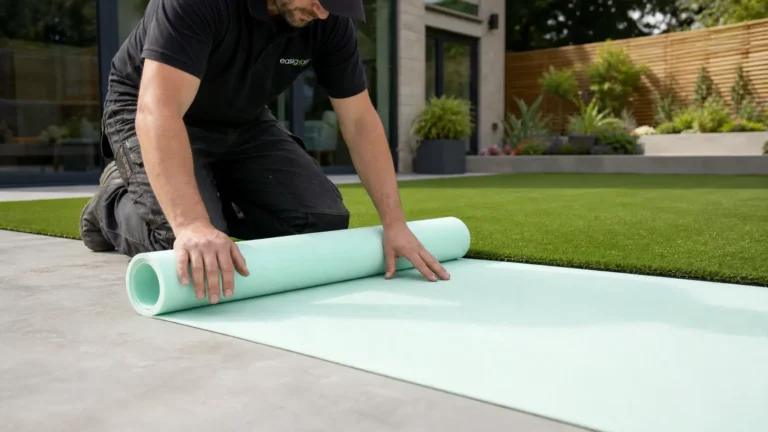
Do you need underlay for artificial grass on concrete? It’s not required, but it’s usually worth it. Concrete is a hard, unforgiving surface. Without a cushioning layer, the turf will feel stiff and every small crack or bump in the slab can show through.
A foam layer helps in two ways. It softens the feel underfoot, and it smooths out small surface imperfections so they don’t telegraph through the grass. It won’t fix major cracks or pooling water on its own. If your concrete has drainage issues, that needs attention before turf goes down. You can read more about how water needs to move through the system in our guide on how artificial turf drains water.
Is Underlay Useful for Playground Artificial Grass?

Yes, and this is one place where it goes from optional to important.
Playground surfacing is judged by how well it protects a child during a fall. The industry measures this using Head Injury Criterion, or HIC, a score based on how much force a surface absorbs on impact. The Consumer Product Safety Commission publishes fall-height and surfacing guidelines in its Public Playground Safety Handbook, and impact testing follows standards like ASTM F1292.
The shock pad thickness you need depends on the fall height of the equipment. Taller equipment needs a thicker, higher-rated pad. This is not a place to guess. A pad that looks fine but fails an impact test is not doing its job.
For play areas at home, this usually means talking to an installer who can match pad thickness to your equipment’s fall height, rather than picking a generic foam roll off the shelf.
Do Putting Greens Need an Underlay?
A putting green needs a different decision.
The main concern is not simply whether the surface feels soft. A putting surface needs a consistent feel and predictable ball roll.
Adding foam can change how the surface responds under pressure. That may not be desirable if firmness and consistency are the main goals.
For this reason, an underlay for a putting green should be selected based on the intended putting surface rather than using the same approach as a residential lawn.
Think about:
- putting green
- artificial putting turf
- surface consistency
- firmness
- cushioning
- ball roll
- underlay suitability
A softer layer may make sense in some specialty designs, but it should not be treated as a universal requirement for putting greens.
The right choice depends on the performance you want from the putting surface.
What Is the Best Underlay for Artificial Grass?
There’s no single best option. It depends on what you’re solving for.
Situation | Best Approach |
Standard residential lawn | Often no underlay needed |
Want a softer feel | Foam underlay, 10mm is common |
Installing over concrete | Foam underlay, helps with feel and minor imperfections |
Playground or play equipment | Rated shock pad matched to fall height |
Putting green | Skip underlay, focus on a firm, level base |
On cost, foam underlay for artificial grass typically runs somewhere between $1.50 and $3.50 per square foot installed, depending on thickness and the size of the job. Shock pads built for playground fall protection usually cost more because of the thicker material and testing behind them. Get a real quote based on your yard, not a national average, since ground conditions change the number quickly.
If you’re searching for underlayment for artificial turf and comparing products, match the product to your actual use case first. Buying a thick comfort pad for a lawn that just needs good drainage is money you don’t need to spend.
Underlay Decision Guide: Do You Actually Need One?
Here’s a quick way to think it through.
- Installing on a normal residential lawn? Usually no underlay.
- Want extra softness underfoot? Add foam underlay.
- Installing over concrete or a hard patio? Foam underlay is worth it.
- Installing near play equipment where falls are possible? Use a rated shock pad, not basic foam.
- Installing a putting green? Skip underlay and focus on a firm base instead.
Final Answer: Does Artificial Grass Need an Underlay?
An underlay is not automatically required for artificial grass. It becomes worth the cost when the application calls for extra cushioning, a softer feel, or real impact protection. It’s most useful over hard surfaces like concrete and in play areas where fall safety actually matters.
If you’re not sure what your yard needs, that’s a normal thing to be unsure about. Every yard sits on different soil, gets used differently, and has different goals. Rather than guessing, it helps to have someone look at the actual ground before you spend money on material you may not need.
At SD Home Turf, we evaluate the surface, the intended use, and the traffic the lawn will see before recommending anything extra. If you’re planning an artificial grass installation in San Diego County, reach out and we’ll walk your property and give you a straight answer on what your project actually needs. No upsells, just what fits your yard.
FAQs
Is underhood the same as artificial grass underlay?
Yes, underfelt for artificial grass is another name for the same foam underlay product used outdoors.
Does artificial grass need a shock pad?
Only in specific cases, mainly playgrounds or areas with fall equipment, where impact protection matters more than comfort.
Do you need an underlay on a residential lawn?
Usually not. A well-prepared base is enough for most backyards.
Is an underlay useful under artificial grass for a playground?
Yes. A shock pad rated for the equipment’s fall height helps meet safety standards like HIC.