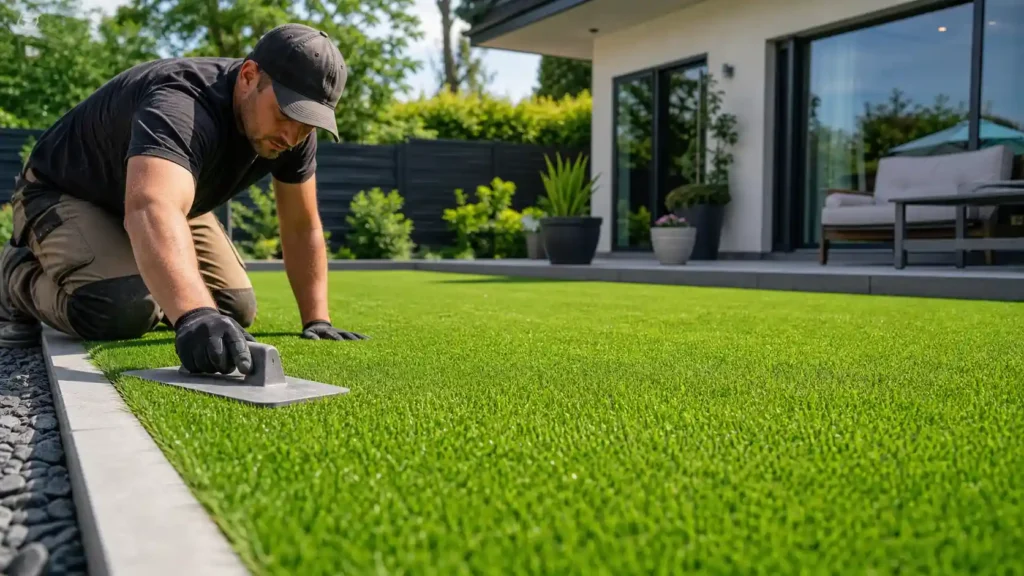
How much does it cost to install artificial turf? There is no single price that fits every yard. In 2026, published estimates range from about $3,200 to more than $8,700 for many residential projects, while Home Depot says its installation projects start around $5,000. A San Diego-area cost guide currently places standard professional installs around $9 to $13 per square foot. These figures are useful benchmarks, not fixed quotes.
The final price depends on your square footage, existing lawn, excavation, base material, turf type, infill, edging, drainage, site access, seams, labor, and design. The important question is not only what turf costs. It is what work and materials are included in the complete installation.
What Determines the Cost of Artificial Turf Installation?
The same square footage can produce very different installation prices. A simple rectangular yard with easy access may need less preparation than a smaller yard with difficult access, poor soil, several seams, or drainage work.
Think of the total artificial grass installation cost as several parts working together:
- Area and square footage
- Excavation and existing lawn removal
- Base material
- Turf type
- Infill
- Edging and edge restraint
- Drainage
- Site access
- Seams
- Labor
- Custom designs
That is why a per-square-foot price should be treated as a starting point, not the whole quote.
1. Square Footage
Square footage is the first number an installer needs.
A larger area requires more artificial grass, base material, infill, and installation time. A smaller project may use less material, but it can still have a higher effective cost per square foot if the job involves complex cuts, tight access, or a small amount of turf spread across several sections.
This is why artificial grass cost per square foot should not be viewed in isolation.
For example, two 500-square-foot yards can have different prices. One may be a clean rectangle with open access. The other may have curves, stairs, existing grass, several seams, and extra preparation.
Square footage sets the scale of the project. It does not define the entire price.
2. Excavation and Existing Lawn Removal
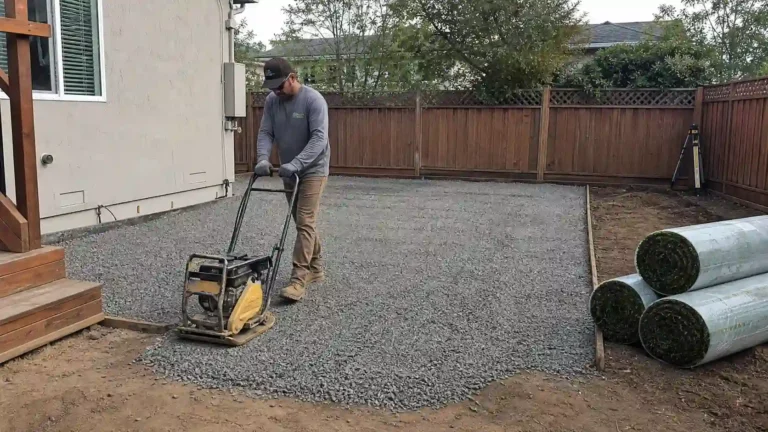
What is already on the ground matters. If an existing lawn is present, the installer may need to remove grass and organic material before building the new surface. Excavation may also be needed to reach the correct finished height.
The amount of work depends on:
- Existing grass and vegetation
- Soil conditions
- Required excavation depth
- Amount of material removed
- Disposal needs
- Finished elevation
More excavation means more labor, equipment use, material handling, and possible disposal costs.
For a deeper look at this part of the installation, see our guide on How to Prepare the Ground for Artificial Grass.
3. Base Material
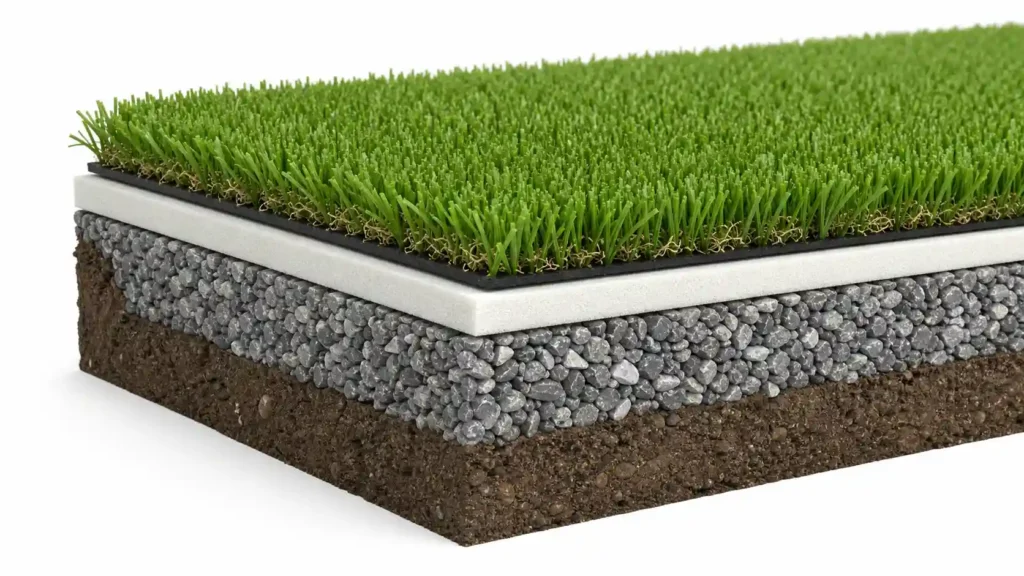
The base is one of the most important hidden parts of an artificial turf installation. A proper base provides a stable surface below the turf. Depending on the site, this can involve aggregate or other crushed base materials, grading, moisture control, and compaction.
Current 2026 pricing published by Angi places common artificial grass sub-base materials around $1.20 to $2.25 per square foot. That is a material benchmark only. Excavation, delivery, compaction, access, and labor can change the actual base cost.
Your soil and site conditions also matter. A base installed over unsuitable or poorly prepared ground may require more work than a straightforward site.
For the technical side of this cost factor, read Do You Need a Sub-Base for Artificial Grass?.
4. Turf Type
The turf itself is another major part of the material cost. Artificial grass is available in different fiber materials, construction styles, quality levels, and durability grades. Polyethylene, polypropylene, and nylon are common fiber materials, and their performance and price can differ.
Current national data from Angi lists artificial grass materials at roughly $2 to $8 per square foot, depending on turf type and other product factors.
A higher material price does not automatically mean the right choice for every yard. The turf should match the intended use, expected traffic, appearance, and required durability.
The key distinction is simple:
Turf cost is the cost of the product. Installed cost includes the work required to turn that product into a finished lawn.
5. Infill
Infill is another material used during installation. The amount and type required can affect the total project cost. Common infill materials include silica sand, zeolite, crumb rubber, and coated sand.
Angi’s current 2026 data lists infill at about $0.30 to $1.75 per pound, depending on the material. The amount needed varies by turf system and installation requirements.
Infill is not priced only by the material itself. The installer must also distribute it across the turf and work it into the fibers.
That means your quote can include both infill material and application labor.
6. Edging and Edge Restraint
The perimeter of the installation also affects cost. Artificial turf needs to be secured around its edges so the finished surface stays in place. The exact method depends on the site and the perimeter condition.
A large rectangular lawn may have a relatively simple perimeter. A yard with many corners, curves, transitions, or separate sections can require more edge work.
The cost can include:
- Edge restraint
- Fasteners
- Perimeter preparation
- Securing the turf
- Extra cutting and fitting
This is one reason two yards with the same square footage can have different installation prices.
7. Drainage Requirements
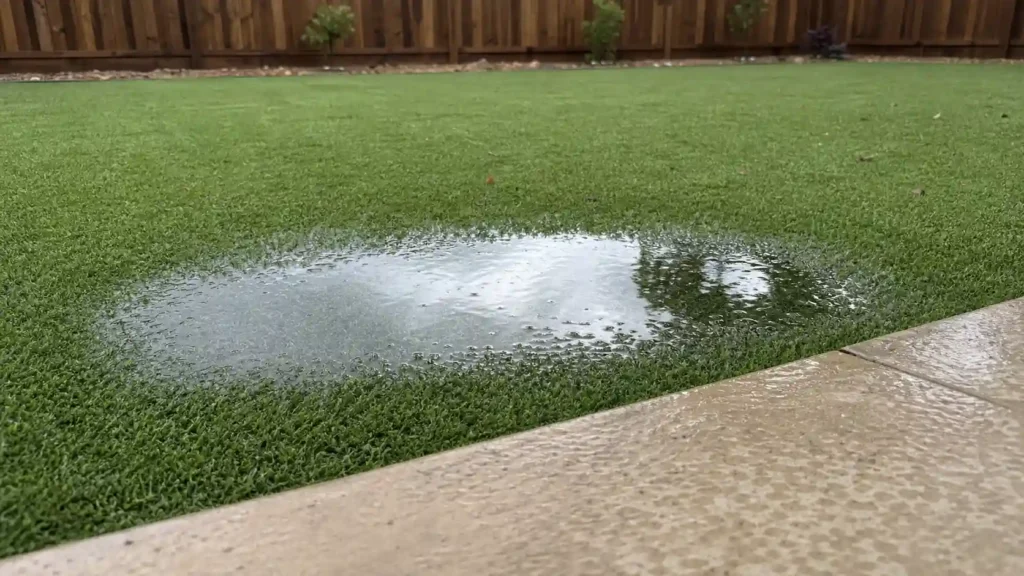
Drainage should be considered before the turf is installed. A site with good drainage may need little additional drainage work. A yard with poor soil, low areas, standing water, or other drainage problems may require additional work before the turf can perform properly.
That additional work can increase the project price. The goal is not simply to place synthetic grass over the ground. Water needs a path away from the surface and through the layers below it.
For the full drainage topic, see How Does Artificial Turf Drain Water?.
The EPA’s research on synthetic turf field construction also describes stone or gravel base layers as part of drainage-oriented turf systems. Residential installations vary, so the exact system should be based on the actual site.
8. Site Access
Access is easy to overlook when comparing quotes. Installers may need to move turf rolls, base material, tools, equipment, and removed soil or grass into and out of the work area.
A backyard with wide, direct access is easier to service than one reached through:
- Narrow side gates
- Stairs
- Long carrying paths
- Tight passages
- Restricted backyard entrances
Difficult access can increase labor because materials and equipment take more time to move.
The site does not become more expensive because of its size alone. The amount of work needed to reach and work in the area matters too.
9. Seams
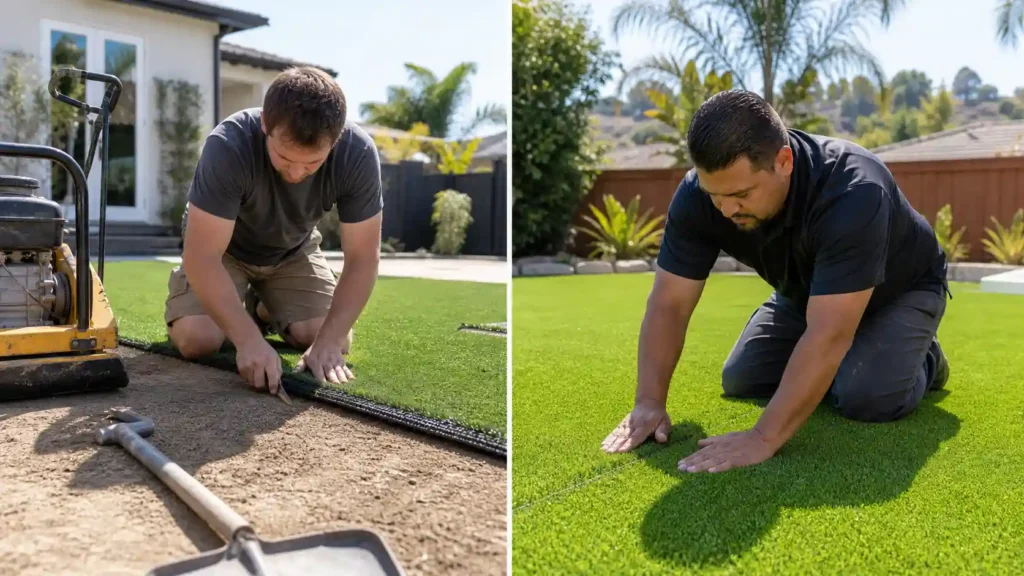
Seams become important when more than one turf section is needed. A simple installation may require fewer joins. A larger or more complex layout may need several turf pieces to cover the area correctly.
Good seaming requires careful:
- Alignment
- Cutting
- Fitting
- Seam preparation
- Adhesive or seam tape
- Final inspection
More seams usually mean more fitting and labor. A quote that includes several turf sections should make clear whether the required seam work is included in the installation price.
10. Labor
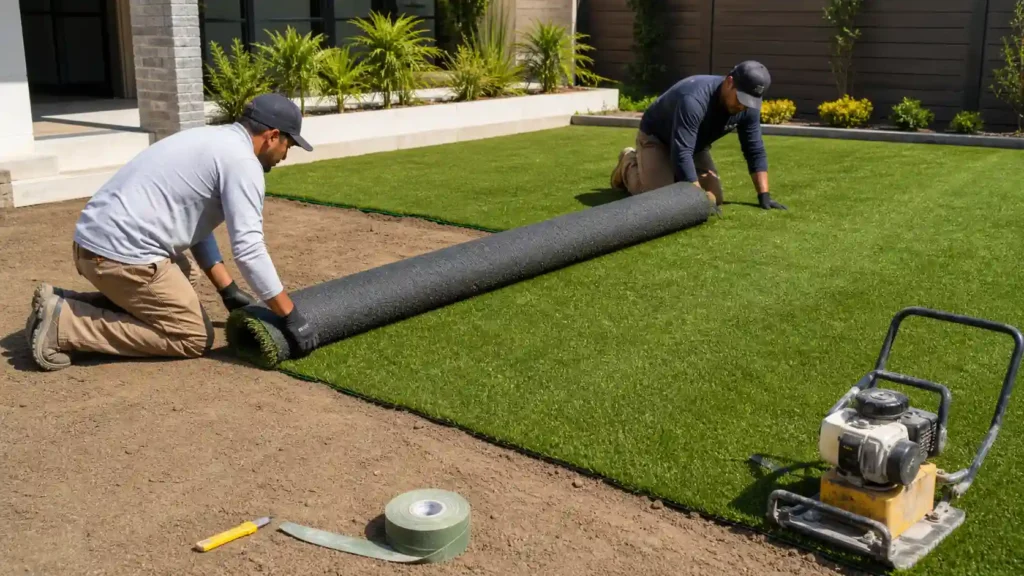
Labor is not just hours multiplied by an hourly rate. It reflects everything the crew has to do: removing the old lawn, excavating, laying and compacting the base, fitting and cutting the turf, creating seams, securing the edges, and spreading infill.
This is exactly why two installers can quote very different prices for the same yard. One quote might include full excavation and a proper base. The other might skip steps to offer a lower number. Choosing the right team matters as much as the price itself, which is why we put together how to choose the right artificial turf installer.
11. Custom Designs and Complex Layouts
Curves, unusual shapes, multiple turf sections, and cuts around patios, trees, or garden beds all add complexity. More cutting and fitting means more material waste and more labor hours.
A simple rectangular yard is the most affordable layout to install. A yard with several curved beds, a pool surround, or a custom putting green section will cost more because of the extra precision the work requires.
Why Two Artificial Turf Installation Quotes Can Be So Different

The biggest mistake homeowners make is comparing only the final number. Imagine two installers quote the same 500-square-foot yard.
One quote includes:
- Turf
- Basic labor
The other includes:
- Existing lawn removal
- Excavation
- Base material
- Compaction
- Turf
- Infill
- Edging
- Seams
- Cleanup
- Required drainage work
- Installation labor
The second quote may be higher, but that does not mean it is overpriced. A lower price can also be misleading if important work has been left out. When comparing quotes, compare the scope of work, not just the price per square foot.
What Should Be Included in an Artificial Turf Installation Quote?
A solid, itemized estimate should spell out:
- Square footage of the project
- Excavation and existing lawn removal
- Base material and compaction
- Turf type and quantity
- Infill type and amount
- Edging and edge restraint
- Drainage work, if your yard needs it
- Seams and finishing work
- Labor
- Any custom design or cutting work
Compare quotes based on this scope, not just the price per square foot. A cheap quote missing half of this list usually costs more later in repairs.
How to Get an Accurate Artificial Turf Installation Cost
Online calculators can give you a rough idea, but they can’t see your yard. An accurate price comes from a real site visit that looks at your soil, drainage, access, and the turf you want.
That visit is the only way to know your actual cost of laying artificial grass, not just a national average.
For homeowners considering artificial turf installation in San Diego County, SD Home Turf can evaluate the project and build the estimate around the actual site instead of giving you a generic square-foot number.
The goal is simple: understand what you are paying for before the work begins.
Request a consultation from SD Home Turf to discuss your yard, installation requirements, and project-specific cost.
FAQs
How much does artificial turf cost per square foot?
Published 2026 estimates vary by project. Angi currently reports artificial grass materials at about $2 to $8 per square foot, while its labor estimates run about $4 to $9 per square foot. Those figures do not mean every completed project will fall into one fixed range because excavation, base work, drainage, access, edging, seams, and other requirements can change the total.
Does the price include base material and labor?
It depends on the quote. A complete installation estimate should clearly state whether base material, excavation, turf, infill, edging, seams, drainage work, and labor are included. Never assume that a quoted price per square foot includes every part of the project.
Is synthetic grass installation more expensive than sod?
The answer depends on the size of the project, materials, preparation, and local labor. Synthetic grass has a different installation process because it requires a prepared base, turf fitting, seams, edging, and infill. Compare the complete installed scope rather than comparing only the material price.
How much should I budget for a 500-square-foot yard?
Use published figures only as an early planning benchmark. For example, Angi’s current national data puts artificial turf materials for 500 square feet at about $1,000 to $4,000 and labor at about $2,000 to $4,500 before all possible project additions. A real project can move outside those figures when excavation, base work, drainage, difficult access, seams, or custom design are involved.
What is the difference between turf cost and installation cost?
Turf cost refers mainly to the artificial grass product. Installation cost includes the labor and work required to prepare the site, install the base, place and cut the turf, create seams, secure the edges, add infill, and finish the project.
What should I compare when reviewing artificial turf installation prices?
Compare the complete scope. Check the square footage, excavation, existing lawn removal, base material, turf, infill, edging, drainage, seams, labor, access requirements, and custom work. The lowest number is not always the lowest total cost when important work is excluded.