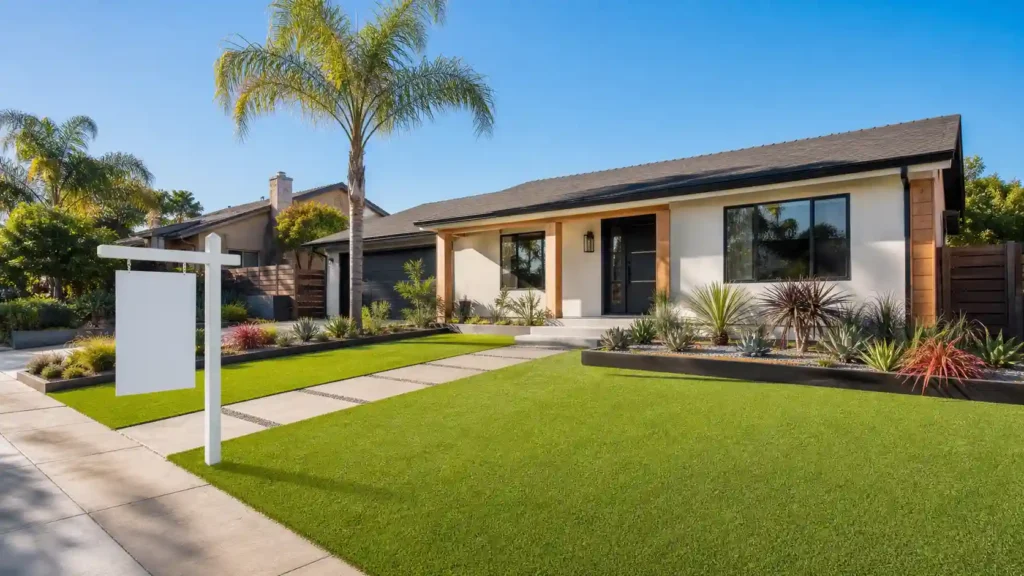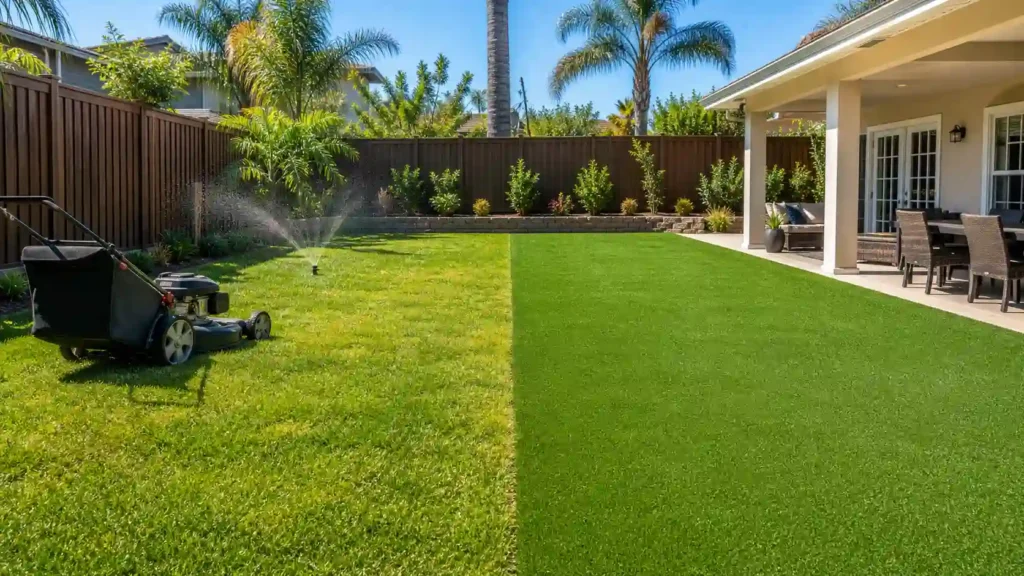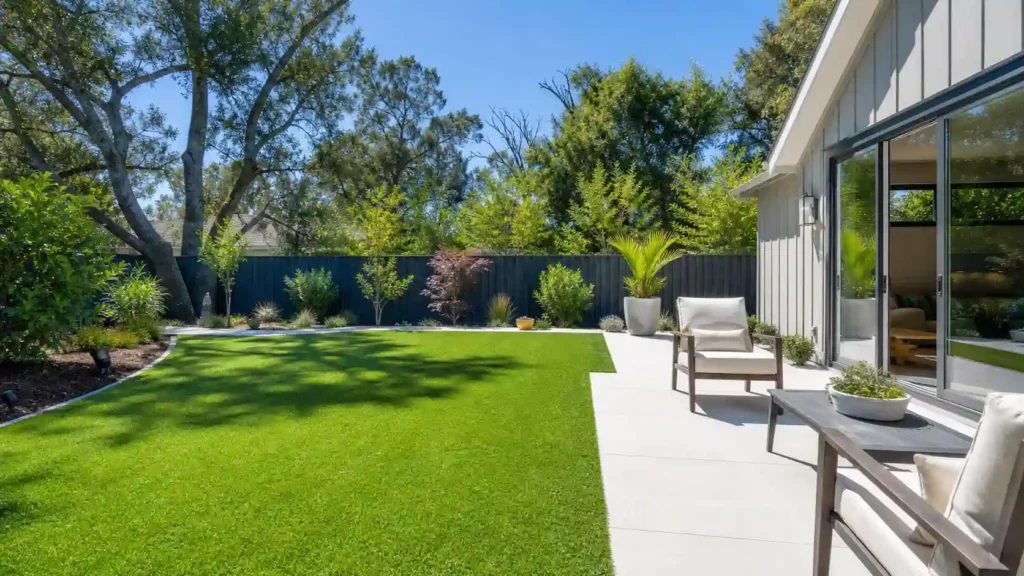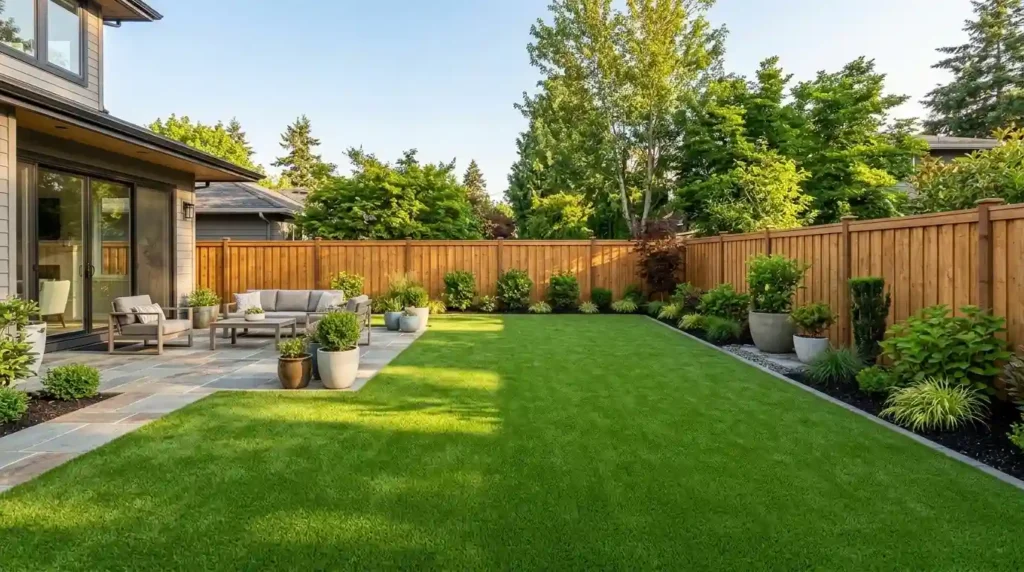
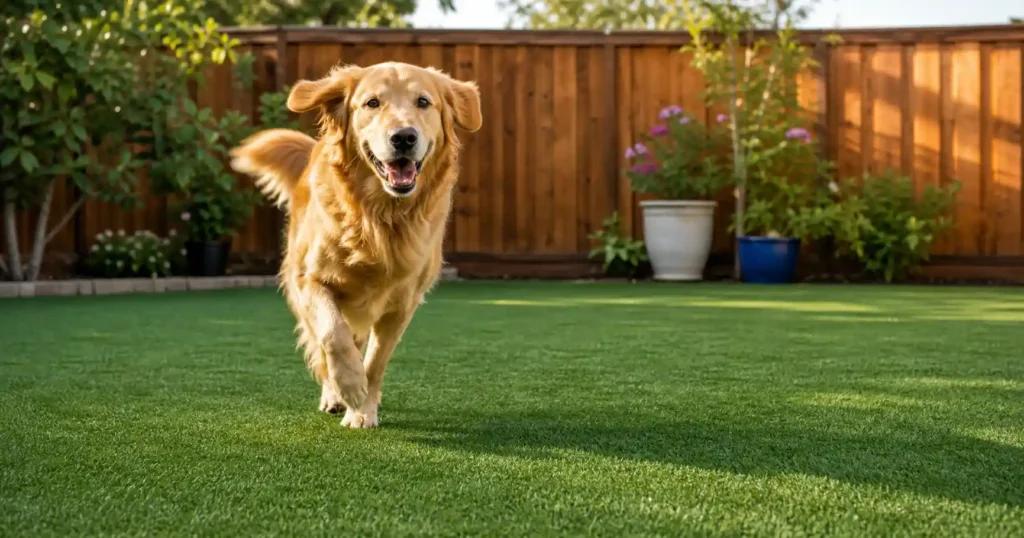
Can dogs damage artificial turf through normal play, like running, rolling, and using the yard as a bathroom? No, a well-installed lawn handles all of that without wearing out fast. Real problems are narrow: loose edges, flattened turf fibers, and odor when urine cannot drain.
This guide shows what digging, scratching, chewing, urine, and heavy traffic do to synthetic grass. You will also learn what prevents each problem, from turf choice to installation.
How Dogs Can Damage Artificial Turf
Dogs affect turf in five ways. Only some cause real damage, and most trace back to the install, not the dog.
Dog behavior | What it does | Real damage? | What prevents it |
Digging | Pulls at edges and seams | Only at weak edges | Secure perimeter and edge restraint |
Scratching | Scuffs the surface | Cosmetic | Dense fibers and brushing |
Chewing | Pulls at loose sections | Rare, mostly at open edges | Tight edges and chew toys |
Urine | Soaks into the turf system | Not to fibers, but odor if it cannot drain | Permeable backing and rinsing |
Heavy traffic | Flattens and mats fibers | Gradual and fixable | Dense yarn and brushing |
Digging and Scratching
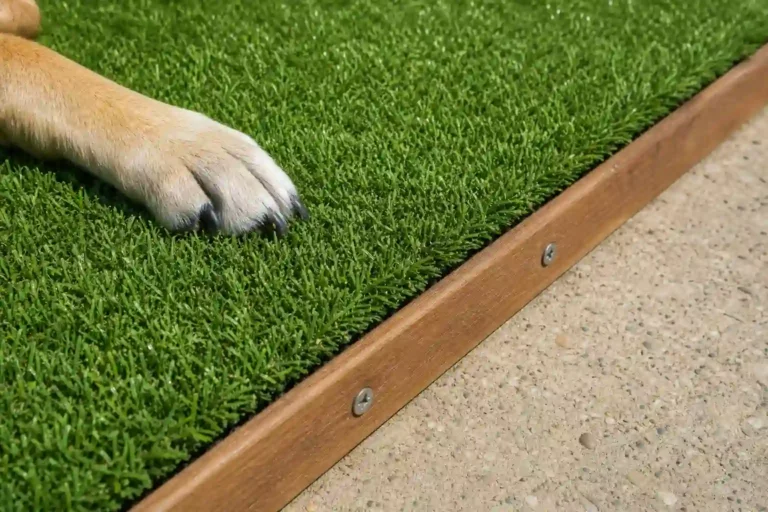
Dogs dig at artificial turf, but the surface rarely gives way. Blades made of polyethylene, polypropylene, or nylon are tied into a strong turf backing. Paws cannot pull that apart.
The weak point is the perimeter. A loose corner gives a dog something to lift and pull. Strong edge restraint removes that weak point before your dog finds it. Good crews lock the turf to a frame or border. They add fasteners, such as nails or staples, close together along the edge and at every seam. A firm sub-base keeps the surface from shifting underneath.
If you install artificial grass yourself, spend the most time on edges and seams.
According to the American Kennel Club, dogs dig from instinct, boredom, or stress, and terriers dig most. A sandbox or a set digging spot gives your furry friend a better outlet.
Scratching is milder, since claws only scuff the surface and press fibers flat in one spot. A quick brushing restores the look, and a short pile hides wear best.
On pet yards, we see the same pattern at SD Home Turf. Trouble usually starts at the edge, not in the middle of the lawn.
Urine and Odor
Dog urine does not harm synthetic turf fibers the way it burns natural grass. Fake grass for dogs to pee and poop on works when urine has a path out.
The trouble starts when it has no path. Urine leaves residue, and bacteria turn its urea into ammonia, which causes the sharp smell. So odor is a drainage and cleaning problem, not proof the turf is ruined.
Turf built to handle dog urine has a permeable backing with drainage holes. Antimicrobial infill or zeolite gives you extra odor control inside the turf. A compacted base that drains slowly keeps urine wet and smelly, so fixing drainage fixes most odor.
Chewing
Chewing is the rarest problem, since most dogs sniff, lick, and walk on turf without pulling at it. The risk sits at exposed corners, loose edges, and open seams.
The ASPCA says puppies chew while teething, and that phase usually ends by six months of age. Tight edges remove the grip, and chew toys give puppies a better target. If your dog swallows turf pieces, call your vet right away.
Heavy Traffic and Running
Natural lawns wear down to bare dirt under dog traffic, but artificial turf does not. Repeated foot traffic does flatten and mat turf fibers, mostly along running paths and near the gate.
A stiff broom, rake, or power brush lifts the blades back up. Fiber resilience and yarn density decide how fast matting shows. Pet owners who brush high-traffic zones often keep the pile standing.
How long can dogs damage artificial turf before wear shows? No single number fits every yard. Traffic level, turf quality, installation, and upkeep set the timeline. High quality turf with tight edges and regular brushing far outlasts a cheap roll. For general lifespan, read how long artificial turf lasts.
How to Keep Artificial Turf in Good Condition With Dogs
Clean Waste and Rinse High-Use Areas
Pick up solid waste as soon as you see it, just like on natural grass. Hose down the spots where your dog pees most, about once a week. Use an enzyme cleaner or mild soap to break down urine residue. Skip harsh chemicals, since they can damage fibers and infill.
Sweep off pet hair and debris so dog waste residue has nothing to cling to. A dog owner who cleans little and often rarely deals with odor.
Make Sure the Turf Has a Proper Drainage Path
Artificial grass for dogs with drainage works as a layered system, and urine needs a clear route through every layer.
- Permeable backing: Drainage holes let liquid pass through instead of pooling on top.
- Infill: It holds blades upright and lets liquid move down without trapping it.
- Aggregate base: A compacted layer of crushed rock drains quickly and stays firm.
- Slope: A slight slope sends extra water away from the turf.
- Soil: The soil under the base absorbs what arrives, and clay soil drains slowly.
In tough spots, a drainage membrane adds an extra path for liquid. Poor drainage is a leading cause of odor in dog areas, so a working drainage system matters more than any cleaner.
Our guide on how artificial turf drains water explains each layer in detail. If your pet area already has puddles or slow drainage, see how to fix drainage problems under artificial turf.

What Makes Artificial Turf More Suitable for Dogs?
Dog friendly artificial grass is defined by its specs, not by the label on the roll. The best artificial turf for dogs combines these features:
Feature | What to look for | Why it matters with dogs |
Pile height | Short to medium pile | Easier to clean and slower to mat |
Face weight | Dense, heavier yarn | Holds up under repeated traffic |
Yarn | Polyethylene or polypropylene blades | Durable and soft underfoot |
Backing | Fully permeable with drainage holes | Lets urine pass through |
Infill | Antimicrobial or zeolite | Controls odor |
Thatch | Low or no thatch layer | Traps less waste |
Edges | Secure edge restraint | Stops lifting, pulling, and chewing |
Cheap turf often skips these features, so low-density yarn mats fast and thin backing drains poorly. The pet turf cost is higher, but dense yarn and better backing avoid early wear and odor.
Choose artificial grass safe for dogs by asking for product specs and safety testing. Pick artificial pet turf from makers that share test results and material details, so it stays safe for pets.
Pet friendly artificial turf works best as a full system: fibers, backing, infill, base, and edges. Even dog friendly turf fails on a weak base or loose edges. That is why artificial turf installation matters as much as the turf itself.
At SD Home Turf, we prepare the base for drainage, secure every edge, and match the turf to your dog. Explore our pet turf services in San Diego County to see how we build yards for dogs. Installing artificial turf the right way once costs less than fixing odor and lifted edges later.
Ready for a yard your dog cannot ruin? Call SD Home Turf or request a quote today, and we will build pet turf made for your yard.
The Bottom Line
So, can dogs damage artificial turf? Only where edges are loose, fibers are thin, or drainage fails. Choose dense, permeable turf, secure the perimeter, and rinse high-use spots often.
Frequently Asked Questions
Do big dogs wear artificial turf faster than small dogs?
Big dogs and homes with several dogs put more weight and more wear on the pile. Matting shows up sooner along favorite running paths. Dense yarn, strong edges, and regular brushing keep the turf looking right.
Can you use a pressure washer on dog areas?
Use a garden hose instead, since it cleans well without harming the turf. A strong pressure washer can blow infill out of the pile and loosen seams. Scrub stubborn spots gently with a stiff broom and more rinsing.
Can you repair a lifted edge or open seam?
Yes, and the sooner you fix it, the smaller the repair stays. A pro can re-secure the edge with fasteners or rejoin the seam with tape and adhesive. Early repair keeps your dog from pulling the gap wider.
Does a dog run need different turf than a backyard lawn?
A dog run packs more urine and traffic into a small space. Choose fully permeable backing, antimicrobial infill, and a strong drainage path for that zone. A drainage membrane helps most where the soil is heavy clay.