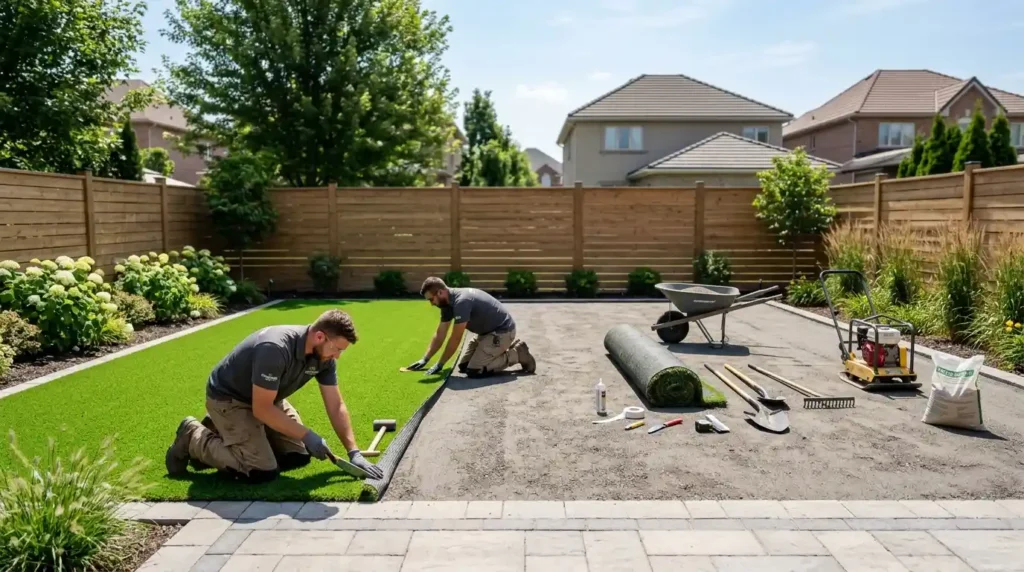
A typical artificial grass project takes about 1 to 3 days when handled by a professional crew. Small, simple lawns may be finished in one day, while large or difficult yards can take several days.
How long does it take to install artificial grass depends less on laying the turf itself and more on the work underneath it. Existing grass, soil, drainage, yard access, square footage, seams, and the amount of ground preparation all affect the final schedule.
How Long Does Artificial Grass Installation Usually Take?
For most residential projects, plan for one to three working days from ground preparation through final cleanup. A small lawn with easy access and good soil may take less than a full day. A large backyard with drainage work, grading, or many cuts can take longer.
The key is to separate labor hours from calendar days. Ten hours of work does not always mean ten hours on your property. A professional installation crew may complete those hours in one day, while a smaller crew may spread the same work over two days.
The project duration usually depends on three things:
- Project size: More square footage means more material handling, cutting, seams, and infill.
- Site preparation: Removing grass, excavating, grading, building the base, and fixing drainage can take more time than expected.
- Project complexity: Curves, slopes, trees, hardscape, narrow gates, and multiple turf areas require more measuring and custom cuts.
A simple installation can move quickly. A difficult site needs more time because the preparation determines how well the finished turf performs.
Artificial Grass Installation Time by Project Size
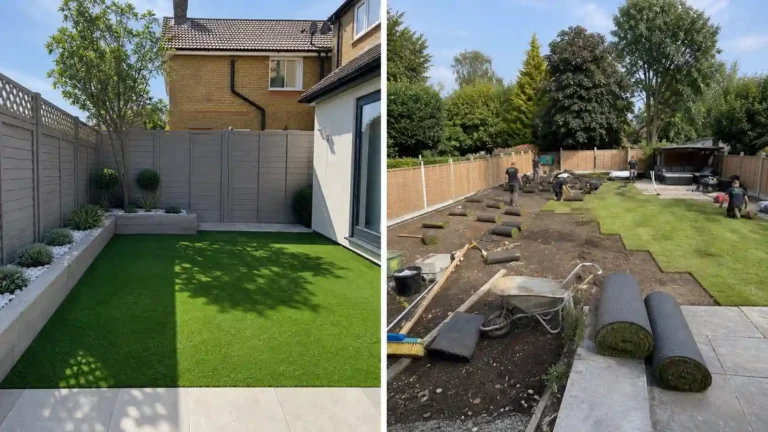
This breaks down turf installation timelines by size, so you can find the scenario closest to your own yard.
Small Residential Lawn
A small lawn under 500 square feet is usually the fastest job on our schedule. Most jobs this size on a residential property finish in four to eight hours. A two-person crew can handle site preparation, turf laying, and cleanup in one day, since crew size doesn’t need to be large for a job this small.
Average Residential Lawn
A typical residential yard between 500 and 1,500 square feet takes one to two full days. Day one covers preparation and the base. Day two covers turf installation, seams, and infill. This is the size we see most often in backyards across San Diego County.
Large Backyard
A large backyard over 1,500 square feet often needs two to four days. More square footage means more excavation and grading. Drainage work takes longer too, since water needs a clear path off the property. Crews also handle multiple turf rolls on a job this size, which means more seams to join by hand. A bigger crew helps keep this kind of project on schedule.
Commercial Artificial Turf Installation
Commercial artificial turf installation works on a different scale. A commercial property might need a week or longer, depending on the total commercial lawn size. Large-scale installation projects usually run in phases.
Site preparation happens first, followed by material delivery, then the turf work itself. Scheduling gets more complex too, since a larger work crew needs coordinating across several project phases.
How Much of the Installation Time Is Spent on Preparation?
Preparation is often the part homeowners underestimate.
Before turf can be installed, the existing surface must be ready to support it. That may mean removing existing grass and vegetation, excavating soil, leveling the area, improving drainage, installing the base material, compacting the base, and adding edging.
The exact preparation time depends on what is already under the lawn.
For example, removing a thin lawn from a clean, accessible area is very different from excavating a yard with thick roots, rocky soil, compacted ground, or poor drainage.
The main preparation steps include:
- Vegetation removal: Existing grass, weeds, roots, and other organic material are removed.
- Excavation: Soil may need to be removed to create room for the proper base and finished turf height.
- Grading and leveling: The surface is shaped so the finished lawn has the correct slope and drains properly.
- Base installation: Aggregate base material is placed in layers.
- Compaction: A plate compactor creates a firm, stable surface.
- Drainage: Drainage work is added when existing water flow is not adequate.
- Edging: The perimeter is prepared so the turf can be secured cleanly.
This is why two yards with the same square footage can have very different installation timelines.
How Long Does It Take to Lay the Artificial Grass?
Once the ground is properly prepared, the visible turf installation can move much faster.
The crew first handles the turf rolls and positions them over the prepared area. The turf may need time to relax after being rolled, depending on the material and installation conditions.
Next comes positioning and cutting.
The crew aligns the turf with the planned layout and makes careful cuts around:
- walls
- trees
- planting beds
- corners
- hardscape
- posts
- other fixed objects
The seams require extra care. Adjacent turf sections must be aligned so the pile direction looks consistent. Seam tape and adhesive may be used where required, and the perimeter is secured with the appropriate fasteners or edging method.
A simple rectangular lawn with few seams is much faster than a yard with many curves and custom cuts.
The phrase install synthetic turf can sound simple, but the quality of the finished surface depends heavily on the work done before and during these cuts and joins.
How Long Does Infill and Final Finishing Take?
Infill is what gives artificial grass its bounce and helps the blades stand up straight. We spread silica sand or another infill material evenly across the surface.
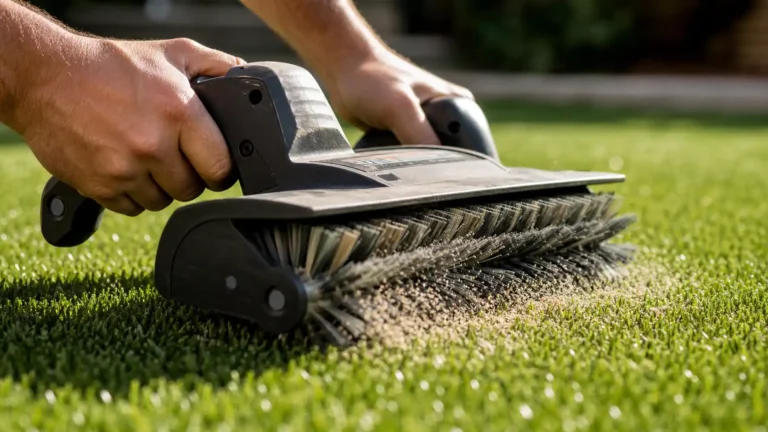
After infill, power brushing comes next. This step grooms the fibers and fixes blade orientation, so the lawn looks natural instead of flat. Then we run a full cleanup, clearing away scraps and dust from the job site.
Infill and finishing usually take one to two hours on a standard yard. We wrap up with a final inspection to check seams, edges, and drainage before we call the job done.
Does Artificial Grass Need Time to Cure or Settle?
Artificial turf itself does not cure like concrete.
The part that may need curing time is the adhesive used for seams or other areas. The required curing period depends on the adhesive product, temperature, moisture, and installation conditions.
The turf can also need some settling and grooming after installation. Infill works into the fibers, the blades are brushed upright, and the surface reaches its finished appearance.
This creates an important difference:
Installation completion means the physical work is finished.
Ready for normal use depends on the installation system, adhesives, infill, weather, and the installer’s instructions.
Do not assume that every turf installation has the same waiting period. Follow the adhesive manufacturer’s instructions and the installer’s guidance for foot traffic, pets, furniture, and other use.
What Can Delay Artificial Grass Installation?
Poor Ground Conditions
Rocky soil and old tree roots slow down excavation. Compacted or uneven ground needs extra grading before base material goes in. Yards with heavy existing vegetation take longer to clear too.
Drainage Problems
Yards with water pooling need extra drainage work before turf goes down. This might mean adding slope, installing a French drain, or laying drainage pipe under the base. Fixing grading issues now saves you from a soggy lawn later.
Difficult Yard Access
Narrow gates and stairs slow down material handling. If equipment and turf rolls have to be carried in by hand instead of wheeled through, expect the job to take longer than usual.
Complex Yard Design
Curves, corners, and slopes all need custom cuts. Yards with multiple sections split up by landscaping or hardscape need more seams and more careful trimming.
Weather
Rain is the biggest cause of weather delays. Wet ground and saturated soil can’t be compacted properly. Heat can also slow adhesive curing, so we plan installation days around both.
What Takes Longer: DIY or Professional Turf Installation?
DIY installation generally takes longer because one person or a small group must handle every stage.
That includes preparation, material handling, excavation, base installation, compaction, turf cutting, seams, edging, infill, and cleanup.
A professional installation crew has experience with these steps and uses specialized equipment such as a plate compactor. That can reduce the time needed for repetitive work and help keep the project moving.
The bigger issue is not just speed. Poor preparation can create drainage problems, uneven areas, loose edges, or visible seams that may require later repair.
If the goal is a predictable project duration, have the site assessed before choosing an installation date.
How to Keep Your Artificial Grass Installation on Schedule
A few steps keep your project on track. Start with an accurate site assessment and real measurements, not guesses. Confirm turf availability before material ordering, so you’re not stuck waiting mid-project.
Check the weather forecast and build in weather planning before you lock in a date. Clear a path for site access so the installation crew doesn’t lose time working around obstacles. Good preparation on your end keeps project scheduling simple for everyone involved.
Artificial Grass Installation Timeline: What to Expect From Start to Finish
Here’s the full artificial grass installation timeline, from that first site visit to the final brush:
- Site assessment and measurement
- Excavation and grading
- Base material and compaction
- Drainage work
- Turf placement and cutting
- Seams and edging
- Infill application
- Power brushing
- Adhesive curing (about 24 hours)
- Infill settling (a few weeks with normal use)
Most homeowners see their finished lawn within one to three days. The curing and settling steps happen quietly in the background while you’re already using the yard.
You may also want to read these posts:
Need This Done Right the First Time?
I’m the founder of SD Home Turf, and I install synthetic turf every week across San Diego County. A rushed job with weak compaction or sloppy seams causes problems within a year. That’s the biggest lesson I’ve picked up running crews for over a decade.
If you want a lawn that holds up, work with a team that treats prep work as seriously as the turf itself. Our artificial turf installation services in San Diego County cover site assessment, base work, drainage, and a full walkthrough when the job is done.
Call SD Home Turf today for a free on-site quote. We’ll give you a real timeline built around your yard, not a generic guess.
For general standards on synthetic turf systems, the Synthetic Turf Council publishes guidelines that most licensed installers follow.
Frequently Asked Questions
Can artificial grass be installed in one day?
Yes. For small to average yards under 1,500 square feet, one-day installation is common.
Does ground preparation take longer than installing the turf?
Yes. Prep work usually takes 50 to 60 percent of total installation time.
Can rain delay artificial grass installation?
Yes. Wet or saturated ground can’t be compacted properly, which is why rain causes most weather delays.
Can you use artificial grass immediately after installation?
You can walk on it right away, but give the seam adhesive a full 24 hours before heavy use.
How long does turf adhesive take to cure?
Seam adhesive typically needs about 24 hours to cure fully.
How long does artificial grass take to settle?
Infill settles over the first few weeks with normal foot traffic and rain.